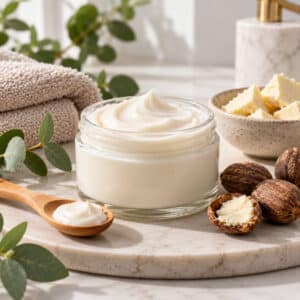
Cosmetic Product Safety Assessment – Oil-Based & Anhydrous
From: €150.00
A signed Cosmetic Product Safety Report for your oil-based or anhydrous cosmetic product, prepared by a qualified Safety Assessor. We assess your water-free formula, ingredient concentrations, stability, and intended use to ensure your product meets EU cosmetic safety requirements and is ready for the European market.
✓ EU Cosmetic Regulation compliant
✓ Signed by a qualified Safety Assessor
✓ PIF, CPSR & CPNP included
✓ Ready for EU/EEA market access
- Description
- Additional information
The Cosmetic Product Safety Assessment will give you all you need to sell specific products to consumers in the EU. For these products some of the laboratory testing is not needed because the product has high PH value or low water contents.
Which products can be assesed with this Cosmetic Product Safety Assessment?
The following types of products can be assesed:
- Anhydrous Products (No or Low Water Content)
- Products with Low (<3) High (>10) pH
- Alcohol-based Products
- Products containing organic solvents (acetone etc.)
- Single-use products
If you have another products than you can use the Water based Cosmetic Product Safety Assessment Bundle here.
Anhydrous Products (No or Low Water Content)
- Lip Balms: Usually anhydrous, made with oils, waxes, and butters.
- Body Butters and Balms: Typically contain oils, butters, and waxes, making them less prone to microbial contamination.
- Solid Perfumes: Often made with waxes and fragrance oils, with no water content.
- Oil-based Cleansers or Serums: These contain no water and rely on oils as the primary ingredient.
- Scrubs: Oil-based scrubs, such as those with sugar or salt, usually don’t contain water.
High pH Products
- Bar Soaps: Handmade or commercial soaps typically have a high pH, more than 10, making them hostile to microbial growth.
- Cleansing Powders: Powder formulations with surfactants are mixed with water just before use and are generally stable without additional preservatives.
- Lye-based Products: Like traditional shaving soap pucks or laundry soap bars, these have very high pH (>10) levels and minimal microbial risk.
Alcohol-based Products
- Perfume Sprays (EDT, EDP etc.): Usually contain a high concentration of alcohol, which acts as a preservative.
Single-use Powders
- Face Masks (Powdered): These products are mixed with water just before application, so they don’t require preservatives or extensive microbial testing.
Testing Exemptions
What is in this Cosmetic Product Safety Assessment?
It consists out of the following:
- Cosmetic Product Information File (PIF)
- Part A: Cosmetic Product Safety Information – Includes data on the product’s ingredients, stability, microbiological quality, impurities, and packaging.
- Part B: Cosmetic Product Safety Report (CPSR) – Contains the safety assessor’s conclusions, warnings, and justifications, ensuring the product is safe under normal use.
- Laboratory testing and results
- EU CPNP Notification
Cosmetic Product Safety Report (CPSR)
The EU Cosmetic Product Safety Report (CPSR) is a document that plays a crucial role in ensuring the safety of cosmetic products placed on the European Union (EU) market. It is a requirement under the EU Cosmetic Regulation (Regulation (EC) No 1223/2009), which sets out the rules and regulations for cosmetic products.
Cosmetic Product Information File (PIF)
The Cosmetic Product Information File (PIF) is a comprehensive document that serves as a central repository of information related to a cosmetic product. It is a mandatory requirement under the European Union (EU) Cosmetic Regulation (Regulation (EC) No 1223/2009). The PIF is intended to provide competent authorities with access to key details about a cosmetic product and its safety assessment.
Cosmetics stability test
Cosmetics stability testing is a series of evaluations conducted to assess how a cosmetic product’s physical, chemical, and microbiological properties are affected over time when stored under various conditions. The purpose of this testing is to ensure that the product remains safe, effective, and retains its intended quality throughout its shelf life.
EU CPNP Notification
The EU CPNP Notification refers to the process of notifying cosmetic products to the Cosmetic Products Notification Portal (CPNP), which is a centralized online notification system used within the European Union (EU). The CPNP is established under the EU Cosmetic Regulation (Regulation (EC) No 1223/2009), and it serves as a tool for the exchange of information about cosmetic products among regulatory authorities and the Responsible Persons placing these products on the market.
What is a variation?
You can often make multiple product variations by changing only the scent or color of a basic formulation. By choosing the variation option in these specific cases, you benefit from lower costs and at the same time ensure that your product variations continue to comply with the regulations for cosmetic safety. For each variation, we create the PIF with CPSR and conduct a laboratory test. For 2 variations, 2 PIFs with CPSR are created and 2 laboratory tests are conducted.
When do you choose the variant option?
- Changing scent: If the only change to the basic composition is a change in scent, you can choose the variant option. This is because the basic formulation remains the same and only the scent is changed.
- Changing color: Similarly, if you choose to change the color of the product without introducing new ingredients or raw materials, this also qualifies for the variant price.
Example 1
Variant 1 soap ingredients:
- 96% soap base white
- 2% aloe vera powder
- Fragrance oil – 2% lavender essential oil
Variant 2 with modified fragrance:
- 96% white soap base
- 2% aloe vera powder
- New fragrance oil – 2% citrus essential oil
Variant 3 with modified fragrance:
- 96% white soap base
- 2% aloe vera powder
- New fragrance oil – 2% Ylang Ylang essential oil
These varieties retain the same basic ingredients, but change the scent from lavender to citrus and Ylang Ylang. Since the composition remains unchanged, apart from the scent, select the 3 varieties option.
Example 2
Variant 1 soap ingredients:
- 20% Water
- 10% sodium hydroxide
- 16% olive oil
- 10% palm oil
- 10% rice bran oil
- 16% coconut oil
- 12% bay leaf oil
- 3% fragrance oil
- Color – 1% mica forest green
- Color – 1% mica blue
- Color – 1% mica orange
Variant 2 with modified color:
- 20% water
- 10% sodium hydroxide
- 16% olive oil
- 10% palm oil
- 10% rice bran oil
- 16% coconut oil
- 12% bay leaf oil
- 3% fragrance oil
- New color– 1% mica golden yellow
- New color– 1% mica black
- New color– 1% mica white
This variant retains the same basic ingredients, but only changes the colors. Because the composition remains unchanged, apart from the colors, select the option 2 variants.
Important reminder: If additional raw materials are added (such as a new active ingredient, plant extract, preservatives or any other ingredient that changes the formulation), this is not counted as a variant, due to the significant change that the new formulation represents.
How does the process work?
- Choosing Assessment
- You purchase the assessment through our website.
- Access to secure Portal
- After purchase, you will gain access to our secure portal where you can complete the intake.
- Complete Intake
- Complete all requested information about your product and upload relevant documentation.
- Send Samples
- Send physical samples of your product to our laboratory. When you scedule your lab test in the portal the safety assessor will request the number of samples. It depends on your product and packaging.
- Laboratory tests
- We performlaboratory tests.
- Safety Assessment
- Our safety reviewer prepares the PIF, Part I, II and III.
- EU CPNP notification and documentation delivery
- We will take care of the registration of your product in the Cosmetic Products Notification Portal (CPNP) and you will receive the complete PIF documentation from us.
What do you need to apply for a CPSR?
To make the process go smoothly, we need the following information from you:
- Product Formulation: a complete list of ingredients, including concentrations and INCI names.
- Product packaging: information on packaging and labels.
- Instructions for use: how the product is used by consumers.
- Sample: a physical sample of your product for laboratory analysis.
- Documentation: certificates of raw materials (e.g., MSDS and COA). You can find more information on our page about documentation needed for a safety assessment.
Additional information
Cosmetic Product Safety Report - CPSR
| Your Product Recipe Ingredients | 1- 9 Ingredients, 10- 14 Ingredients, 15- 19 Ingredients, 20- 29 Ingredients, 30+ ingredients |
|---|
Cosmetic Label Review
| Label Review | Extended, Standard |
|---|
Stability and Compatibility Test
| Stability Test | Accelerated, Accelerated + Shelf Life Estimation, Thermal Shock, Thermal Shock + Shelf Life Estimation |
|---|
What we assess specifically for oil-based & anhydrous products
Water-free doesn't automatically mean risk-free. Our Safety Assessors focus on the specific characteristics of oil-based and anhydrous formulations to ensure your product meets EU cosmetic safety requirements.
Ingredient Safety & Concentrations
Each oil, butter, wax, and active ingredient is assessed for its toxicological profile, concentration, and suitability for the intended cosmetic application.
Oxidative Stability & Rancidity
We evaluate the susceptibility of oils and fats to oxidation, including potential degradation products, shelf-life considerations, and the role of antioxidants.
Microbiological Risk
Although anhydrous products generally present a lower microbiological risk, we assess potential contamination during manufacturing and consumer use, including possible water introduction.
Skin Exposure & Intended Use
Exposure calculations consider the application area, frequency of use, product quantity, and whether the formulation is leave-on or rinse-off.
Fragrance & Allergens
Essential oils, fragrance compounds, and relevant allergens are assessed against applicable EU restrictions, including concentration limits and labelling requirements.
Raw Material Purity & Specifications
We review ingredient specifications, potential impurities, contaminants, and raw-material quality, including relevant oxidation indicators and residual substances.
3 easy steps to get your oils based or anhydrous product Product Safety Assessment

Buy your assessment
See which assessment fits with your product and needs

Add your product recipe
In our secure online platform you can easily create your product for assessment.

Receive your assessment
We create the full assessment. Your sales can start!
You receive a complete Cosmetic Product Safety Report
Delivered as a signed PDF in your Secure Portal, ready to file in your Product Information File (PIF).
- CPSR Part A
- CPSR Part B
- Ingredient safety assessment
- Exposure calculations
- Margin of Safety calculations
- Safety conclusion
- Warnings & conditions of use
- Qualified assessor signature
Make sure your oils based or anhydrous product label is EU compliant
A safe formula still can’t be sold with a non-compliant label. We check your artwork against Article 19 of Regulation (EC) No 1223/2009 — and, with the extended review, every claim you make.
Label Review
The legal basics every cosmetic label needs.
- Mandatory information Responsible Person, nominal content, durability date or PAO, precautions, batch number and country of origin.
- INCI ingredient list Correct INCI names, descending order, colorants, nano-materials and labelled fragrance allergens.
- Icons & symbols PAO jar, open-book symbol, hourglass and ℮-mark — correct use and placement.
Extended Label Review
Standard checks, plus a review of every claim on your packaging.
- All claims reviewed Every claim on pack is checked against the common criteria of Regulation (EU) No 655/2013.
- Claim validity & evidence Claims such as “dermatologically tested”, “long-lasting” or “free from” are matched against your supporting data.
- Rewording advice Where a claim can’t be supported, we suggest compliant alternatives.
Your oils based or anhydrous product is assessed by qualified professionals — not generated
Article 10 of Regulation (EC) No 1223/2009 requires the safety assessment to be carried out by a person holding a diploma in pharmacy, toxicology, medicine or a similar discipline. Every CPSR we issue is reviewed, concluded and signed by such an assessor, who takes professional responsibility for the conclusion.
- 01 Degree in pharmacy, toxicology, medicine or equivalent
- 02 Assessment follows the SCCS Notes of Guidance
- 03 Direct contact with your assessor via the Secure Portal


What if my oils based or anhydrous product formula doesn't pass?
You don't just receive a rejection. If your assessor identifies an ingredient concentration, restriction or other safety concern, we explain the issue and what needs to be resolved before the assessment can be completed.
-
Issue identified
E.g. a restricted substance above its Annex III limit, or missing impurity data.
-
Clear explanation
Your assessor tells you what the concern is and which options resolve it.
-
You adjust or supply data
Reformulate, add documentation or run an additional test.
-
Assessment completed
Your CPSR is finalised and signed.
Frequently asked questions
Do I need a CPSR for an oil-based or anhydrous cosmetic product?
Yes. All cosmetic products placed on the EU market require a Cosmetic Product Safety Report (CPSR), including oil-based and anhydrous formulations. Even though these products contain little or no water, they must undergo a safety assessment in accordance with Regulation (EC) No 1223/2009 before being sold in the EU.
Which oil-based and anhydrous cosmetic products can you assess?
We can prepare CPSRs for a wide range of water-free cosmetics, including facial oils, body oils, massage oils, cleansing oils, beard oils, hair oils, body butters, balms, salves, lip balms, solid perfume balms and other anhydrous formulations. Each product is assessed according to its ingredients, intended application and conditions of use.
Do anhydrous cosmetic products need laboratory testing?
Anhydrous cosmetic products generally have a lower microbiological risk than water-based formulations. Depending on the formula, packaging and intended use, microbiological testing or preservative efficacy testing may not be necessary if a scientifically justified risk assessment supports this conclusion. However, appropriate stability testing is still important to evaluate product quality, oxidation, physical changes and compatibility with packaging.
What documents do I need for an anhydrous cosmetic CPSR?
We require the complete quantitative formulation, including INCI names and exact ingredient percentages. Additional documentation may include Safety Data Sheets (SDS), Certificates of Analysis (CoA), raw-material specifications, fragrance allergen declarations and IFRA certificates where applicable. Information about manufacturing, packaging and intended use may also be required to complete the safety assessment.
Do oil-based cosmetics need preservatives?
Not necessarily. Completely anhydrous formulations generally do not support microbial growth in the same way as water-containing cosmetics. However, contamination may occur when water is introduced during manufacturing or consumer use. Our Safety Assessors evaluate the microbiological risks associated with the formulation, packaging and intended use to determine whether preservation or additional testing is necessary.
Can I use essential oils in my anhydrous cosmetic product?
Yes. Essential oils may be used in anhydrous cosmetic products provided their concentrations and intended applications comply with applicable EU cosmetic regulations. Our Safety Assessors evaluate essential oil constituents, potential skin sensitisation, phototoxicity, fragrance allergens and relevant restrictions. IFRA documentation may also be considered where applicable.
Can multiple fragrance variations be included in one CPSR?
Yes, in some cases. If your products share the same base formulation and only the fragrance or essential oil blend changes, multiple variations may be covered within one safety assessment. Each fragrance variation must be evaluated individually for its composition, concentration, allergens and regulatory restrictions. We review your formulations to determine whether they can be grouped together.
Do natural oils and butters require a safety assessment?
Yes. Natural ingredients such as shea butter, cocoa butter, coconut oil, jojoba oil and sweet almond oil must also be evaluated when used in cosmetic formulations. Natural origin does not automatically guarantee safety. Our assessment considers ingredient purity, toxicological information, potential allergens, impurities and the concentration used in the finished product.
How is the shelf life of an oil-based cosmetic product determined?
The shelf life of an oil-based cosmetic product depends on factors such as the stability of its oils and butters, susceptibility to oxidation, antioxidant systems, packaging and storage conditions. Stability testing and supporting technical information help establish an appropriate minimum durability period or Period After Opening (PAO), where applicable. Our Safety Assessors review the available evidence as part of the product safety evaluation.
Can you assess handmade or small-batch anhydrous cosmetics?
Yes. Handmade and small-batch cosmetic products must meet the same EU cosmetic safety requirements as products manufactured on a larger scale. We can prepare CPSRs for independent cosmetic brands, artisan producers and small businesses, provided the required formulation and ingredient documentation is available. Manufacturing must also comply with applicable Good Manufacturing Practice (GMP) requirements.
Can you assess oil-based cosmetics manufactured outside the EU?
Yes. Oil-based and anhydrous cosmetics manufactured outside the European Union can receive an EU Cosmetic Product Safety Report. The manufacturer or supplier must provide sufficient information about the formulation, ingredients, manufacturing process and packaging. An EU-established Responsible Person is also required before the product can be placed on the EU market.
Is a CPSR enough to sell anhydrous cosmetics in the EU?
No. A CPSR is an essential part of EU cosmetic compliance, but additional requirements apply. Your product must have a complete Product Information File (PIF), an EU Responsible Person, compliant labelling, appropriate Good Manufacturing Practice (GMP) documentation and a Cosmetic Products Notification Portal (CPNP) notification before being placed on the EU market.
What happens if I change an oil or butter in my formulation?
Changes to ingredients, concentrations, fragrance blends or other formulation components must be reviewed to determine whether the existing safety assessment remains valid. Even replacing one vegetable oil with another can affect the toxicological assessment, product stability and potential allergens. Depending on the modification, your CPSR may require an update or a new safety assessment.
Can Certified Cosmetics also help with the PIF and CPNP notification?
Yes. Certified Cosmetics provides comprehensive regulatory support for oil-based and anhydrous cosmetic products. In addition to the CPSR, we can assist with the Product Information File (PIF), cosmetic label review, EU Responsible Person services and CPNP notification, helping you prepare your products for compliant market access throughout the EU and EEA.
Ready to make your oils based or anhydrous product EU compliant?
Start your Cosmetic Product Safety Assessment today. Our Safety Assessors review your formulation and documentation and guide you through every requirement for completing your CPSR.
Order Safety Assessment- EU compliant
- Qualified Safety Assessor
- Complete CPSR
- Online process