
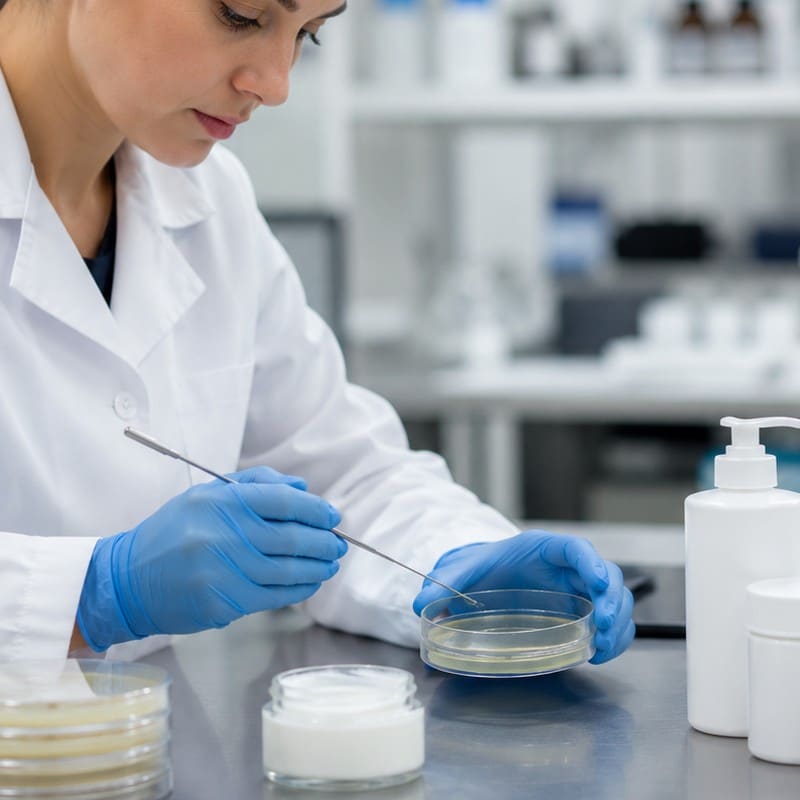
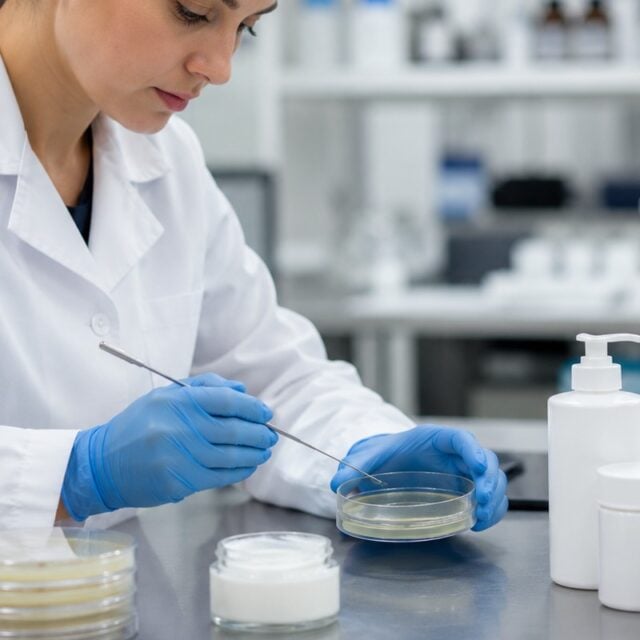
One laboratory study that often raises questions is preservative efficacy testing, also known as the challenge test. While this test is essential for many cosmetics, it is not automatically required for every formulation placed on the European market.
European cosmetic legislation does not explicitly state that every cosmetic product must undergo preservative efficacy testing.
Instead, Regulation (EC) No 1223/2009 requires manufacturers to ensure that cosmetic products are safe for human health under normal or reasonably foreseeable conditions of use. As part of the Cosmetic Product Safety Report (CPSR), the safety assessor must evaluate the microbiological quality of the product and consider whether the preservation system is adequate.
For products that rely on preservatives to control microbial growth, a preservative efficacy test is often the most appropriate way to demonstrate that the preservation system performs as intended.
In practice, although not mandated by name in the Regulation, preservative efficacy testing is widely recognised as the standard scientific method for generating this evidence.
Which products usually require preservative efficacy testing?
In general, preservative efficacy testing is recommended for cosmetic products that are susceptible to microbial contamination during storage and consumer use.
This typically includes products that:
- Contain water or water-based ingredients
- Are packaged in containers that allow repeated contact with the product
- Are intended for repeated use after opening
- Can reasonably become contaminated during normal consumer use
Common examples include facial creams, body lotions, shampoos, conditioners, liquid soaps, cleansing gels, serums and many leave-on skincare products.
Because microorganisms require water to grow, these formulations generally depend on an effective preservation system to remain microbiologically safe throughout their intended lifetime.
Which products may not require preservative efficacy testing?
Not every cosmetic formulation presents the same microbiological risk.
Products with little or no available water are naturally less favourable for microbial growth. Examples include many anhydrous oils, wax-based balms, some pressed powders and certain solid products.
Likewise, products with extreme pH values or formulations whose composition inherently prevents microbial proliferation may not require preservative efficacy testing if their microbiological safety can be scientifically justified.
However, the absence of preservatives does not automatically mean that testing is unnecessary. The overall formulation, packaging and intended use must always be considered together.
How does packaging influence the need for testing?
Packaging plays an important role in the microbiological risk of a cosmetic product.
A formulation dispensed through an airless pump is generally less exposed to repeated contamination than the same product packaged in an open jar, where consumers repeatedly introduce fingers into the product.
Similarly, single-dose packaging presents different microbiological considerations from multi-use containers.
For this reason, laboratories and safety assessors evaluate both the formulation and its packaging when determining whether preservative efficacy testing is appropriate.
What guidance supports preservative efficacy testing?
Although Regulation (EC) No 1223/2009 does not prescribe a specific laboratory method, recognised scientific guidance is available.
The SCCS Notes of Guidance recommend demonstrating that the preservation system is suitable whenever microbiological risk exists. In practice, laboratories commonly perform preservative efficacy testing according to internationally recognised methods such as ISO 11930, which provides a standardised approach for evaluating cosmetic preservation systems.
Using recognised methodologies helps ensure that results are scientifically robust and suitable for supporting the cosmetic safety assessment.
Can a microbiological test replace a challenge test?
No – Routine microbiological testing and preservative efficacy testing answer two different questions.
A microbiological quality test evaluates whether the finished product is contaminated at the moment it is analysed. It provides a snapshot of the product’s microbiological condition.
A preservative efficacy test, on the other hand, evaluates whether the preservation system can effectively control microorganisms that may enter the product during normal consumer use.
Because they assess different aspects of microbiological safety, the two tests are complementary rather than interchangeable.
What happens if preservative efficacy is insufficient?
If laboratory results show that the preservation system does not adequately control microbial growth, additional work is usually required before the product can be marketed.
Possible solutions include reformulating the preservation system, adjusting ingredient concentrations, modifying the packaging or improving manufacturing controls.
Once changes have been implemented, the preservative efficacy study normally needs to be repeated to confirm that the revised product performs satisfactorily.
Although this may extend product development, identifying preservation problems before commercial launch is far preferable to discovering them after the product reaches consumers.


