Water Activity (aw) Determination Test
€75.00
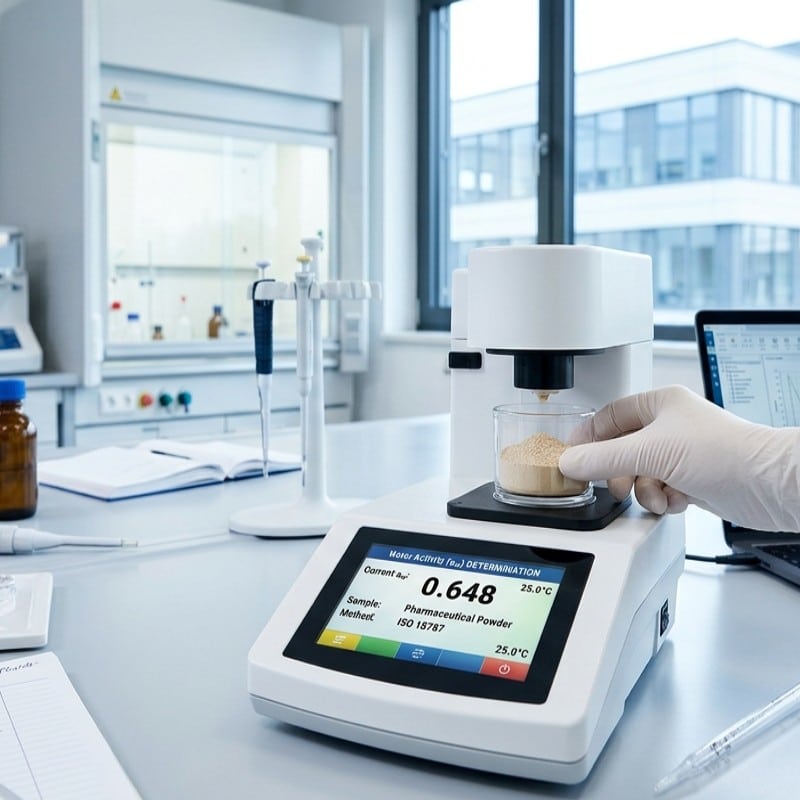
Water activity (aw) is one of the most critical factors in determining the quality and safety of consumer products. Unlike total moisture content, which measures the amount of water present, water activity measures specifically, the “free” water available to support the growth of bacteria, yeast, and mold.
By determining the aw value, manufacturers can predict the shelf-life of their formulations, optimize packaging requirements, and prevent physical changes such as clumping, texture loss, or chemical degradation. Our laboratory provides high-precision testing to help you maintain the integrity of your products, particularly in complex low-water or water-free systems.
Regulations
Understanding water activity is not just a quality preference; it is a regulatory necessity across multiple industries.
-
Food Safety: Regulatory bodies such as the FDA and EFSA recognize water activity as a primary “Hurdle Technology.” Products with an aw below 0.85 are generally considered “non-potentially hazardous” as they inhibit the growth of many pathogenic bacteria.
-
Pharmaceuticals: The USP <1112> provides guidelines on using water activity for pharmaceutical dosage forms, allowing for reduced microbial limit testing and aiding in the selection of antimicrobial preservative systems.
-
Cosmetics: ISO 29621 establishes aw limits for cosmetic products to identify those with low microbiological risk, potentially exempting formulations from rigorous preservative challenge testing (Challenge Tests).
Standards and Test Methods
Our testing protocols are performed in strict accordance with recognized international standards:
-
ISO 21807: Microbiology of food and animal feeding stuffs — Determination of water activity.
-
ISO 29621: Cosmetics — Microbiology — Guidelines for the risk assessment and identification of microbiologically low-risk products.
Upon completion of the analysis, you will receive a comprehensive report featuring:
-
Precise aw Value
-
Expert Interpretation: A detailed assessment of the microbiological risk associated with your specific sample and guidance on how to optimize the formulation for enhanced stability.