
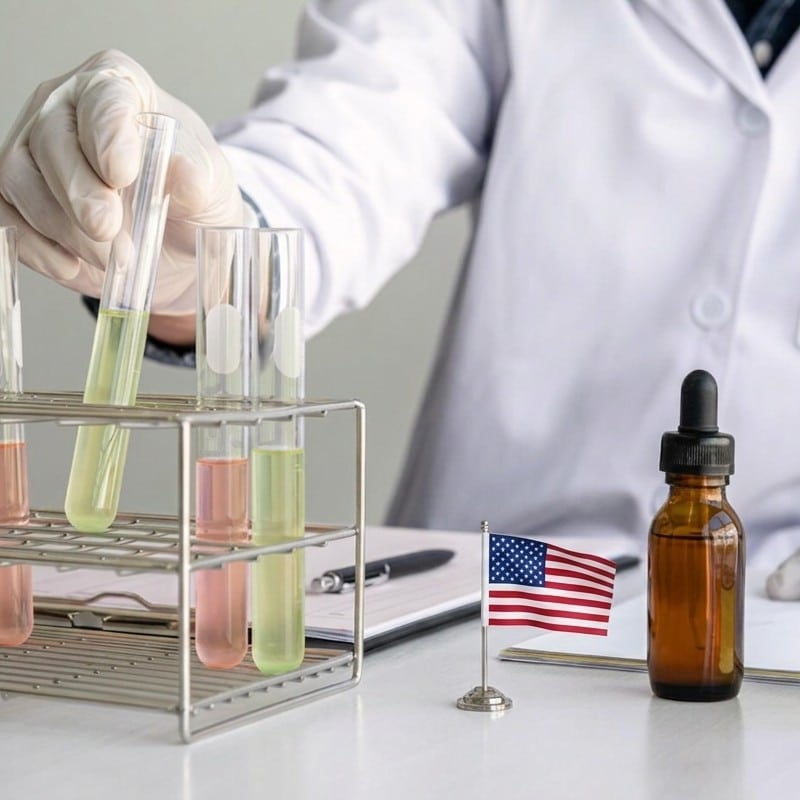

For many brands, especially those operating internationally, understanding FDA guidance on cosmetic safety testing is essential not only for compliance in the United States, but also for aligning with broader global regulatory practices.
Absence of pre-market approval
One of the main differences between the US and European cosmetic systems is the regulatory approach before products reach the market.
In the European Union, Regulation (EC) No 1223/2009 requires a formal Cosmetic Product Safety Report (CPSR) and detailed product documentation before commercialization. In contrast, the FDA generally operates through post-market oversight.
This means cosmetic companies themselves must determine which tests and safety evaluations are necessary to support product safety. If a product causes harm or lacks adequate substantiation, the FDA may take enforcement action after the product is already on the market.
As a result, safety testing in the United States is based less on predefined mandatory protocols and more on scientific responsibility and risk assessment.
What Does “Adequate Safety Substantiation” Mean?
MoCRA formally reinforced the requirement that cosmetics must have “adequate substantiation of safety.” In practice, this means companies should possess reliable scientific evidence demonstrating that a product is safe under normal or reasonably foreseeable conditions of use.
The FDA does not publish a universal checklist of mandatory cosmetic tests. Instead, safety substantiation may rely on a combination of:
- Toxicological assessments
- Existing ingredient safety data
- Stability studies
- Microbiological evaluations
- Packaging compatibility testing
- Dermatological testing
- Scientific literature and historical use information
The level of evidence expected depends on the type of product, the ingredients used, the exposure route, and the target consumer population.
A rinse-off shampoo, for example, does not present the same safety considerations as an eye-area product or a leave-on treatment containing active ingredients.
FDA Guidance Is Risk-Based
Unlike some regulatory systems that prescribe highly standardized testing frameworks, FDA expectations are generally risk-based.
This means manufacturers are expected to evaluate the specific risks associated with their formulations and choose testing strategies accordingly.
Products containing water typically require microbiological control and preservative efficacy testing because they are more susceptible to contamination. Formulas exposed to heat, light, or oxidation risks may require extensive stability testing. Products intended for sensitive skin or prolonged contact may need additional dermatological assessment.
The FDA also expects companies to consider reasonably foreseeable misuse, consumer exposure patterns, and cumulative safety concerns linked to ingredients.
This flexible approach gives manufacturers scientific freedom, but it also increases their responsibility to justify decisions with credible evidence.
The Role of Toxicological Assessment
One of the central pillars of cosmetic safety evaluation is toxicological assessment.
Safety assessors examine ingredients individually and within the finished formula to determine whether exposure levels remain within acceptable margins of safety. This evaluation may consider:
- Ingredient concentration
- Frequency of use
- Absorption potential
- Application area
- Population exposure
- Existing toxicological data
Although the FDA does not require a formal safety report equivalent to the European CPSR, many companies develop a comprehensive cosmetic product dossier to support international compliance, safety substantiation, and internal quality systems.
For global brands, harmonizing toxicological documentation across jurisdictions often simplifies regulatory management and improves consistency.
FDA Expectations and Global Compliance
Although US cosmetic regulation remains more flexible than the European system, global regulatory expectations are gradually converging around common principles:
- Scientific substantiation
- Product traceability
- Risk assessment
- Good Manufacturing Practices (GMP)
- Post-market surveillance
Companies should therefore maintain organized documentation supporting their safety decisions.
In practice, many companies now develop testing programs that simultaneously support FDA expectations, EU requirements, and other international regulatory frameworks.
