
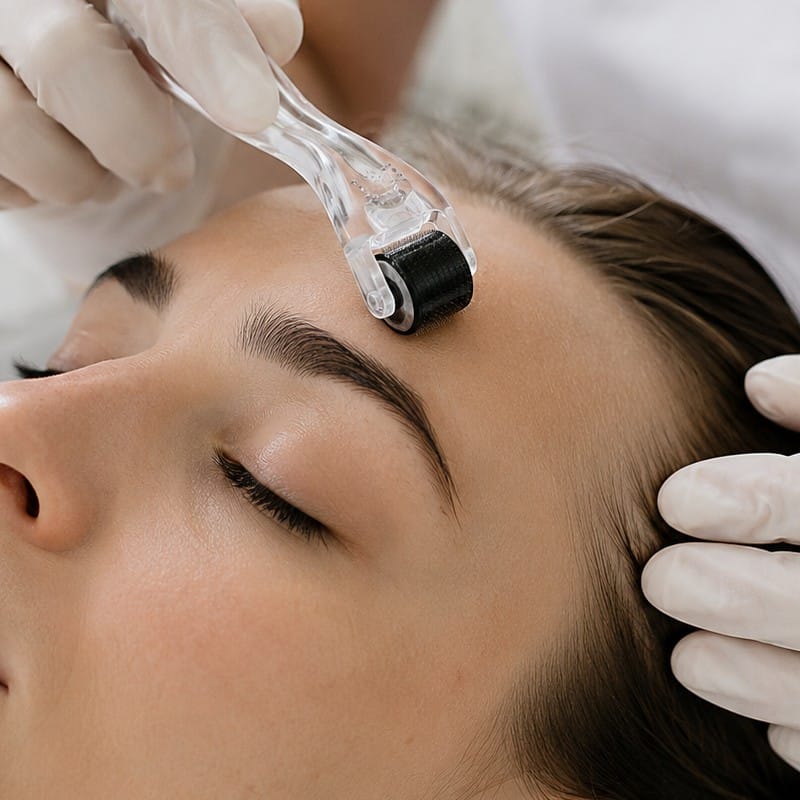
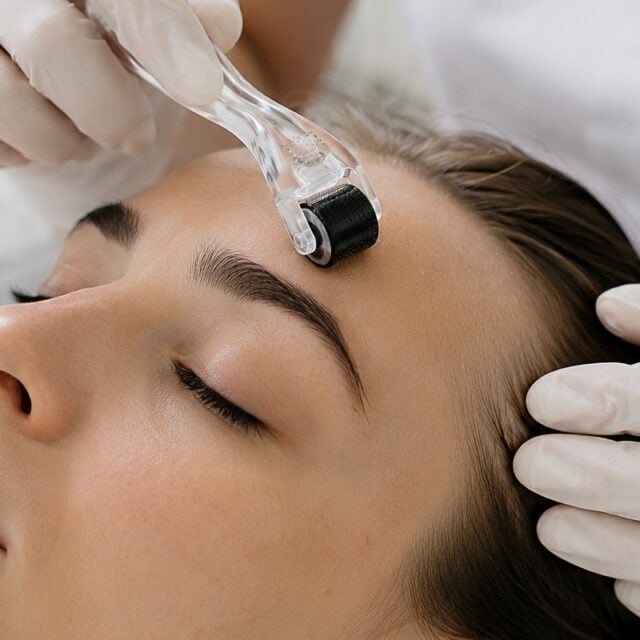
From a regulatory perspective, however, microneedling raises important questions. Where is the boundary between cosmetics and medical devices? Can a product that alters the skin barrier still fall within the scope of cosmetic legislation? And how should manufacturers assess safety when product use may increase skin penetration?
Under the European regulatory framework, these issues directly affect product classification, claims, safety assessment and market access.
According to Regulation (EC) No 1223/2009, a cosmetic product is defined as a substance or mixture intended to be placed in contact with the external parts of the human body with the purpose of cleaning, perfuming, changing appearance, protecting, keeping in good condition or correcting body odours. The Regulation also specifies that products intended to be injected or implanted into the body are excluded from the definition of cosmetics.
How Microneedling Works
Microneedling consists of creating controlled micro-perforations in the skin using very small needles or microstructures. In aesthetic practice, the objective is generally to stimulate skin renewal processes and enhance the penetration of topical substances.
In the cosmetics sector, microneedling-related products are frequently marketed as tools to improve the appearance of the skin, increase hydration or support smoother and more radiant skin.
The regulatory complexity begins precisely at this point. When a product or device intentionally alters the skin barrier, authorities may examine more closely whether it remains within the scope of cosmetics legislation or falls under other regulatory frameworks, such as medical devices legislation.
European Commission guidance on borderline products emphasizes that classification depends on several factors considered together, including the intended purpose, claims, mechanism of action, mode of use and overall presentation of the product.
Cosmetics, Medical Devices and Borderline Products
Not all microneedling-related products are automatically classified as medical devices. Under EU legislation, classification is assessed case by case.
If a product is intended exclusively to improve appearance without therapeutic or medical claims, manufacturers may position it under Regulation 1223/2009. However, if the intended purpose involves treatment, correction of pathological conditions or significant physiological modification, authorities may consider that the product falls outside the cosmetic framework.
Claims play an important role in this assessment. Expressions such as “repairs tissue,” “treats acne scars” or “stimulates collagen regeneration” may suggest a medical or physiological purpose depending on the context in which they are used.
The technical characteristics of the product are also relevant. Authorities may evaluate factors such as:
- depth of penetration,
- degree of invasiveness,
- intended area of application,
- and foreseeable consumer use.
This is particularly important for systems combining cosmetic formulations with applicator devices. A serum itself may qualify as a cosmetic product, while the associated device could fall under Regulation (EU) 2017/745 on medical devices.
Why the Skin Barrier Matters
One of the core principles of cosmetics legislation is that cosmetic products are intended for application on external parts of the body. Although cosmetics may interact with the surface of the skin, the integrity of the skin barrier remains highly relevant for safety assessment.
Microneedling changes the exposure conditions of cosmetic ingredients because it may facilitate deeper penetration into the skin. This creates additional toxicological and microbiological considerations compared with conventional cosmetic application.
Ingredients considered safe under normal cosmetic use conditions may require additional evaluation when combined with techniques that increase transdermal exposure.
For this reason, manufacturers developing microneedling-associated products should pay particular attention to:
- microbiological quality,
- potential systemic exposure,
- risk of irritation or inflammation,
- and reasonably foreseeable misuse.
These considerations are directly linked to the Cosmetic Product Safety Report (CPSR) required under Regulation 1223/2009.
Safety and Compliance Considerations for Manufacturers
Manufacturers developing cosmetic products associated with microneedling technologies should integrate regulatory assessment early in product development.
Compliance evaluation should consider not only the formulation itself, but also the complete conditions of use, including the associated device, application method, target consumer and intended claims.
The Product Information File (PIF) and Cosmetic Product Safety Report should reflect the specific exposure profile associated with the product’s intended use. Under Regulation 1223/2009, the responsible person must ensure that the product is safe under normal and reasonably foreseeable conditions of use.
For products operating close to the cosmetic-medical device boundary, obtaining specialized regulatory assessment before commercialization is often advisable.
