
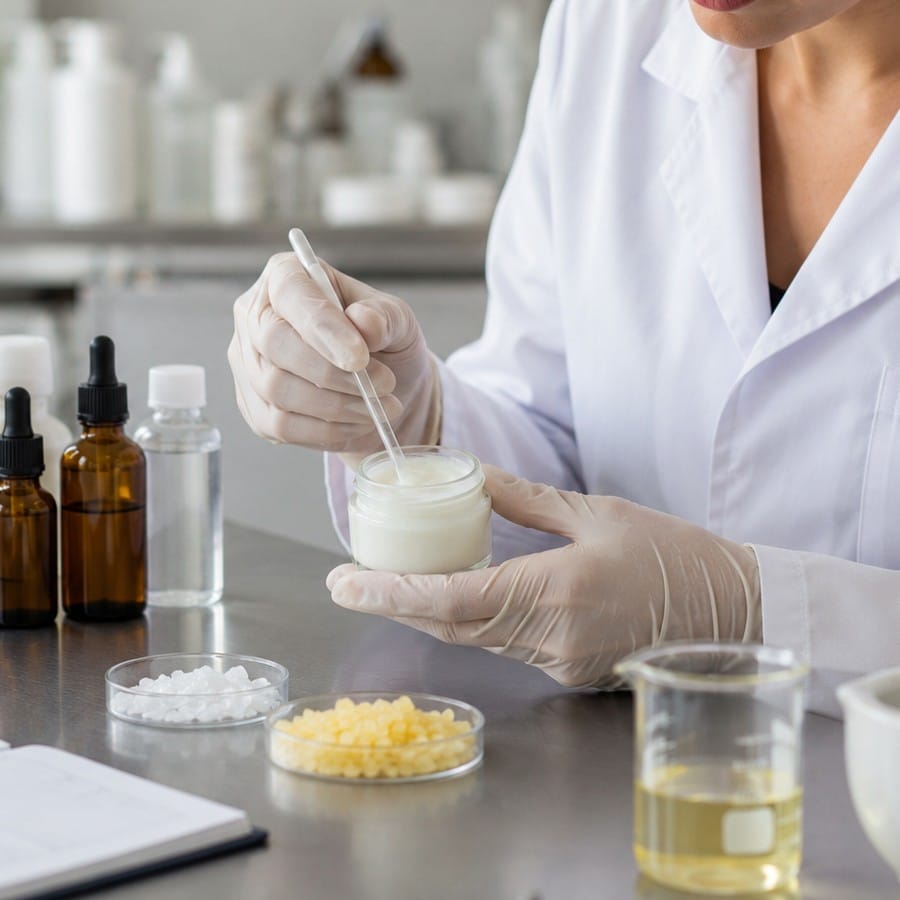
A cosmetic ingredient function describes the technical role that a substance performs within a cosmetic formulation or on the finished product. In simple terms, it explains why an ingredient has been included. An ingredient may help preserve the product, stabilize an emulsion, adjust viscosity, provide fragrance, absorb ultraviolet radiation, or moisturize the skin.
In regulatory practice, ingredient functions are commonly described using the European Commission’s CosIng database, which provides standardized functional categories for cosmetic ingredients. Although these functions are primarily descriptive and informative, they help create a common language across the cosmetic industry.
Why Ingredient Functions Matter
Ingredient functions are not merely technical descriptions. They support several key aspects of cosmetic compliance and product development.
First, they help formulators build effective and stable products. A cosmetic formulation requires more than active or marketing ingredients. It also depends on emulsifiers, thickeners, preservatives, antioxidants, chelating agents, solvents, and many other functional components that ensure performance and safety.
Second, ingredient functions contribute to the safety assessment required under Regulation (EC) No 1223/2009. The safety assessor must understand the purpose of each ingredient, its concentration, and its expected exposure conditions when evaluating the safety of the finished product.
Third, understanding functions helps manufacturers correctly classify products and avoid regulatory issues. The intended purpose and mode of action of ingredients can influence whether a product remains within the scope of cosmetic legislation or moves into another regulatory category, such as medicinal products, medical devices, or biocides. European guidance on borderline products repeatedly emphasizes the importance of intended purpose and function when determining regulatory status.
One Ingredient, Multiple Functions
A common misconception is that every ingredient has only one purpose. In reality, many cosmetic ingredients perform several functions simultaneously.
Glycerin is a good example. It is widely recognized as a humectant because it helps retain moisture in the skin. At the same time, it can also function as a solvent and contribute to the overall texture and stability of a formulation.
Similarly, certain polymers may act as film-forming agents, viscosity controllers, and conditioning agents within the same product.
For regulatory purposes, ingredient databases may therefore list multiple functions for a single substance. The presence of several functions does not mean that all of them are relevant in every formulation. The actual role depends on the concentration used, the formulation design, and the intended product performance.
Common Categories of Cosmetic Ingredient Functions
Most cosmetic formulations are built around a combination of functional categories.
Emollients help soften and smooth the skin surface. Humectants attract and retain water. Emulsifiers allow oil and water phases to remain mixed. Preservatives protect the product against microbial growth. Antioxidants help prevent ingredient degradation caused by oxidation. Surfactants enable cleansing by helping oils and dirt disperse in water. Fragrance ingredients provide scent, while colorants contribute to appearance.
Some ingredients have highly specialized functions. UV filters, for example, are specifically regulated in the European Union and may only be used when authorized under the relevant annexes of Regulation (EC) No 1223/2009. Likewise, preservatives and colorants are subject to dedicated regulatory requirements.
Ingredient Function vs Product Function
One of the most important regulatory distinctions is the difference between an ingredient function and a cosmetic product function.
Under Regulation (EC) No 1223/2009, a cosmetic product must be intended mainly or exclusively to clean, perfume, change appearance, protect, keep in good condition, or correct body odours. These are the legally recognized cosmetic functions of the finished product.
Ingredient functions operate at a different level. They describe the technical contribution of individual raw materials within the formula.
For example, a face cream may have the overall cosmetic function of protecting and keeping the skin in good condition. Within that same formula, different ingredients may function as emollients, emulsifiers, preservatives, antioxidants, and viscosity-controlling agents.
Confusing these two concepts can lead to misunderstandings when developing claims, preparing documentation, or assessing product classification.
Connecting Formulation, Safety, and Compliance
A cosmetic ingredient function describes the specific role a substance performs within a formulation. Although it may seem like a simple technical classification, it is closely connected to formulation design, product performance, safety assessment, and regulatory compliance.
For manufacturers, understanding ingredient functions is essential for building effective and compliant products. For consumers, it offers valuable insight into how cosmetics achieve their intended effects.
As cosmetic regulations continue to evolve, a clear understanding of ingredient functions remains one of the foundations of responsible formulation and regulatory compliance in the European market.
