
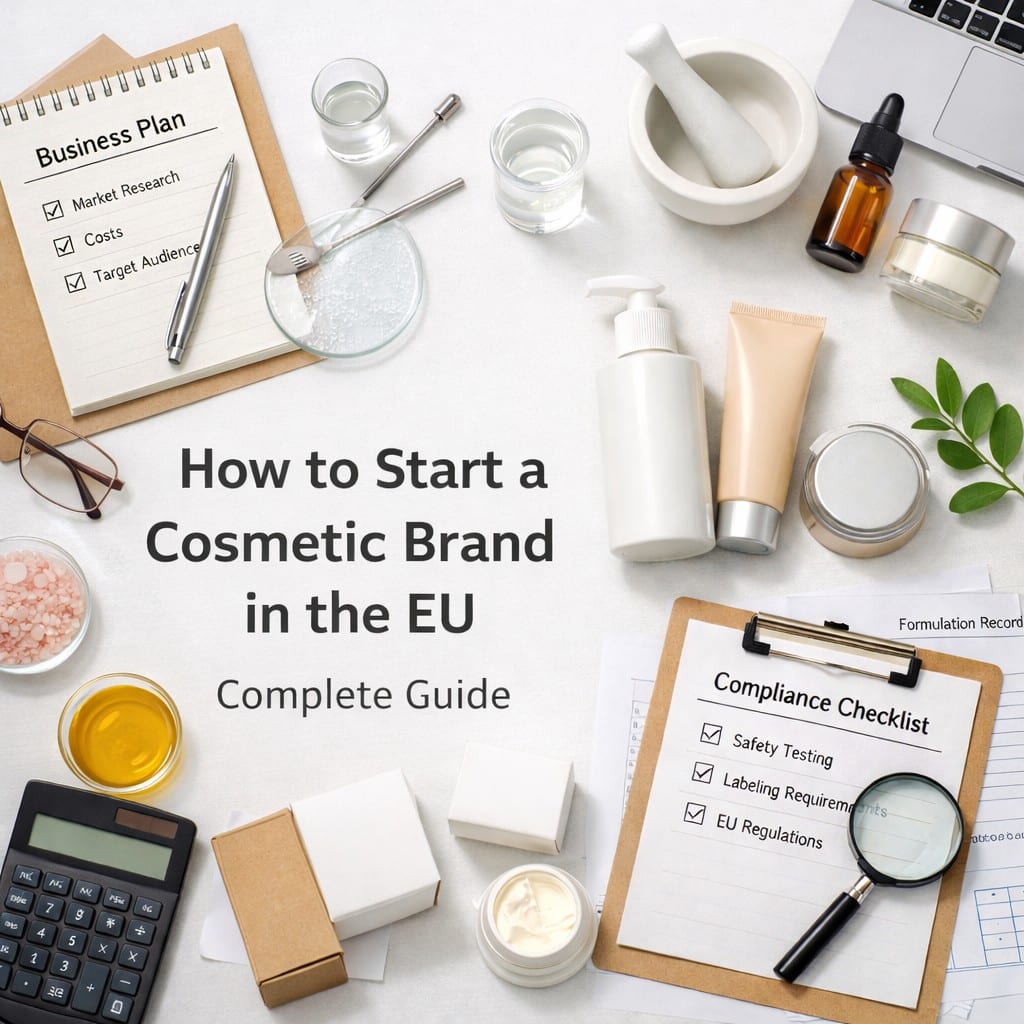
Launching a cosmetic brand in the EU is one of the most attractive business opportunities today—but it’s also one of the most misunderstood.
This guide walks you through everything you need to go from idea to legally selling cosmetics in Europe, even if you’re starting from home or with a small budget.
You’ll learn:
- What is legally considered a cosmetic product
- What requirements you must meet before selling
- How to develop, test, and manufacture your product
- How to launch and scale your brand safely
Step-by-Step: Launching a Cosmetic Brand in the EU
Launching a cosmetic brand requires more than formulation—it demands a structured approach to regulation, safety, and business setup.
This guide walks you through each stage:
- Understand Legal Basics
- Set Up Your Business Properly
- Develop Your Product
- Ensure Compliance & Documentation
- Launch & Scale Your Brand
1. Understanding Cosmetic Regulations in the EU
Before anything else, you must understand how the EU defines and regulates cosmetics.
These articles will help you avoid the most common beginner mistakes:
|
📌 What is considered a cosmetic product under EU law? A clear explanation of what qualifies as a cosmetic. as it is defined not only by what it is, but by where it is applied and what it claims to do. This determines the entire regulatory pathway, from safety assessment to labeling. Understanding the boundaries between cosmetics and other product categories is essential to avoid misclassification and ensure compliance from the very beginning. |

|
📌 Cosmetic vs medicinal vs biocide explained Cosmetics, medicinal products and biocides may appear similar, but they are governed by entirely different regulatory frameworks. Classification depends on intended use, claims, and mode of action—not just formulation. Understanding these distinctions is essential to position your product correctly and avoid costly regulatory consequences. |

|
📌 What is a cosmetic product category Learn how product classification defines product development, testing and regulation. From skincare to fragrances, classification influences everything from ingredient selection to claims and compliance requirements. Understanding how categories work helps ensure your product is positioned correctly and avoids complications later in development. |
|
📌 Do soaps fall under cosmetic regulation? Soaps are often assumed to be simple cosmetic products, but their classification in the EU depends on more than just their form. Composition and, especially, product claims can shift them into different regulatory categories. Understanding where your product sits is essential to apply the correct requirements and avoid unexpected compliance issues. |

|
📌 Can you sell natural cosmetics without testing? Why “natural” doesn’t exempt you from regulation. While animal testing is banned, every cosmetic product must still undergo a formal safety assessment and, in many cases, additional validation. Understanding what testing involves is essential to develop natural products that are both compliant and safe for consumers. |
|
📌 Minimum legal requirements to sell cosmetics The essential compliance steps before entering the market, from confirming your product’s classification to ensuring safety, documentation, and proper labeling. Understanding these core obligations early on is key to avoiding delays and building a compliant foundation for your cosmetic business. |
2. Setting Up Your Cosmetic Business
Once you understand the legal framework, the next step is building your business correctly.

|
📌 Can you sell cosmetics from home in the EU? Selling cosmetics from home in the EU is possible, but it comes with the same regulatory obligations as any established manufacturer, from safety assessments and documentation to GMP and labeling. Understanding what is required is essential to operate legally and build a credible cosmetic business. |
 |
📌 Do you need a license to sell cosmetics in Europe? Understand what approvals are (and aren’t) required to legally sell. Selling cosmetics in the EU does not require a traditional license, but it does require meeting strict pre-market obligations. From appointing a Responsible Person to preparing safety documentation, compliance replaces the idea of a “license” and forms the foundation for legally entering the market. |

|
📌 Can you start a cosmetic brand without a lab? Advantages and limitations of a lab-free model. Starting a cosmetic brand in the EU does not require owning a laboratory, but it does require managing compliance and working with the right partners. Understanding your role as the Responsible Person is key to ensuring your products meet all regulatory requirements—even without in-house production. |

|
📌 How to validate your product idea before launch Learn how to build a product that stands out and delivers real value. From understanding your target audience to testing your concept and assessing feasibility, early validation helps reduce risk and refine your strategy—ensuring you move forward with a product that meets a real market need. |

|
📌 Common beginner mistakes cosmetic brands make Many cosmetic startups face similar challenges when moving from idea to market, often underestimating the technical complexity involved. Understanding common pitfalls early helps avoid delays, reduce costs, and build a more robust and compliant brand from the start. |

|
📌 Step by step cosmetic business checklist EU The essential stages of building a compliant cosmetic business. It requires aligning product development, operations, branding, and strategy into a cohesive system. From initial concept to market launch, understanding how these elements connect is key to creating a compliant, scalable, and competitive brand. |

|
📌 Timeline from idea to selling cosmetics legally Understanding each stage required to bring a cosmetic product to market. From concept and formulation to safety assessment, documentation, and final notification. Each stage builds on the previous one, combining technical development with regulatory requirements. Understanding this process helps turn a complex pathway into a clear and manageable journey. |
3. Product Development & Manufacturing
This is where your idea becomes a real product—but also where compliance risks increase.

|
📌 Cost breakdown for starting a cosmetic brand A comprehensive overview of the real costs involved in building and scaling a cosmetic brand in the EU, covering investment across legal setup, compliance systems, manufacturing, and market entry. From regulatory responsibilities to supply chain and branding, understanding the full cost structure is essential to plan realistically and build a sustainable business. |

|
📌 Do you need insurance for cosmetic products? Learn how insurance supports compliance and protects your cosmetic business from risk. Insurance is not legally required to sell cosmetics in the EU, but it plays a key role in managing risk and protecting your business. From product liability to commercial expectations, understanding how insurance fits into your overall strategy can make a significant difference in building a stable and credible cosmetic brand. |

|
📌 Registering your cosmetic brand name Registering your cosmetic brand name transforms it from a creative idea into a protected business asset. Trademark protection helps prevent conflicts, secures your position in the market, and supports long-term growth. Understanding how registration works—and how it aligns with your business strategy—is key to building a strong and defensible brand. |

|
📌 How to name your cosmetic product legally Naming a cosmetic product goes beyond creativity—it carries regulatory implications under EU law. Product names can be interpreted as claims and must accurately reflect what the product does, without misleading consumers. Striking the right balance between branding and compliance is essential to avoid issues and build a credible, legally sound product. |

|
📌 How to choose a cosmetic manufacturer Choosing the right cosmetic manufacturer is a key decision that affects product quality, compliance, and scalability. From understanding different manufacturing models to evaluating technical capabilities, costs, and reliability, selecting the right partner is essential to building a consistent and competitive cosmetic brand. |

|
📌 Private label vs custom formulation differences Choosing between private label and custom formulation shapes how your cosmetic brand develops from the start. While private label offers speed and lower investment, custom formulation provides greater control and differentiation. Understanding how these approaches differ—and when to use each—can help you build a strategy aligned with your goals and resources. |
4. Compliance, Documentation & Responsibility
This is the core of your legal obligation.

|
📌 Do handmade cosmetics require CPSR? A closer look at handmade cosmetics and regulatory expectations, including the need for a Cosmetic Product Safety Report (CPSR). Regardless of scale, demonstrating product safety through a qualified assessment is mandatory—making CPSR a key step in turning an artisanal product into a compliant cosmetic business. |

|
📌 What documents do you need before selling cosmetics? Before a cosmetic product can be sold in the EU, it must be supported by a structured set of documents that demonstrate safety, quality, and compliance. From specifications and batch records to stability data and the Product Information File, understanding how these elements connect is essential to building a reliable and inspection-ready system. |

|
📌 How to find a responsible person in the EU Every cosmetic product sold in the EU must have a designated Responsible Person who ensures compliance with all regulatory requirements. From safety and documentation to market surveillance, this role is central to your business. Understanding how to appoint and work with the right Responsible Person is key to entering the EU market smoothly and securely. |

|
📌 What happens if you sell non compliant cosmetics Learn about the importance of compliance in protecting your brand and consumers. Selling non-compliant cosmetics can lead to more than regulatory corrections—it may result in product withdrawals, fines, and significant business disruption. From documentation gaps to labeling errors, understanding where non-compliance arises is essential to protect your brand and your access to the market. |

|
📌 Small batch cosmetics rules EU What changes (and what doesn’t) when producing in small quantities, as small batch production does not mean lighter regulation in the EU. Whether producing a few units or scaling up, the same requirements for safety, documentation, and labeling apply. Understanding how to implement these obligations efficiently at a smaller scale is key to building a compliant and scalable cosmetic business. |
5. Launching & Scaling Your Cosmetic Brand
Once compliant, you’re ready to sell—but scaling brings new challenges.

|
📌 Can you sell cosmetics on Etsy legally in the EU Discover what you need to know before listing cosmetic products on Etsy, as it comes with full regulatory responsibility. From safety assessments and documentation to labeling and notification, handmade products must meet the same legal standards as any other cosmetic. Understanding these requirements is essential to sell confidently and build a compliant business online. |

|
📌 Selling cosmetics on Amazon EU requirements Discover what changes when scaling through marketplaces. From documentation readiness to claim control and listing consistency, understanding how compliance operates within the platform is essential to avoid disruptions and scale successfully. |

|
📌 Dropshipping cosmetics legal requirements Dropshipping cosmetics may seem simple, but selling within the EU involves clear legal responsibilities—even if you never handle the product. From ensuring proper documentation and labeling to understanding your role as importer or Responsible Person, compliance remains essential. Knowing how these obligations apply is key to building a safe and sustainable business model. |

|
📌 How to scale from handmade to commercial production Scaling a cosmetic product goes far beyond increasing batch size—it requires adapting formulations, processes, and quality systems to ensure consistency and reliability at a larger scale. From equipment and supply chain to stability and cost control, understanding what truly changes during this transition is key to growing your production sustainably. |
Frequently Asked Questions
Can I start a cosmetic brand from home in the EU?
Yes—but you must still comply with all EU cosmetic regulations, including safety assessment and documentation.
Do I need a license to sell cosmetics in Europe?
No specific “cosmetic license” exists, but you must meet strict compliance requirements.
How long does it take to launch a cosmetic product?
Typically 3 to 12 months, depending on formulation, testing, and documentation.
Can I sell cosmetics without testing?
No—testing and safety assessment are essential for legal compliance.
Building a Solid Foundation
Starting a cosmetic brand in the EU is absolutely achievable—but only if you approach it correctly.
This HUB gives you the foundation.
Your next step is understanding formulation compliance, an essential part of building a solid cosmetic product where many important considerations come into play.
