
The short answer is no—but the full picture is more nuanced, and often misunderstood. In the European Union, “testing” does not necessarily mean animal testing, and understanding this distinction is essential if you want to develop and sell natural cosmetics responsibly and legally.
This article explains what the law actually requires, what kind of testing is mandatory, and how this applies specifically to natural and artisanal cosmetic brands.
The Legal Framework
This principle applies equally to:
- Large multinational brands
- Small artisanal producers
- “Natural” or “organic” cosmetics
There are no exemptions based on the size of the business or the perceived “naturalness” of the ingredients.
What Does “Testing” Actually Mean?
When people ask whether they can sell cosmetics without testing, they often associate testing exclusively with animal experimentation. However, under EU law, the required testing refers primarily to safety assessment, not animal testing.
In fact, animal testing for cosmetic products and ingredients is banned in the EU.
So what is required instead?
Every cosmetic product must undergo a Cosmetic Product Safety Assessment (CPSR) carried out by a qualified professional. This assessment is based on:
- The toxicological profile of each ingredient
- Exposure levels (how and how often the product is used)
- The finished product formulation
- Available scientific data
This process ensures that the product is safe before it reaches consumers.
The Myth of “Natural Means Safe”
A common misconception in the natural cosmetics sector is that ingredients derived from plants or minerals are inherently safe and therefore do not require testing.
This is incorrect.
Natural ingredients can present risks such as:
- Skin irritation and photosensitivity (e.g. essential oils)
- Allergic reactions (e.g. fragrances from natural extracts)
Regulation 1223/2009 does not distinguish between synthetic and natural substances when it comes to safety. All ingredients must be evaluated with the same scientific rigor.
Recommended Tests
Certain complementary tests are strongly recommended to support product safety, performance, and consumer acceptance.
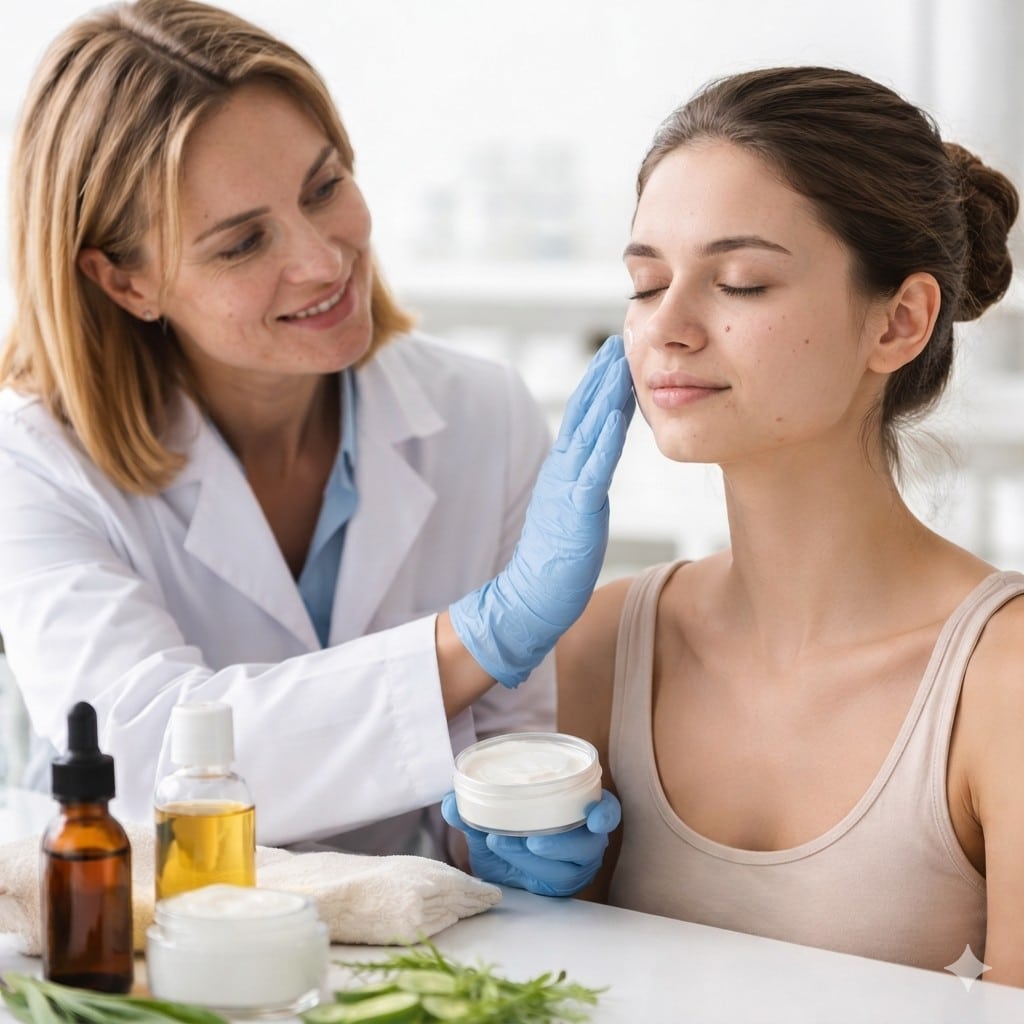
One of the most common is the patch test (or skin compatibility test). This involves applying the product to a small area of skin, typically under controlled conditions, to evaluate potential irritation or sensitisation. While it does not replace the toxicological assessment, it provides practical, human-based evidence of tolerance.
Closely related is the use test, also known as a consumer test. In this case, the product is used by a group of volunteers under normal or slightly controlled conditions over a defined period of time. This allows you to observe real-life performance, detect any adverse reactions, and support product claims such as “suitable for sensitive skin” or “dermatologically tested”.
For formulations that contain water, a microbiological challenge test (preservative efficacy test) is a must. This evaluates whether the preservation system effectively protects the product against microbial contamination during its shelf life and use.
Similarly, stability testing helps ensure that the product maintains its physical, chemical, and microbiological integrity over time under different environmental conditions (e.g. temperature, light, humidity).
While these tests are not always legally mandatory, they are considered good practice within the industry. They strengthen your Product Information File, support your safety assessment, and ultimately contribute to building a reliable and compliant cosmetic product.
Can You Avoid All Testing?
You cannot avoid safety evaluation, but you can avoid certain types of testing depending on your formulation and strategy.
For example:
- You can rely on existing scientific data for well-known ingredients
- You may not need additional laboratory tests if the formulation is straightforward and well documented
- Stability and microbiological testing may still be necessary depending on the product type (especially for water-based formulations)
In other words, while not every product requires extensive laboratory testing, no product can be legally sold without a documented safety assessment.
Testing Is Essential
You can absolutely sell natural cosmetics in the European Union without animal testing—but not without safety assessment.
Testing, in the regulatory sense, is about ensuring that your product is safe, stable, and properly documented. Far from being a bureaucratic obstacle, this process protects both consumers and your business.
If you are serious about building a cosmetic brand, understanding and embracing these requirements is not just necessary—it is a fundamental part of creating trustworthy, high-quality products.


