CERTIFIED COSMETICSLatest news

Here we bring the latest news of anything new in the cosmetic market.
bt_bb_section_bottom_section_coverage_image
Vietnam Targets Fake Cosmetics in New Enforcement Drive

The ‍cosmetics sector in vietnam is⁢ seeing rapid expansion, but counterfeit ‌products‍ and items with unclear origins are⁣ causing industry-wide alarm. Leading beauty companies have ‌voiced that the spread of fake cosmetics is damaging public trust and making it tough for local brands to‍ compete fairly. Industry⁣ experts and⁣ regulators argue⁤ that close cooperation ⁣is...

New Cosmetic Rules in Indonesia

Indonesia is implementing tougher⁤ standards for cosmetics ⁤compliance. New ‍halal documentation ​rules are set to take ‌effect alongside stricter action against unauthorized cosmetics in the​ marketplace. These two moves​ send​ a clear​ message-adherence to regulations‌ has become​ compulsory in Indonesia’s cosmetics sector. A recent ⁤draft regulation from‌ the ‍Halal​ Product Assurance Organizing Agency (BPJPH) outlines...

EU Moves Closer to Ending Animal Testing for Cosmetics

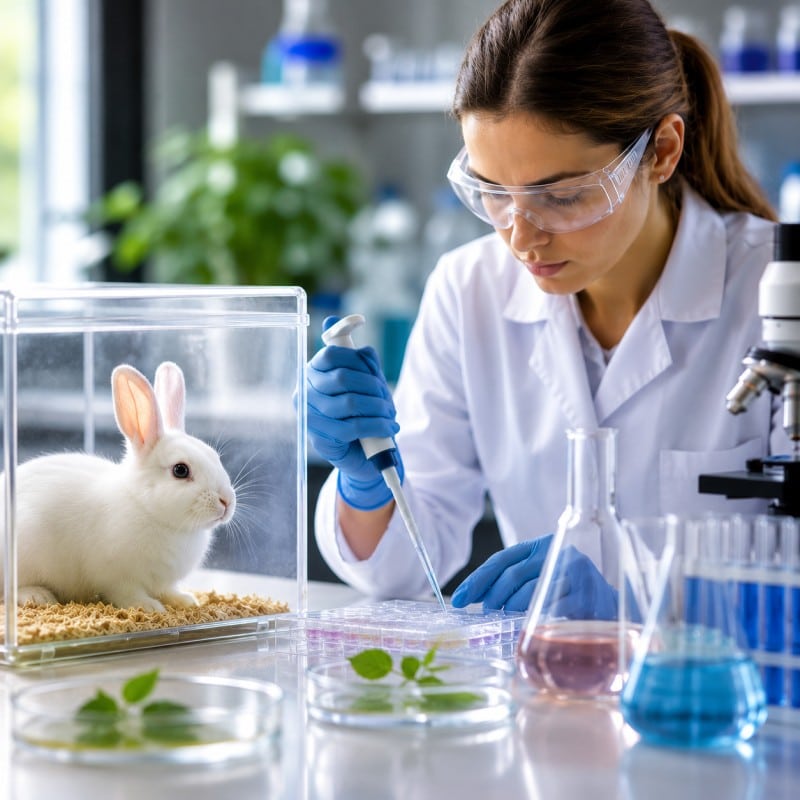
the European ‌Commission (EC) unveiled a detailed roadmap to stop ​animal testing in​ chemical safety assessments throughout the EU, covering sectors like cosmetics, industrial chemicals, pharmaceuticals, and pesticides. The aim ⁢is to switch to non-animal ‍testing options while keeping the high safety standards required‍ for both consumers‍ and the habitat.This initiative supports the EUS Chemicals...

AI Transforms How Cosmetic Products Are Developed

Researchers in Beauty & Wellbeing are leveraging artificial intelligence to analyze consumer behavior and ‌sift through years ⁤of scientific records.Product development teams rely on ​AI to extract relevant insights, gather data, and shape offerings ​tailored for today’s beauty shoppers. Modern consumers demand clarity about⁢ ingredients, formulation science, and product styles. Thay read reviews, look for...

Digital Product Passports: What They Mean for Cosmetics Right Now

Across Europe, Digital Product Passports ‌(DPPs) are ‌emerging as⁣ a vital ‍tool in supporting clarity, sustainability, and traceability for all types of goods. ⁢This movement, ⁤spurred by the Ecodesign for Sustainable ​Products Regulation (ESPR), aims to⁢ overhaul the way product data ‍is gathered, stored, and accessed. While the cosmetic industry is not the first one...

Beauty Brands Enter the New Era of Technology

The ⁤beauty industry has entered a technology-driven competition. Companies ‌lacking their own data capabilities‍ and computing resources risk losing ‍independence, with AI now deeply⁣ involved in formulation, manufacturing, and consumer experiences. Processing power is no longer a minor factor. GPUs-key to large-scale data operations-are at the forefront. Both⁢ states and private​ groups ⁤compete fiercely to...

France Bans Harmful PFAS Chemicals in All Cosmetics

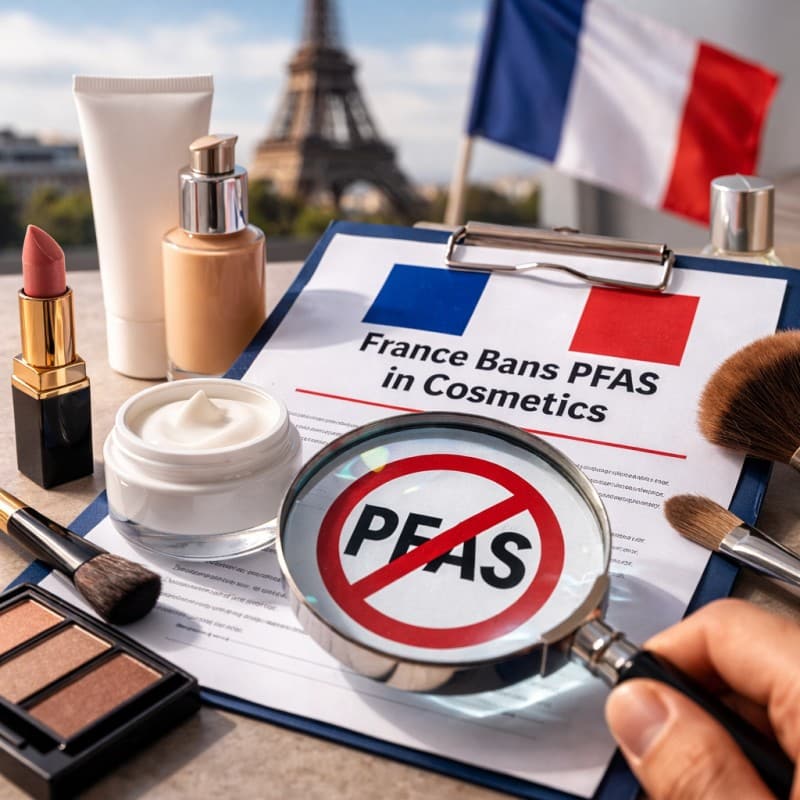
🇫🇷 France Issues New Regulation Banning PFAS in Cosmetics On 28 december ‍2025, the French government announced Decree No. 2025-1376. This measure aims to reduce the health⁣ risks ⁢connected to perfluoroalkyl adn polyfluoroalkyl substances⁢ (PFAS) by restricting their presence in consumer ⁣products. Articles L. 524-1 and L. 524-2 of the‍ Environmental Code, updated⁢ through Law...

Switzerland Bans Eight Furocoumarins in Cosmetics Starting 2026

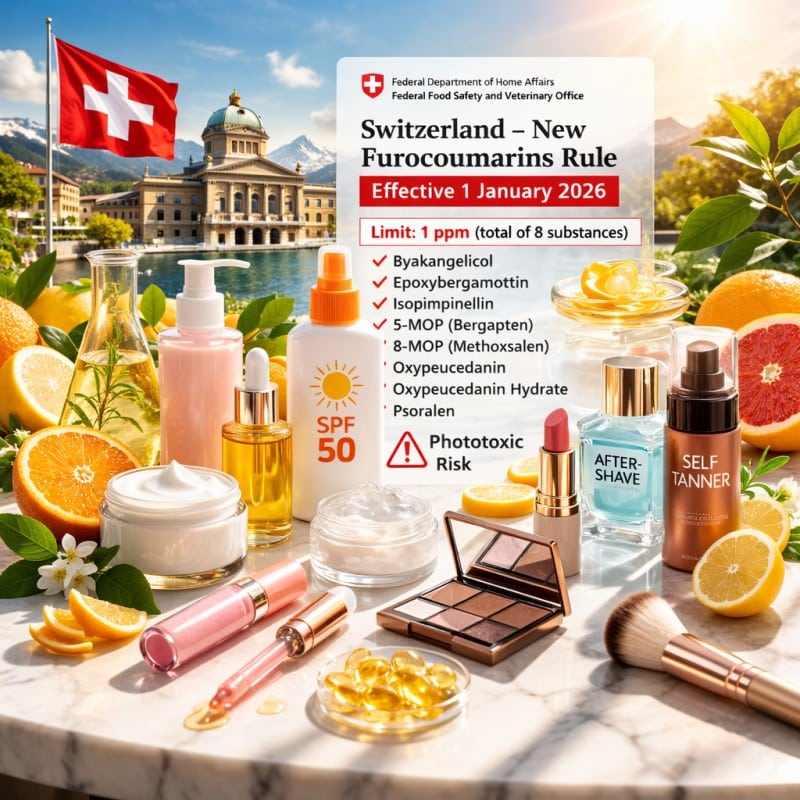
Switzerland has updated its Cosmetics​ Ordinance, introducing a specific‍ restriction on ⁢furocoumarins that takes effect on 1 January 2026. The Federal​ Department‌ of Home Affairs, through the Federal ​Food Safety ⁤and ⁢ Veterinary Office, announced the update⁢ (RU 2025 824) on 9 December 2025, redefining how selected furocoumarins ‌in leave-on cosmetic products are regulated when...

EU Flags Two Chemicals of Concern for Cosmetic Safety

The European⁢ Chemicals Agency​ (ECHA) has updated ​its Candidate List under⁣ the EU REACH Regulation by including two substances: n-hexane ⁤and bisphenol AF (BPAF). Cosmetic manufacturers⁢ using these compounds are ⁢now subject to strict new requirements. If⁢ any ⁣product contains ‍more than 0.1%⁤ of either ingredient, ‌brands must provide full ⁤disclosure to both authorities and⁣...