
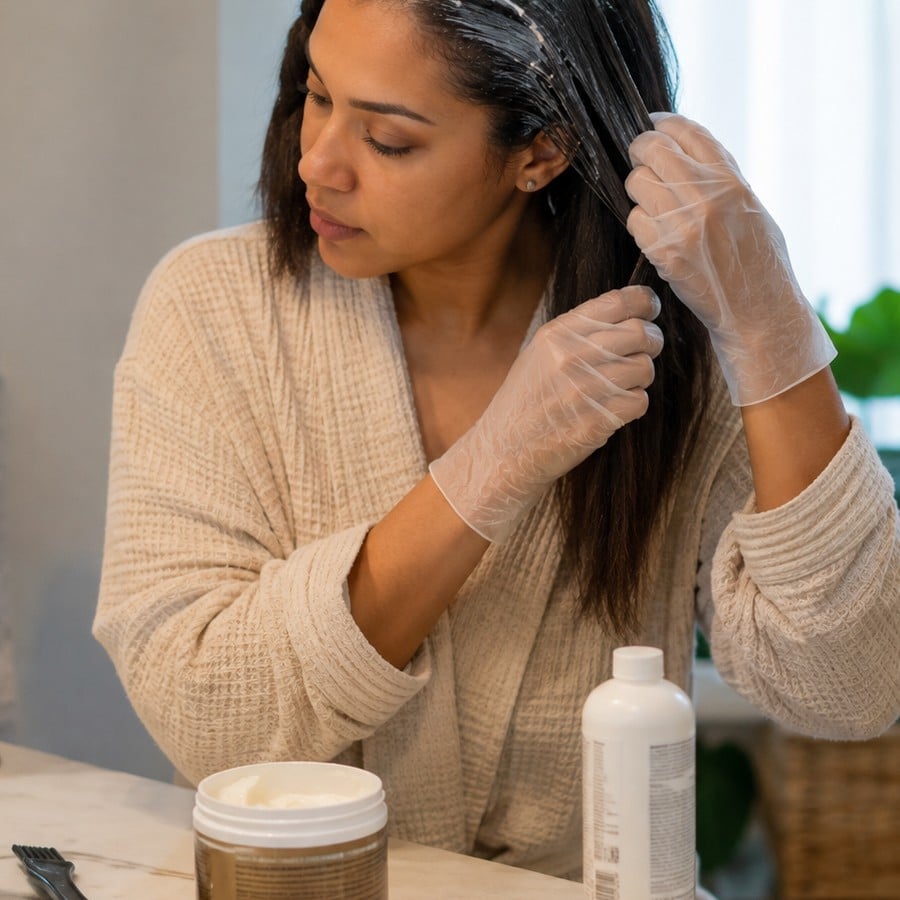

The measure, HB26-1135, Transparency of Chemicals Used in Hair Products, was signed into law by the Governor on 12 May 2026. The legislation is intended to give consumers greater visibility into chemicals used in hair products, with particular attention to populations that may have experienced disproportionate exposure to potentially harmful substances.
The new requirements will apply from 1 July 2027 and will be particularly relevant to manufacturers and brands selling hair relaxers, wigs, extensions and other hairpiece products in Colorado.
Which products are covered?
The legislation applies to two broad categories of products: hair relaxers and hairpieces.
A hair relaxer is defined as a product applied to hair to weaken its structure or curl pattern and facilitate straightening. Hairpieces cover a wider range of products, including hair extensions, wigs and decorative hair adornments.
The requirements apply where a covered product contains an intentionally added carcinogen or reproductive toxicant.
For the purposes of the law, carcinogens include substances classified by recognised US or international authorities, including certain Group 1 or Group 2A carcinogens identified by the International Agency for Research on Cancer (IARC), as well as chemicals classified as carcinogenic by the US Department of Health and Human Services or the Environmental Protection Agency.
Reproductive toxicants are substances identified as reproductive or developmental toxicants by the Center for the Evaluation of Risks to Human Reproduction under the US National Toxicology Program.
The definition of a chemical is also broad and covers both individual substances and groups of structurally related substances, as well as relevant breakdown products formed through decomposition, degradation or metabolism.
What does “intentionally added” mean?
A key point for manufacturers is that the law does not treat every trace presence of a chemical as an intentional addition.
An intentionally added chemical is one that the manufacturer deliberately introduces into the product and that remains present when the product is sold, offered for sale or distributed in Colorado.
The law establishes a concentration threshold of more than 100 ppm, or a lower health-based threshold identified by the relevant authorities, whichever is lower.
Importantly, incidental contamination or the unintended presence of a substance does not fall within this definition.
The term manufacturer is also defined broadly. It includes the company manufacturing the product or the company whose brand name appears on it. For products imported into the United States, the importer or first domestic distributor may also fall within the definition where the manufacturer or brand owner has no US presence.
Warning labels required from July 2027
Starting 1 July 2027, covered hair products containing an intentionally added carcinogen or reproductive toxicant cannot be sold, offered for sale or distributed in Colorado unless the required warning is provided.
The requirement also applies to online sales. In these cases, the physical product does not necessarily need to carry the warning at the point of online purchase, but the transaction must include a clear and conspicuous online warning statement.
For physical products, the warning must be clearly visible and printed in a font of at least 12 points.
The wording depends on the type of chemical present. Products containing only a carcinogen must state:
“This product contains a chemical known to cause cancer”.
Where the product contains only a reproductive toxicant, the required statement is:
“This product contains a chemical known to cause birth defects or other reproductive harm”.
If both types of substances are present, the combined warning must state:
“This product contains chemicals known to cause cancer and birth defects or other reproductive harm”.
Professional-use products are exempt
The legislation includes an important exemption for professional products.
The warning requirement does not apply when a covered hair product is sold or distributed to a commercial entity for professional use and is not offered for retail sale to consumers in Colorado.
Companies therefore need to consider not only the formulation and product type, but also the distribution channel. A product intended exclusively for professional use may fall outside the warning requirement, while the same product sold directly to consumers would not qualify for the exemption.
Enforcement and future changes
A manufacturer’s failure to comply with the requirements constitutes a deceptive trade practice under Colorado law.
The framework may also evolve. Beginning 1 July 2028, the Colorado Attorney General will have authority to adopt rules modifying the warning-label requirements.
This gives manufacturers a further reason to monitor implementing rules and any subsequent changes to the state’s requirements after the initial compliance date.
What manufacturers should do now
Although the new requirements do not apply until July 2027, companies selling relevant products in Colorado have several areas to review in advance.
The first step is to establish which products fall within the scope of the legislation and screen their formulations and raw materials for substances that could meet the definitions of carcinogens or reproductive toxicants.
Companies should also determine whether any such substances are intentionally added and whether their concentration exceeds the applicable threshold. This assessment should take into account the specific formulation and the relevant regulatory classifications.
Where a warning will be required, manufacturers should allow sufficient time to update packaging and, where applicable, online product listings. The required wording and minimum 12-point font size should be incorporated into the compliance review rather than treated as a last-minute labelling adjustment.
Finally, companies selling hair products across the United States should consider Colorado’s requirements alongside those already operating in other states. California’s Proposition 65 and measures adopted in states including Minnesota and Washington create a broader and increasingly complex landscape for chemical warnings and restrictions.
For manufacturers with nationwide distribution, coordinating these requirements at the formulation, packaging and e-commerce levels may help avoid separate compliance processes for individual markets while ensuring that Colorado’s new rules are met by the 1 July 2027 deadline.
