
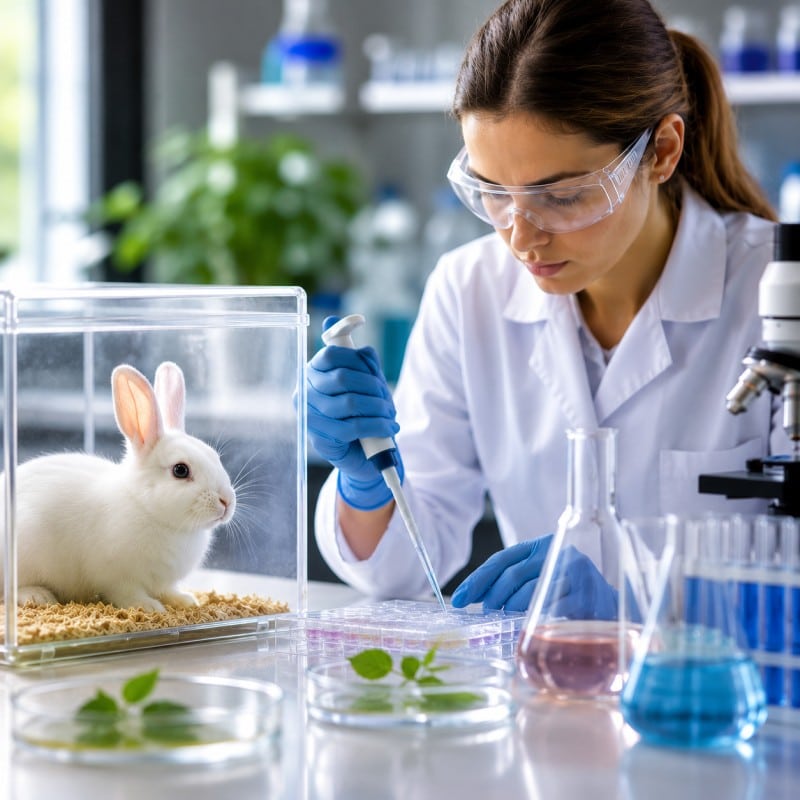
the European Commission (EC) unveiled a detailed roadmap to stop animal testing in chemical safety assessments throughout the EU, covering sectors like cosmetics, industrial chemicals, pharmaceuticals, and pesticides. The aim is to switch to non-animal testing options while keeping the high safety standards required for both consumers and the habitat.This initiative supports the EUS Chemicals Action Plan and aligns with REACH (Registration, Evaluation, Authorization and Restriction of Chemicals), introducing 22 targeted actions that focus on eliminating animal experiments across 15 distinct regulatory fields. 
“After years of animal testing, we are making real progress toward its end. Advancing chemical safety assessments with innovative alternatives is a win for animal welfare, industrial growth, and environmental protection,” explained Jessika Roswall, EU Commissioner for Environment, Water Resilience, and Competitive Circular Economy.
According to the EC, new testing technologies that do not use animals already deliver faster, more affordable chemical safety assessments, supporting ongoing innovation. This approach matches the personal care industry’s promise to offer cruelty-free,safe products.
Roswall added, “European agencies can now use this momentum to apply the roadmap’s measures, pushing toward a scientific system that does not depend on animal models.”
Alongside this declaration, the European Chemicals Agency (ECHA) introduced its new Alternatives to Animal Testing platform. This resource is designed to connect and inform stakeholders, encouraging open sharing of scientific advancements and regulatory developments.
Key Strategies for Animal-Free Safety Testing
The EC’s plan stands on three main strategies for removing animal testing from European safety assessments. The first offers over 30 specific steps allowing regulators and businesses to replace,limit,or better control animal use in both human health and environmental tests.
A second strategy puts strong support behind scientific research and breakthroughs in Europe. Institutions and companies developing New Approach Methodologies (NAMs) will receive special attention, funding, and cooperation opportunities.
The personal care sector, responding to consumer demand for ethical testing, has improved its development of non-animal test methods over the past few years. Sectors such as beauty have now begun leading the way in applying and promoting alternatives to animal testing, setting a valuable example for others.
regulatory bodies pointed out last year that choice testing practices within cosmetics could be scaled up in other fields. The EC’s roadmap backs the creation of more non-animal testing solutions and includes steps to expand the use of AI and large datasets, both of which can sharpen the accuracy and efficiency of safety reviews. The cosmetics industry already has experience using these advanced digital tools.
Collaboration marks the third pillar of the EC’s plan. The Commission partners with EU governments, agencies, global authorities, and companies to accelerate the acceptance of new testing methods that do not require animals.
Stéphane Séjourné,executive vice president for Prosperity and industrial Strategy at the EC,stated,”Publishing this roadmap is a crucial move toward updating how Europe evaluates chemicals and reinforcing our lead in scientific innovation.”
“Phasing out animal-based testing strengthens ethical standards and improves European industry competitiveness thanks to advanced, alternative technologies,” continued Séjourné.
Rollout of the roadmap has begun. A major progress review conference is scheduled for 2029, focusing on achievements and identifying future actions.
New ECHA Platform Fosters Cooperation
The newly launched ECHA Alternatives to Animal Testing platform brings together representatives from regulatory bodies, industry, academia, and community organizations. By encouraging open dialog, troubleshooting scientific obstacles, and promoting the acceptance of novel testing methods, the platform aims to speed up the approval and adoption of non-animal tests. The first collaborative meeting will take place in helsinki, Iceland, before the end of the month.
ECHA reaffirmed its support for the roadmap and emphasized its ongoing shift from older animal-based protocols to innovative non-animal tests.
The agency will continue to expand the development of NAMs, in addition to the tools, databases, and scientific approaches that support the move away from animal testing across europe.
