
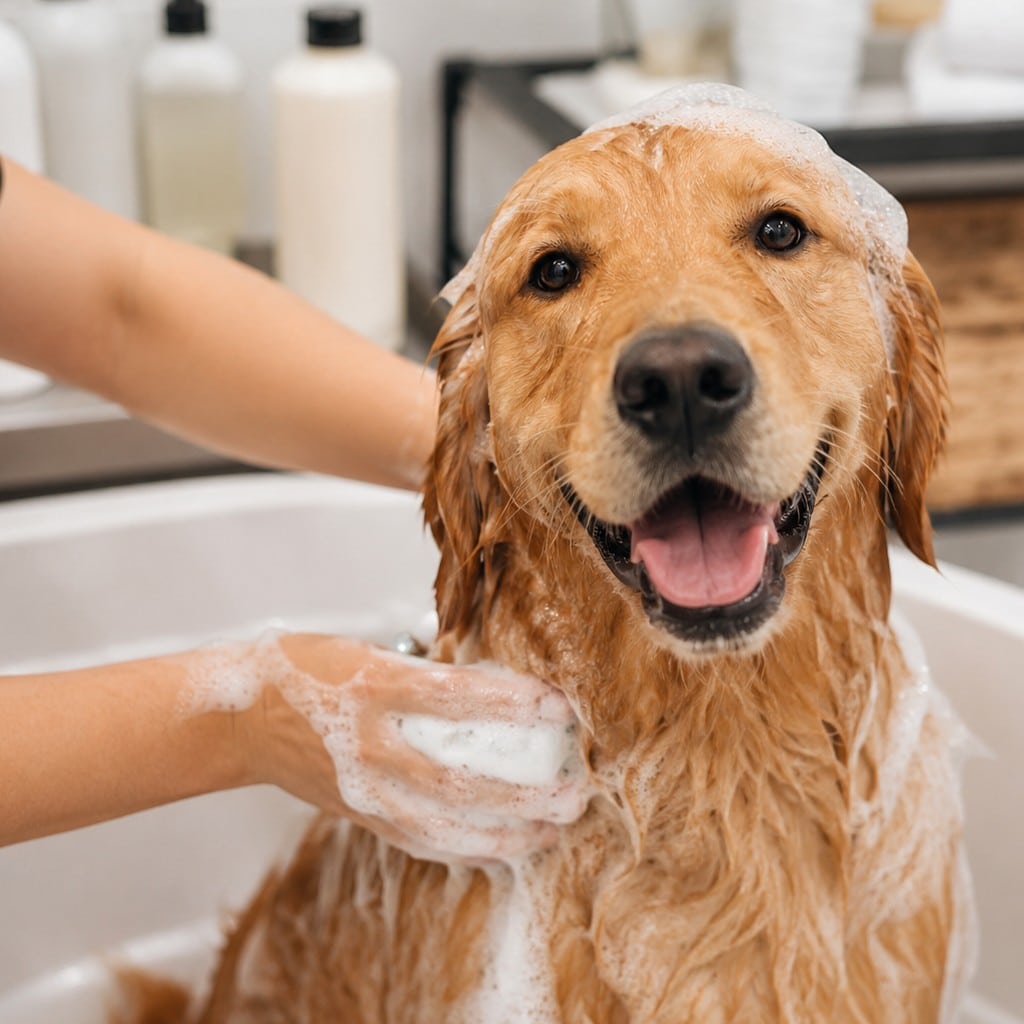
Products like shampoos, conditioners, cleansing wipes, delicate perfumes, and coat or ear cleaning products are now established parts of the market, and turnover keeps increasing. That growth brings up an important regulatory question. Which legislation actually applies to pet cosmetics? Can they be treated the same way as cosmetics for humans under Regulation (EC) No. 1223/2009, or do different rules apply?
The Regulatory Framework: Does Regulation 1223/2009 Apply to Animals?
Regulation (EC) No. 1223/2009 is the main legislation for cosmetic products in the European Union. The definition of a cosmetic product is very direct:
“Cosmetic product means any substance or mixture intended to be applied to the external surfaces of the human body (epidermis, hair, nails, lips, external genital organs) or to the teeth and mucous membranes of the mouth, for the sole or main purpose of cleaning, perfuming, changing their appearance, protecting them, keeping them in good condition or correcting body odors.”
One thing stands out straight away from this definition. Animals are not included in the scope of Regulation 1223/2009. So products intended for pets are not legally classified as “cosmetic” products under European legislation.
There is no specific EU regulatory framework for pet cosmetics at the moment. These products are usually treated as freely marketed products, often considered animal hygiene products or, sometimes, biocides if they contain disinfectant substances.
Rules can differ from country to country, which creates fragmentation and a regulatory gap. Different interpretations are possible. Some Member States do have more detailed national rules, though there is still no harmonised directive or regulation covering pet cosmetics in a uniform way.
That makes voluntary standards and good manufacturing practices pretty important, along with compliance with broader product safety rules like Directive 2001/95/EC on general product safety, now incorporated into Regulation 988/2023.
Pet Cosmetics Market Growth
The pet cosmetics sector is going through rapid expansion, despite the ongoing regulatory uncertainty.
Industry data shows that the European pet care products market is growing at a strong annual rate. Two trends are driving this growth:
- Humanisation of pets. Pets are increasingly treated as family members, with needs seen as similar to those of humans.
- Increased purchasing power and stronger awareness of animal welfare. Consumers are more willing to spend money on premium, natural, and safe products.
The result is a broader and broader product range, from hypoallergenic shampoos and “pet-friendly” fragrances to complete product lines made for professional grooming. Still, this fast market growth creates risks too. Not every product is formulated properly, and the lack of harmonised regulation can encourage unfair practices.
The Risk of Using Human Cosmetics on Animals
One major issue is that some owners use cosmetics designed for humans on their animals. That can be dangerous for a few reasons.
- Physiological differences. Animal skin has a different pH from human skin. Dog skin, for example, has a pH around 6.5–7.5. Human skin is usually more acidic, around 5.5. A human shampoo used on a dog can disrupt the skin barrier and lead to irritation.
- Increased sensitivity to certain substances. Ingredients commonly found in human cosmetics, including some fragrances, preservatives, and essential oils, may be irritating or toxic for animals.
- Risk of ingestion. Animals often lick themselves after products are applied, so there is a higher chance of accidentally ingesting unsafe substances.
- Respiratory problems. Certain aerosols or fragrances may trigger acute respiratory reactions, especially in cats.
Pet owners need to understand that human cosmetics are not safe for animals. Only products developed and tested specifically for pets should be used.
Formulation Requirements of Pet Cosmetics
Responsible manufacturers follow strict criteria when developing pet cosmetics, even without harmonised legislation. These standards are usually based on safety, tolerability, and efficacy.
Main requirements include:
- Absence or careful selection of fragrances. Fragrances may present risks for animals. If they are included, they should use non-toxic substances at safe concentrations.
- Exclusion of irritating or toxic ingredients. Some essential oils, including tea tree, eucalyptus, and mint, can be dangerous for dogs and especially for cats.
- Delicate formulations that respect animal pH. Surfactants should cleanse effectively without damaging the skin barrier.
- No unnecessary dyes or additives. Product appearance matters less than safety.
- Targeted toxicological evaluation. Ingredients should be assessed not only for topical application, but for ingestion risks too.
Some manufacturers are moving toward natural and organic ingredients and presenting them as added value for safety and sustainability. Natural ingredients still need careful assessment though. Not every natural substance is automatically safe for animals.
The Role of the Veterinarian in the Development of Pet Cosmetics
Veterinarians play a central role in helping make pet cosmetics safe.
Their medical and toxicological knowledge helps them:
- Evaluate whether ingredients are suitable for the target species.
- Identify possible sensitisation or toxicity risks.
- Advise on formulations that respect animal physiology.
- Help define instructions for use and warning labels.
Veterinarians are an important point of contact for pet owners too. They help raise awareness about proper product use and the risks linked to using human cosmetics on animals.
Labelling and Transparency Towards the Consumer
Labelling is another important aspect of pet cosmetics. There is no legal obligation exactly like the one under Regulation 1223/2009, though manufacturers should still provide clear and complete information for transparency and consumer understanding.
This includes:
- Complete ingredient lists, ideally following INCI nomenclature for clarity and consistency.
- Specific warnings, such as “for external use only” or “keep away from the eyes and mouth of the animal”.
- Detailed instructions for use.
- Manufacturer information and batch traceability.
Clear labelling protects consumers and helps create trust in the brand. It can separate serious manufacturers from less reputable ones too.
Pet Cosmetics and Consumer Safety
The pet cosmetics market is growing quickly and remains a dynamic sector, driven by increased attention to companion animal welfare. Still, the lack of harmonised legislation creates important challenges, especially around safety and consumer protection.
Using human cosmetics on animals improperly can create serious risks. Only dedicated formulations, developed with veterinary support and rigorous scientific criteria, can properly protect pet safety.
Clearer European regulation is still being awaited. Right now, responsibility mainly falls on manufacturers, who are expected to adopt voluntary standards covering quality, transparency, and safety.
For consumers, the recommendation is simple. Use only products specifically formulated for pets and avoid shortcuts that may put the health of four-legged companions at risk.
