
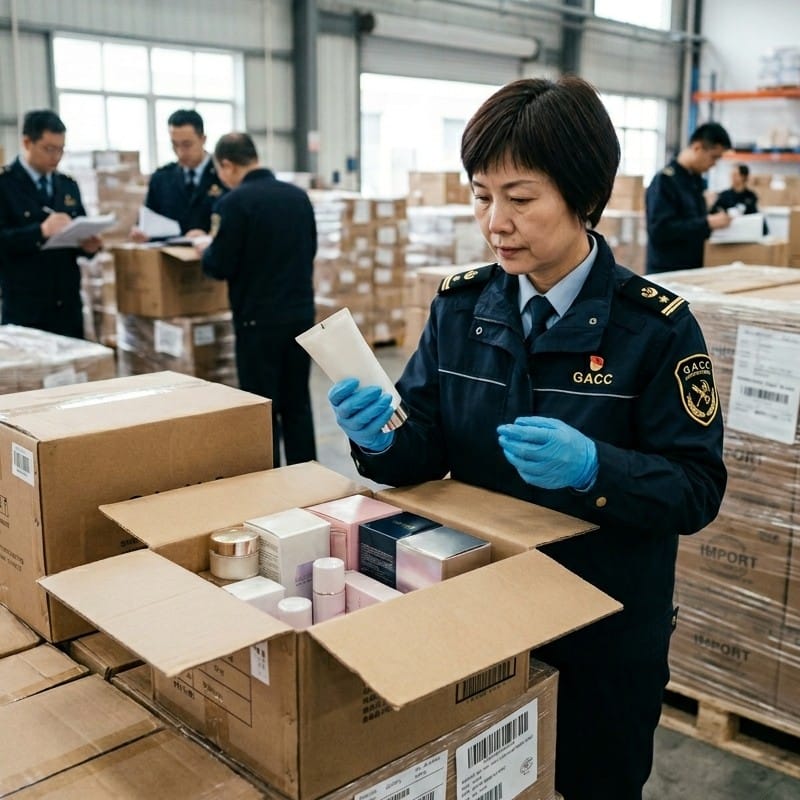
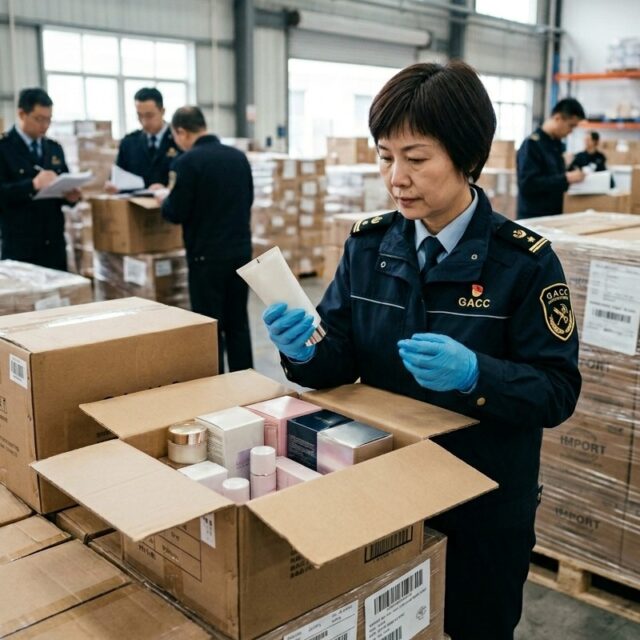
New inspection framework for cosmetics
Customs authorities will inspect cosmetics according to the principle of risk management. The regulation applies to products listed in the Catalog of Commodities Subject to Inspection and Quarantine by Customs and to cosmetics covered by relevant international treaties, laws, and regulations.
The inspection process for import and export cosmetics must follow the conformity assessment procedures established under the Law of the People’s Republic of China on Import and Export Commodity Inspection.
Requirements affecting imported cosmetics
Before entering China, imported cosmetics must complete either special cosmetic registration or ordinary cosmetic filing, depending on the product category. Customs authorities will verify compliance through automatic electronic data comparison systems.
Imported cosmetics must comply with China’s mandatory national technical specifications. If a product fails inspection on items related to safety, health, or environmental protection, Customs may order the products to be returned or destroyed.
Non-compliance involving other inspection items may allow technical processing under Customs supervision. The products may only be sold or used after passing re-inspection.
The Measures place recordkeeping obligations on importers too. Companies importing cosmetics must accurately maintain product information records, and those records must be retained for at least one year after the product shelf life expires.
Rules for exported cosmetics
Exported cosmetics must comply with the standards or contractual requirements of the importing country or region. Manufacturers involved in export activities are required to establish and maintain an effective quality management system.
The Measures contain a separate provision for cosmetics processed from supplied materials and then fully re-exported. If documentary evidence proves compliance with the standards or regulations of the destination country or region, the imported materials may be exempt from inspection against Chinese standards.
Supervision, monitoring, and enforcement
Customs authorities may conduct spot-check inspections on import and export cosmetics that are not subject to mandatory Customs inspection.
The Measures state too that Customs will carry out safety risk monitoring activities for import and export cosmetics. Following risk assessments, authorities may increase inspection items, issue risk warnings, or suspend imports.
China Customs will continue implementing credit management and classified management measures for operators involved in import and export cosmetics.
Additional provisions and product definitions
The Measures clarify that cross-border e-commerce retail import cosmetics and cosmetics imported as exhibits will continue to follow relevant regulations.
Ordinary soap products are excluded from the scope of the Measures, except for soap claiming special cosmetic efficacy. Toothpaste products and cosmetic semi-finished products will be managed by reference to these rules.
At the import stage, cosmetic semi-finished products are exempt from registration or filing verification and from label verification requirements.
