CERTIFIED COSMETICSLatest news

Here we bring the latest news of anything new in the cosmetic market.
bt_bb_section_bottom_section_coverage_image
Cosmetic Regulations in Switzerland compared to the EU

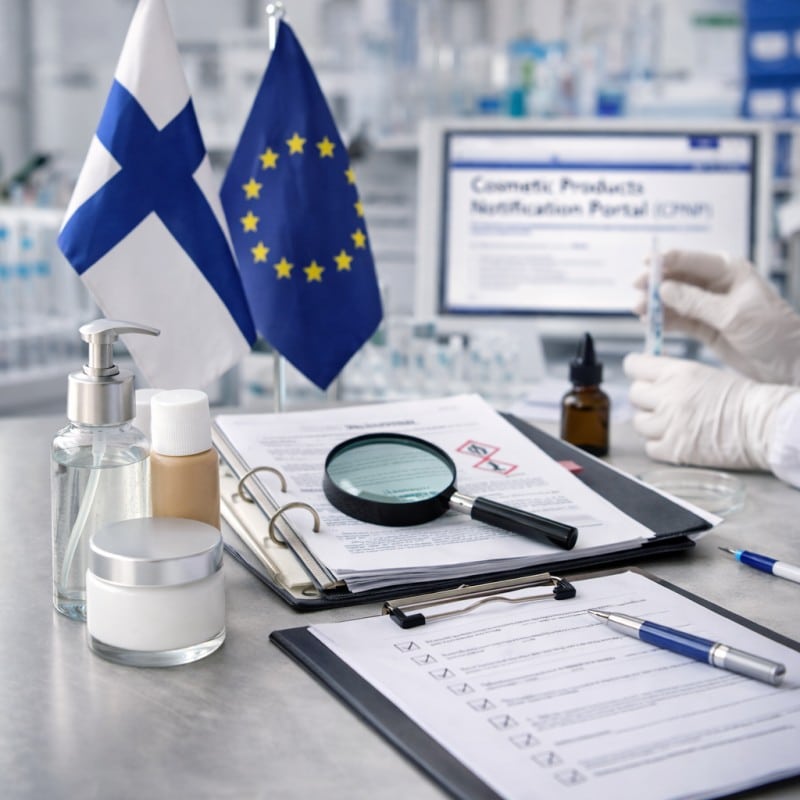
Switzerland does not utilize the European Union’s Cosmetic Products Notification Portal (CPNP) for cosmetic product registration. As a non-EU and non-EEA member, Switzerland operates under its own regulatory framework for cosmetics, managed by the Federal Food Safety and Veterinary Office (FSVO). Key Points About Cosmetic Regulations in Switzerland No CPNP Requirement: Cosmetic products intended for...

What does the EU General Product Safety Regulation (GPSR) entail, and how is it relevant to cosmetic products?

In an ever-evolving marketplace where consumer safety is paramount, the European Union’s regulatory landscape continues to adapt to new challenges. One significant development is the EU General Product Safety Regulation (GPSR)—a sweeping update designed to reinforce product safety standards across member states. While traditionally, cosmetics have been governed by bespoke legislation such as Regulation (EC)...

Here is an overview of which documentation is needed when doing a safety assessement: Ingredient Type/ Group TDS/SPEC SDS COA Composition Breakdown Allergen IFRA Other (If any) Active Ingredients (Single Component) (Ex: Aqua) ✓ ✓ ✓ Marketing sheets supporting product claims, if any , Stataments regarding animal testing, CMR etc. Active Ingredients (in Mixtures) (Ex:...

Vegan Cosmetics

In cosmetic products such as makeup, hair and skin care, personal care, perfume, it has become very important for consumers in recent years that the products are not tested on animals and do not contain animal derived ingredients. With the awareness that has emerged on this issue worldwide, the vegan symbol in cosmetic products on...

What Does Cruelty-Free Mean?

Cruelty Free means that no harm is done to animals in any stage of the development of the cosmetic product or its components. It does not and should not claim that the cosmetic product or its ingredients have not been tested on animals. Animal testing has already been banned by the European Union regulations on...

Commonly Used Cosmetic Claims

Claims are the information, statements, or visuals used on the label, packaging, and/or promotions of cosmetic products regarding their characteristics, efficacy, and/or safety. According to the Cosmetics Regulation No. 1223/2009, cosmetic products defined as; “Any substance or mixture intended to be placed in contact with the external parts of the human body (epidermis, hair system,...

Resources for Ingredient Monitoring

Monitoring cosmetic ingredients is essential for ensuring product safety, regulatory compliance, and consumer trust. Several resources and systems have been developed to assist manufacturers, regulators, and consumers in assessing and understanding cosmetic ingredients. This article explores key tools and databases—Cosing, Cosmetic Ingredient Review (CIR), COSMILE Europe, and INCI Decoder—that provide vital information on ingredient safety,...

Key elements to Evaluate Safety of the Cosmetics

Achieving the safety assessment of a cosmetic product demands an integrated strategy throughout the product’s lifecycle, from the selection of raw materials to post-marketing assessments. Several critical factors must be carefully considered, including: Ingredient Safety: It is essential to choose cosmetic ingredients that are confirmed to be safe at their specified concentrations in the final...

Natural & Organic Certification for Cosmetics

The European Commission has not established regulations regarding claims for natural and organic cosmetic products. The assessment of claims is subject to the interpretation of the competent national authorities, and there are also various specific standard labeling bodies (e.g. Natrue and Cosmos). The relevant bodies determine the requirements for these claims without any legal obligation....