
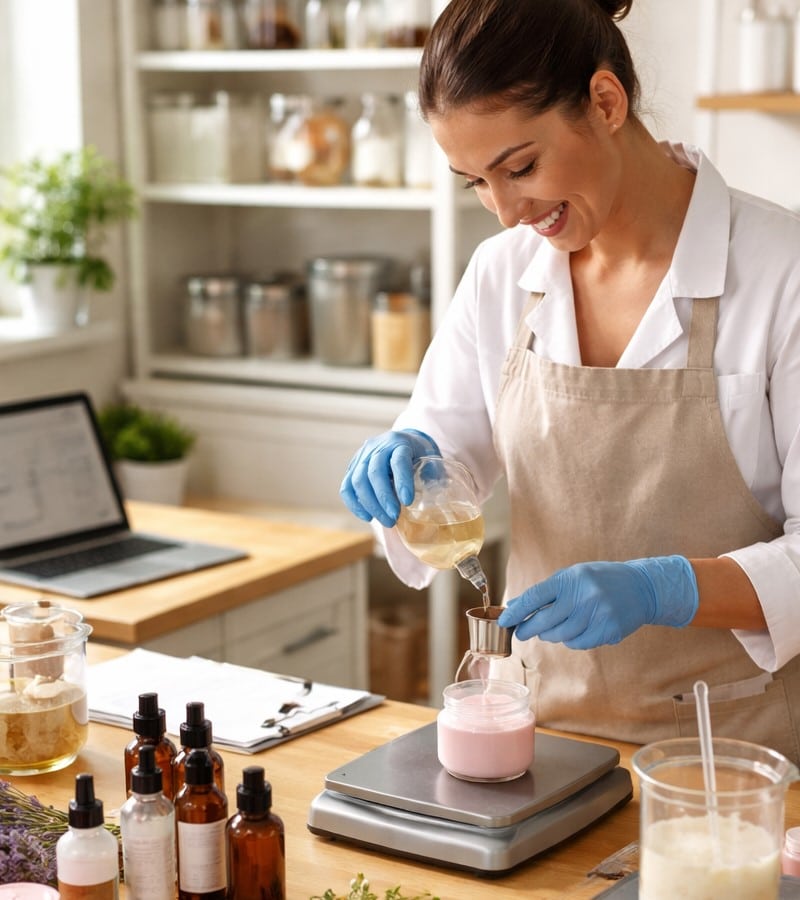
The idea of creating and selling cosmetics from home has become increasingly popular across Europe. Small-scale entrepreneurs, artisans, and independent brands are entering the market with innovative products and personal approaches. But is it legally possible to sell cosmetics from home in the European Union?
The short answer is yes — but only if you fully comply with EU cosmetic regulations, particularly Regulation (EC) No 1223/2009. This regulation sets strict safety, labeling, and manufacturing requirements that apply regardless of the size of your business or where the product is made.

Understanding Regulation (EC) No 1223/2009
Regulation 1223/2009 is the cornerstone of cosmetic legislation in the EU. It ensures that all cosmetic products placed on the market are safe for human health when used under normal or reasonably foreseeable conditions.
Importantly, the regulation does not distinguish between large manufacturers and individuals working from home. If you sell a cosmetic product, you are legally considered a “Responsible Person” and must meet the same obligations as any established company.
Key Requirements for Selling Cosmetics from Home
Product Safety Assessment
Before placing any cosmetic product on the market, it must undergo a safety assessment carried out by a qualified professional (typically a toxicologist or similarly qualified expert). This assessment results in a Cosmetic Product Safety Report (CPSR), which is mandatory.
Without a valid CPSR, the product cannot legally be sold.
Good Manufacturing Practices (GMP)
Even if production takes place at home, it must follow Good Manufacturing Practices (GMP), as outlined in ISO 22716. This means your workspace must be clean, organized, and controlled to prevent contamination and ensure product consistency.
A domestic kitchen or workspace can be used, but it must be adapted to meet hygiene and traceability standards. In practice, this often requires clear separation between personal and production activities.
Product Information File (PIF)
Each cosmetic product must have a Product Information File (PIF), which must be readily accessible to authorities. The PIF includes:
- Product description
- Safety report (CPSR)
- Manufacturing method and GMP compliance
- Proof of claimed effects (if applicable)
- Data on animal testing
This documentation must be kept for at least 10 years after the product is last placed on the market.
Notification via the CPNP
Before selling your product, you must notify it through the Cosmetic Products Notification Portal (CPNP). This is an EU-wide system that allows authorities and poison centers to access product information in case of safety concerns.
Notification is mandatory and must be completed before the product reaches consumers.
Labeling Requirements
Cosmetic labeling in the EU is strictly regulated and must comply with a set of clearly defined requirements. Each product label must include the following information:
- Name and address of the Responsible Person
- Country of origin (if imported)
- Nominal content
- Date of minimum durability or PAO (Period After Opening)
- Precautions for use
- Batch number
- Product function
- Full ingredients list (INCI format)
These requirements apply equally to all cosmetic products, meaning that even handmade or small-batch items must fully comply.
Claims and Marketing
All claims made about a cosmetic product must be truthful, evidence-based, and compliant with EU guidelines on cosmetic claims. Terms like “natural,” “organic,” or “hypoallergenic” must be used carefully and supported by appropriate data.
Misleading claims can lead to regulatory action.
Can Your Home Be a Legal Production Site?
Yes, but with conditions. The regulation does not prohibit home-based manufacturing, but your setup must comply with GMP standards. In addition, local or national authorities may impose additional requirements related to business registration, zoning, or health inspections.
This means that beyond EU law, you must also check your country’s specific administrative and legal requirements.
Can you sell cosmetics from Home in the EU?
Selling cosmetics from home in the EU is entirely possible, but it requires a structured and professional approach grounded in regulatory compliance. Beyond fulfilling administrative obligations such as safety assessments, notification, and labeling, particular attention must be paid to Good Manufacturing Practices (GMP). Even in a home-based setting, production conditions must ensure consistent quality, hygiene, traceability, and control of processes to prevent contamination and guarantee product safety.
Compliance with Regulation (EC) No 1223/2009 is not optional or dependent on the size of the business. Any individual placing a cosmetic product on the EU market assumes the responsibilities of a manufacturer and must meet the same standards as established companies.
While these requirements may seem demanding at first, they form the foundation of consumer protection and trust. For home-based cosmetic entrepreneurs, integrating regulatory knowledge—especially GMP principles—into everyday practice is essential not only for legal compliance, but also for building a credible and sustainable brand within the European market.


