
- Technical Guideline for Research on Hair Perming Cosmetics (Trial)
- Technical Guideline for Research on Quality Control Requirements for Hair Perming Cosmetics (Trial)
Together, these documents provide a clearer regulatory framework for the development, testing, registration, and quality control of hair perming products in China. They also reflect the growing technical detail that companies are expected to provide when demonstrating product safety, efficacy, formulation rationale, and quality control.
What are Hair Perming Cosmetics
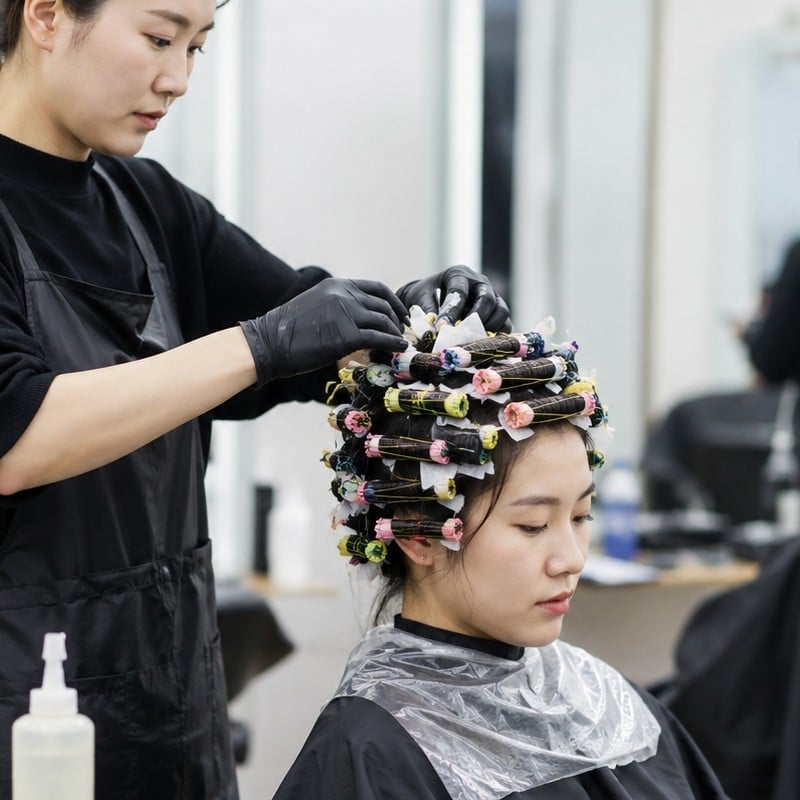
The guidelines define hair perming cosmetics as products intended to change the curl pattern of hair — either curling or straightening — while maintaining a relatively stable effect over time. Products whose effects disappear after washing are excluded from this category.
This distinction is important because it determines whether a product falls within the regulatory category of hair perming cosmetics subject to registration requirements in China.
The classification rules are also explicit: products must include “hair perming” as an efficacy claim, the application site must be limited to hair, and products cannot target infants or children.
Stricter Naming Rules
China continues to strengthen controls on cosmetic naming and marketing language, and the new guidelines reinforce this direction.
Product names should generally include a trademark name, a generic name, and an attribute name. The guidance discourages the use of promotional or ambiguous expressions.
The authorities also reiterate that Chinese product names should not rely on letters, symbols, or numbers except where necessary, such as registered trademarks or series codes.
For imported products, consistency between the original foreign-language name and the Chinese name is particularly important. If there is potential ambiguity, companies are expected to provide explanatory notes directly on the packaging.
This reflects China’s increasing focus on avoiding misleading claims and ensuring that product positioning remains scientifically supportable.
Stronger Focus on Ingredient Safety
One of the clearest messages in the new guidance is that regulators expect deeper technical justification for ingredient selection and formulation design.
The guidelines emphasize that ingredient use levels, intended functions, and physicochemical properties must all align with the product’s dosage form and technical purpose.
Special attention is given to thiol-based reducing agents used in perming systems, including:
- thioglycolic acid and derivatives
- cysteamine hydrochloride
- mercaptopropionic acid
These ingredients are central to the perming mechanism because they break and reform disulfide bonds in hair keratin.
The guidelines reaffirm China’s concentration limits for thioglycolic acid and related compounds:
- up to 8% for general-use products
- up to 11% for professional-use products
both calculated as thioglycolic acid.
The documents also stress compliance obligations for new cosmetic ingredients still under China’s monitoring period. Companies must obtain authorization from the ingredient registrant and ensure use conditions remain within the approved scope.
Manufacturing Processes Must Be Documented
The guidance places notable emphasis on manufacturing process transparency and reproducibility.
Manufacturers are expected to document key production steps clearly, including critical process parameters and characteristic manufacturing stages such as emulsification for cream or lotion systems.
This reflects broader regulatory expectations for more comprehensive quality management and clearer technical substantiation during product development and registration.
For imported products specifically formulated for the Chinese market, the guidelines additionally encourage formulation studies tailored to Chinese consumers.
Quality Control Requirements
The second guideline focuses heavily on quality control expectations and introduces detailed technical considerations that companies will need to integrate into product standards and testing strategies.
The authorities require scientifically justified physicochemical and microbiological specifications, including controls for:
- heavy metals
- pH
- efficacy ingredients
- potential impurities such as dioxane or methanol where relevant
The pH requirements are especially detailed. For example:
- products containing thioglycolic acid and its salts must remain within pH 7.0–9.5
- products containing thioglycolic acid esters must remain within pH 6.0–9.5
- neutralizing agents must maintain a pH above 2.0 to avoid strong-acid safety concerns
The guidance also highlights analytical method selection. Although titration methods remain officially accepted for thioglycolic acid determination, the NIFDC warns that interference from compounds such as mercaptopropionic acid or cysteine may compromise accuracy. In these cases, HPLC or ion chromatography should be used instead.
This level of technical specificity indicates increasing regulatory scrutiny of laboratory methodologies and data reliability.
Labeling and Claims
The new guidance reinforces China’s long-standing position against exaggerated cosmetic claims.
Hair perming cosmetic labels must include all mandatory information required under Chinese cosmetics regulations, including registration numbers, ingredient lists, manufacturer details, directions for use, and safety warnings.
More importantly, efficacy claims must remain scientifically supportable and proportionate. The use of medical terminology or implied therapeutic effects is prohibited.
For imported products using Chinese over-labeling, regulators also expect consistency between the Chinese label and the original packaging. If inconsistencies exist, companies may need China-specific packaging.
Safety Assessment Expectations Continue to Expand
The guidelines confirm that safety assessment is now a central part of cosmetic compliance in China.
In addition to conventional ingredient risk assessment, companies are expected to conduct three important supporting studies:
- stability testing
- preservative challenge testing
- packaging compatibility testing
The NIFDC had already issued dedicated technical guides for these studies in 2024, and the new perming guidelines formally integrate those expectations into the registration framework.
This reflects China’s ongoing move toward more evidence-based safety assessment requirements supported by technical documentation and testing data.
China’s Evolving Cosmetics Requirements
The new hair perming guidelines are more than technical documents for a single product category. They also illustrate how China’s cosmetics regulatory framework is becoming increasingly detailed in areas such as technical substantiation, quality control, safety assessment, and efficacy support.
For cosmetic manufacturers and international brands, compliance in China increasingly requires coordination between R&D, regulatory affairs, quality assurance, safety assessment, and labeling teams.
As China continues refining its cosmetics framework, category-specific technical guidelines like these are likely to become more common across the industry.
