
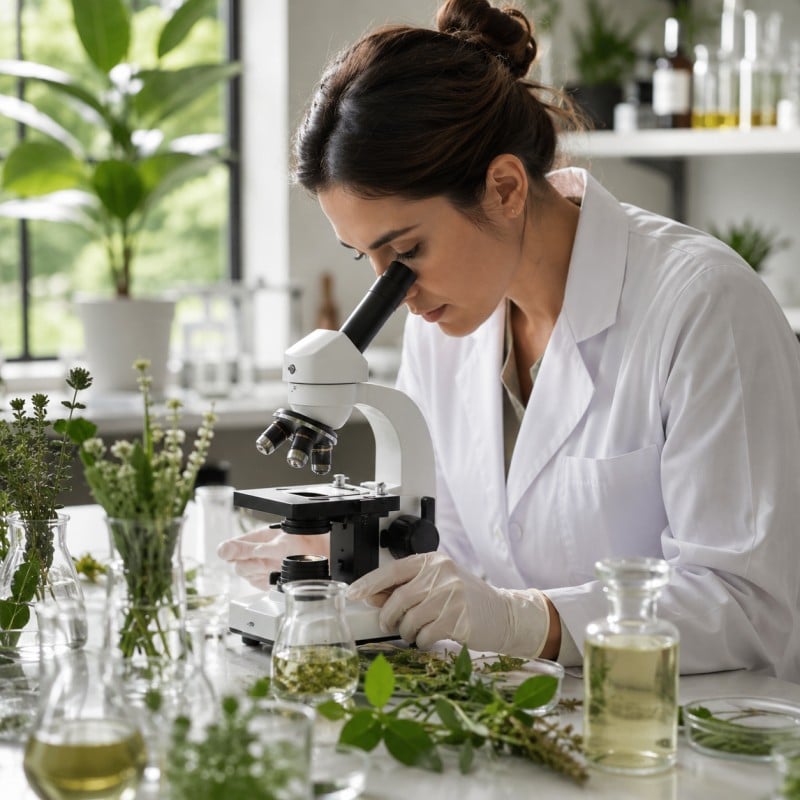
The plant-based personal care market is going through a major change as consumer demand keeps shifting toward clean, effective, and sustainable products. Plant-based innovation is no longer treated as a passing trend. It now sits at the center of product development as brands respond to an audience that is becoming more informed. Consumers are looking for natural ingredients, but they still expect strong performance. They want solutions backed by clinical evidence that target both visible concerns and deeper biological processes.
Plant-based beauty moves beyond simple natural claims
According to Dr. Ariati Aris, scientific affairs specialist at PhytoGaia, the growth in plant-based innovation is tied directly to changing consumer expectations. People want products that are clean,
Demand is growing for what some describe as “cleanical” beauty. In this space, natural formulations are expected to deliver clinically relevant efficacy. Advances in biotechnology and green chemistry are helping make this possible. These technologies support the development of plant-derived bioactives with better stability, bioavailability, and targeted functionality.
Plant-based ingredients are moving beyond traditional extracts. They are becoming precision-designed functional actives. Sustainability pressures and increasing regulatory attention are pushing brands toward renewable, traceable, and environmentally responsible ingredients.
Product development priorities are changing too. There is stronger interest in high-performance plant actives and multi-functional formulations. More attention is being paid to skin health as a whole, targeting not only visible concerns but the biological processes linked to aging.
Sourcing and processing are changing
Plant-based ingredients have historically faced issues around consistency and scalability. Aris says that situation is changing.
More controlled and traceable sourcing practices are reducing natural variability and helping raw materials meet defined quality standards. Extraction technologies have advanced as well. More selective processes can isolate important bioactives with greater precision while preserving functionality and creating standardized ingredient profiles.
Upcycling is becoming more common. Agricultural by-products are being transformed into high-performance ingredients. This reduces waste and creates a more reliable and sustainable supply stream. Circular sourcing follows a similar idea by recovering valuable compounds from agricultural by-products. This improves sustainability, resource efficiency, and supply reliability.
At PhytoGaia, the company developed an extraction technology that can obtain both tocotrienols and squalene as a complex called STGaia from palm fruits without solvents or chemicals. Aris says this feature allows STGaia to be positioned as a 100% clean, natural, plant-based cosmetic ingredient.
Traceability remains a challenge
Reliable and traceable supply chains remain difficult to maintain for plant-derived ingredients. Agricultural systems naturally vary. Climate conditions, seasonal yields, and different farming practices can all affect raw material quality and availability.
The challenge becomes greater in sourcing networks that involve multiple intermediaries. Full traceability becomes harder as transparency expectations continue to grow.
Brands are responding by investing in integrated supply chains, direct sourcing partnerships, and digital traceability systems. Blockchain technology and advanced tracking platforms are being explored to improve transparency and strengthen data integrity. Collaboration with growers and processors is helping establish more controlled cultivation practices and standardized quality requirements.
Regulations and certifications are shaping the market
Regulatory frameworks and certification standards are playing a larger role in how plant-based products are developed and marketed.
Aris says growing scrutiny around natural claims means brands need clear, compliant, and scientifically supported positioning. Ingredient transparency, safety documentation, and standardized quality control are receiving more attention. Formulators are increasingly selecting plant-derived ingredients that can meet expectations for consistency and traceability.
Beauty claims are becoming more evidence-based. Scientific and clinical validation through in vitro, in vivo, and human studies is increasingly used to support efficacy claims. This is raising expectations for measurable performance.
Natural and sustainability certifications continue to matter for consumer trust. Clinical data is now often added to strengthen credibility and differentiation.
Standing out in a crowded market
Natural and green claims alone are no longer enough to distinguish a brand.
Aris says differentiation now comes from proven performance, scientific depth, and functional relevance. Brands are focusing more on bioactivity and measurable efficacy. They are explaining how plant-derived ingredients interact with biological pathways instead of only highlighting natural origin.
Clinical validation and mechanistic understanding are becoming more important. This helps transform plant-based concepts into results-focused solutions.
Multi-functional formulation strategies are becoming more common. Plant actives are being designed or combined to support barrier integrity, hydration, and oxidative stress within one system.
Aris points to STGaia as an example. The ingredient combines tocotrienols and squalene and is positioned as a holistic approach to aging support. The formulation aims to address visible skin concerns and deeper cellular pathways through a synergistic system.
Current nutraceutical and nutricosmetic ingredients are often designed for either visible or non-visible signs of aging. Collagen peptides, hyaluronic acid, ceramides, aloe vera extract, and biotin are generally associated with visible outcomes such as skin hydration, elasticity, and hair health.
Nicotinamide mononucleotide, nicotinamide riboside, resveratrol, senolytics, pyrroloquinoline quinone, curcumin, alpha lipoic acid, and coenzyme Q10 are more commonly connected to non-visible biological processes including cellular energy metabolism, mitochondrial function, and longevity pathways.
Aris says these ingredients serve important functions individually but often target only one aspect of aging. STGaia is positioned as a natural synergistic complex that addresses both visible and non-visible dimensions through a dual-action approach.
Consumer expectations keep rising
Consumers are becoming more selective and informed. They want to understand where ingredients come from, how they are processed, and what benefits they provide.
Plant-based credentials are now viewed as a core expectation rather than a niche preference. They are commonly linked with safety, sustainability, and performance.
Product development is moving toward an evidence-driven model. Plant-based positioning is increasingly expected to be supported by measurable benefits. Brands are placing more emphasis on traceable ingredients, cleaner formulations, and stronger scientific validation.
Natural and organic certifications still matter, but they no longer stand on their own. Greater transparency and supporting data are being used alongside these certifications to build credibility and consumer confidence.
What comes next?
Aris points to bioactive optimization and synergistic formulations as key developments for the future. Plant compounds are no longer simply extracted. They are being refined, standardized, and strategically designed or combined to target specific biological pathways more effectively.
Future formulations are expected to operate as multi-pathway systems that address interconnected biological processes rather than isolated concerns. Advances in processing and formulation science are improving bioavailability, stability, and delivery. The goal is to provide consistent performance at clinically relevant levels.
