
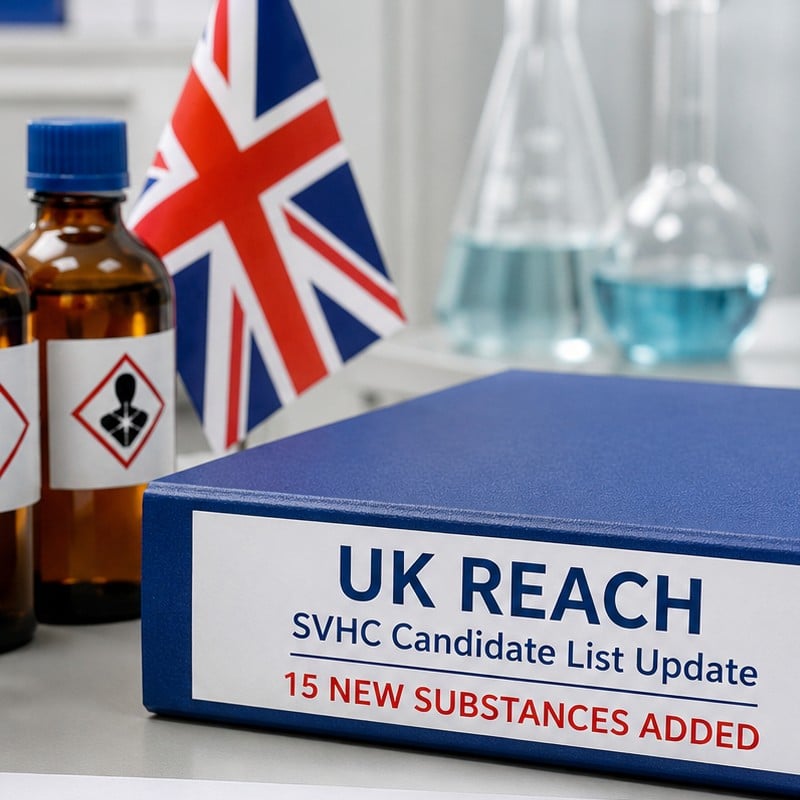
Although this development primarily affects the chemicals sector, it is also relevant for manufacturers of cosmetics, personal care products and other consumer goods that use chemical raw materials or complex supply chains.
The UK REACH Candidate List identifies substances that may present serious risks to human health or the environment because of properties such as carcinogenicity, reproductive toxicity, persistence in the environment or bioaccumulation. Inclusion on the Candidate List is not an immediate ban, but it is an important regulatory milestone that can lead to additional legal obligations and, eventually, possible authorisation requirements.
For companies placing products on the Great Britain market, the update means that supply chains should be reviewed to determine whether any of the newly listed substances are present in raw materials, mixtures or articles. Businesses may also need to update internal compliance documentation and communicate relevant information throughout the supply chain.
What has changed since Brexit?
When the UK left the European Union, it initially retained the existing EU REACH Candidate List. However, subsequent additions made by the European Chemicals Agency (ECHA) were no longer automatically incorporated into UK legislation.
The June 2026 update marks the first independent expansion of the UK Candidate List under the UK’s own evaluation process. Interestingly, the substances added were already recognised as SVHCs under EU REACH, but until now they had not formally triggered equivalent obligations under UK REACH. This represents another step towards maintaining a level of alignment between the UK and EU chemicals frameworks while preserving separate regulatory decision-making.
Potential impact on the cosmetics industry
Most cosmetic ingredients are already subject to specific requirements under cosmetic legislation, meaning many SVHCs are restricted or prohibited before they would typically appear in finished cosmetic products. Nevertheless, cosmetic manufacturers should not assume these updates are irrelevant.
The Candidate List can affect ingredients used during manufacturing, processing aids, packaging materials, adhesives, printing inks, equipment components and other materials that form part of a product’s wider supply chain. Companies importing raw materials or finished products into Great Britain should therefore verify whether suppliers have updated their compliance information following the latest UK REACH revision.
Manufacturers operating in both the EU and UK should also be aware that, despite many similarities, the two REACH systems are no longer automatically synchronised. Separate regulatory monitoring is increasingly important for businesses serving both markets.
Preparing for future regulatory changes
The HSE has indicated that additional Candidate List consultations are expected during the 2026–2027 work programme, suggesting that further updates are likely in the coming months. Companies that regularly review their ingredient portfolios, maintain close communication with suppliers and monitor regulatory developments will be better positioned to respond efficiently to future changes.
