CERTIFIED COSMETICSLatest news

Here we bring the latest news of anything new in the cosmetic market.
bt_bb_section_bottom_section_coverage_image
Heavy Metal Testing for Cosmetic Products

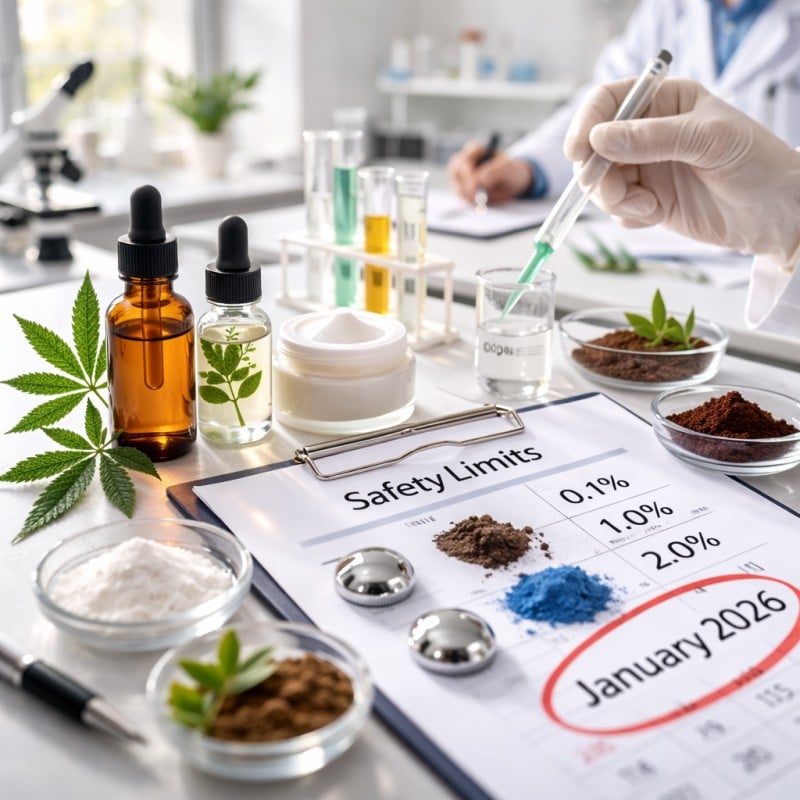
Heavy metals, such as Pb (lead), As (arsenic), Cd (cadmium), Hg (mercury), and Sb (antimony), which have a density greater than 5 g/cm3 and exhibit metallic properties, can pose significant health risks if present in cosmetics. These toxic substances can have adverse effects on human health, including skin irritation, allergic reactions, and long-term health issues...

Stability Testing of Cosmetics

Stability test helps ensure that a cosmetics maintains its intended physical, chemical, and microbiological properties over time. This process verifies that factors like appearance, color, odor, viscosity, and pH remain consistent, and that the product’s efficacy and safety are not compromised under various storage conditions. Guidelines and Standards for Stability Testing The Cosmetic Guidelines on...

Which Products are Exempt from the Challenge Test?

Challenge test (Preservative Efficacy Test) is a procedure used to assess the effectiveness of preservatives in cosmetic and personal care products. The primary purpose of this test is to evaluate the ability of preservatives to prevent microbial contamination and growth in the product over time. Microbial contamination can lead to product spoilage, reduced shelf life,...

Preservative Efficacy (Challenge) Test

Before opening the original packaging of cosmetic products and during their use by the end user, the efficacy of the preservative used must be tested to ensure that they remain microbiologically stable. Challenge test examines the efficacy of the preservatives and determines whether your product is protected by the preservatives you use against any microbiological...

Microbiological Quality of Cosmetics

Regulation (EC) No 1223/2009 sets out comprehensive requirements for the safety assessment, manufacturing, and marketing of cosmetics in the EU market. According to Article 3 of the regulation, cosmetics must not cause harm to human health when used under normal or reasonably foreseeable conditions. To comply with these requirements, manufacturers must conduct a safety assessment...

Good Manufacturing Practices (GMP)

Good Manufacturing Practices (GMP) are essential for ensuring the quality and safety of cosmetic products. In the European Union (EU), cosmetics are regulated under the new EU Cosmetic Regulation (EC) No. 1223/2009. This regulation outlines the requirements for the manufacture, testing, and marketing of cosmetics, emphasizing the need for high standards of production to protect...

Essential Safety Tests for Cosmetics

Testing represents an important part of a cosmetic product registration process. Cosmetic products have to undergo all the required tests defined in the EU Cosmetics Regulation (EC) 1223/2009 in order to be compliant and more importantly, to prove they are safe for use under reasonably foreseeable conditions. Part A of the cosmetic product safety report...

Cosmetic Product Safety Report (CPSR) for Specific Products

The Cosmetic Product Safety Report (CPSR) is a crucial document required for compliance, particularly under the European Union’s Regulation (EC) No 1223/2009. This report ensures that a cosmetic product is safe for human use before it enters the market. Preparing a Cosmetic Product Safety Report (CPSR) is not a one-size-fits-all process. Each product category has...

Horizontal Regulations to Follow for Cosmetics

Cosmetic manufacturers and Responsible Persons diligently follow the Cosmetics Regulation to ensure compliance; however, adhering to this regulation alone is not sufficient for full compliance. To meet all legal and ethical obligations, it is essential to consider additional horizontal regulations and directives. These not only safeguard consumers but also support sustainable and ethical business practices....

Resources for Staying Updated on Regulatory Changes

Staying informed about regulatory changes in the cosmetics industry is vital for ensuring compliance, protecting consumer safety, and maintaining market access. With frequent updates to ingredient restrictions, safety standards, and labelling requirements, professionals need access to reliable and official resources. Below is a curated list of official sources and tools that provide essential information for...