
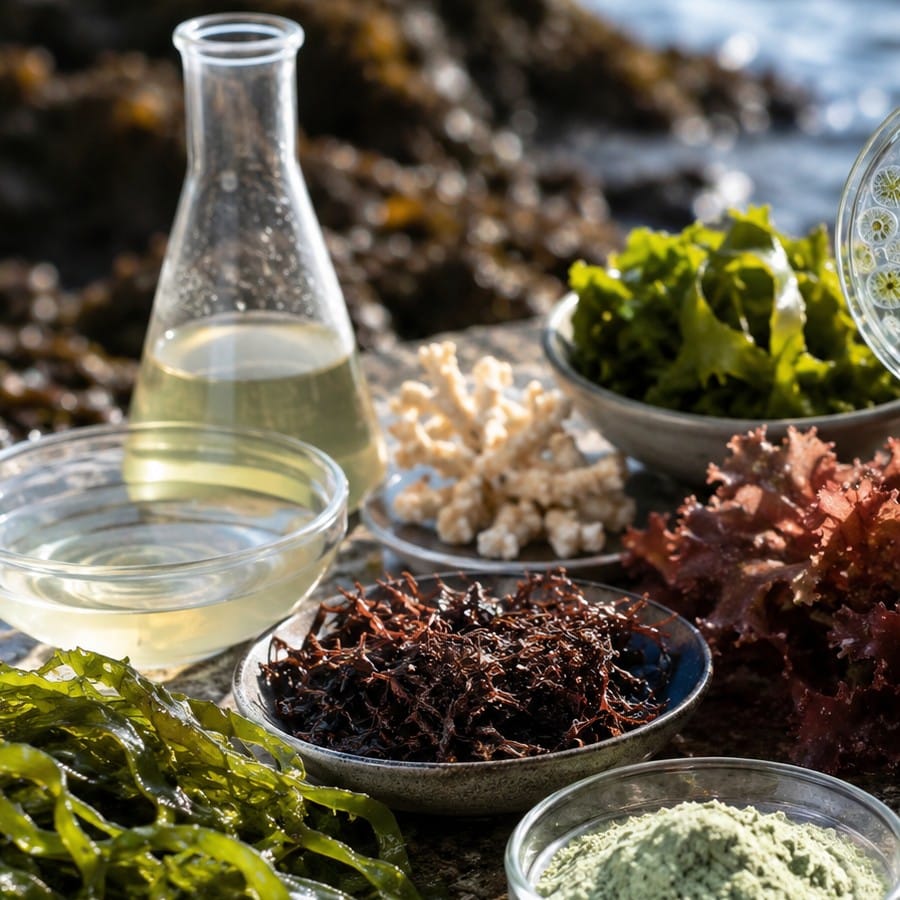
The search for fresh sources of cosmetic ingredients now extends to the ocean. Innovations based on marine algae, seaweed, and microorganisms are creating new possibilities for skincare. Companies and scientists are tapping into these marine resources to develop bio-based products that deliver advanced skin benefits while supporting responsible sourcing.
interest in these approaches is gaining ground across Europe. According to the European Commission, cosmetics belong to the core focus areas of the blue bioeconomy-a sector centered on using renewable aquatic materials and biotechnological processes to generate high-value outputs.
What Drives Demand for ocean-Derived Ingredients?
Marine sources face different environmental challenges compared to those on land. This fosters the development of unique molecules not found in terrestrial plants. Researchers have spotlighted marine algae due to their antioxidant, skin-protecting, and hydrating effects. Patent analysis from 2010 to 2023 points to a sharp rise in interest for brown and red algae, as well as new processes like nanoemulsions and encapsulation for better stability and delivery of active compounds.
The appeal of marine ingredients lies not just in their natural origin,but in the range of innovative molecules and formulation techniques they bring to cosmetic science.
Transforming Sea Biomass Into premium Ingredients
A key development for the industry involves maximizing the use of marine biomass beyond simple seaweed extracts.
Within the EU, several projects now use biorefinery models that allow for the recovery of multiple outputs from a single batch of marine material. This means that rather of discarding leftover biomass, producers can extract additional valuable substances for cosmetics, nutrition, or materials.
As an example, the BIG-ALGAE initiative is working to extract a variety of bioactives-including proteins, pigments, and polysaccharides-from large volumes of macroalgae, targeting cosmetics as a principal application. Other European programs are optimizing circular uses: algae farming and processing that outputs various end-products with less waste, improving both sustainability and profitability.
Advances in Marine Biotechnology
Innovation is moving from traditional harvesting to targeted production of rare marine compounds with biotechnological tools.
Launched in 2026,the OCEOMICS project brings together computational research,machine learning,and biotechnology to identify and manufacture novel marine actives for skincare. by focusing on bioactives with antioxidant, anti-inflammatory, barrier-supporting, or UV-protective actions, the project seeks ingredients that previously went undiscovered.
This move from random bioprospecting to precise, reproducible compound production removes one of the main barriers of scale: not only must new substances be found, but they must be characterized, screened for safety, and produced with rigorous standards fit for cosmetic use.
Sustainable Use of Marine Resources
Though frequently linked with environmental benefits, the sustainable sourcing of marine ingredients brings its own hurdles. Wild collection can disrupt fragile habitats, while extensive farming, transport, and extraction also generate ecological impacts.
Current European research takes a proactive approach. Strategies now emphasize controlled marine cultivation, ethical harvesting, and the use of full biomass fractions to minimize waste. A 2026 report on Codium seaweed, such as, reviewed integrated aquaculture systems that allow for skincare use of certain fractions and seek new uses for remaining materials. These circular approaches are increasingly vital for scaling up marine ingredients while avoiding environmental harm.
Outlook for Marine Ingredients in Cosmetics
Using marine actives gives brands access to new functional compounds and supports eco-amiable messaging.Yet, success in the market goes far beyond an ingredient’s source.
Reliable supply chains, standardization, extensive safety testing, and adaptable extraction technologies all play a role. The regulatory landscape in Europe specifically calls attention to safety, proven efficacy, streamlined approval pathways, and measures that protect marine biodiversity as essential criteria for market entry.
Marine ingredients have the potential to reshape how brands develop and market cosmetics. Their broad adoption will depend on the creation of safe, scalable, and truly sustainable options-bridging scientific promise with responsible sourcing and advanced manufacturing. As advancements in biotechnology, aquaculture, and processing continue together, the ocean’s role as a hub for new cosmetic innovations is set to expand.
