

Hair care is attracting growing attention as research moves deeper into the biology of healthy hair, new approaches to repairing damage, and potential treatments for hair loss. Recent developments are looking beyond surface-level hair care and focusing on what happens inside the hair follicle and along the hair fiber. Research is pointing to biological factors linked to stronger hair formation, while new ingredients are being developed to repair damage during everyday styling. At the same time, pharmaceutical companies are exploring hair loss as a potential new area for treatment development.
New research into stronger hair formation
Recent research has examined how the microenvironment of the hair follicle c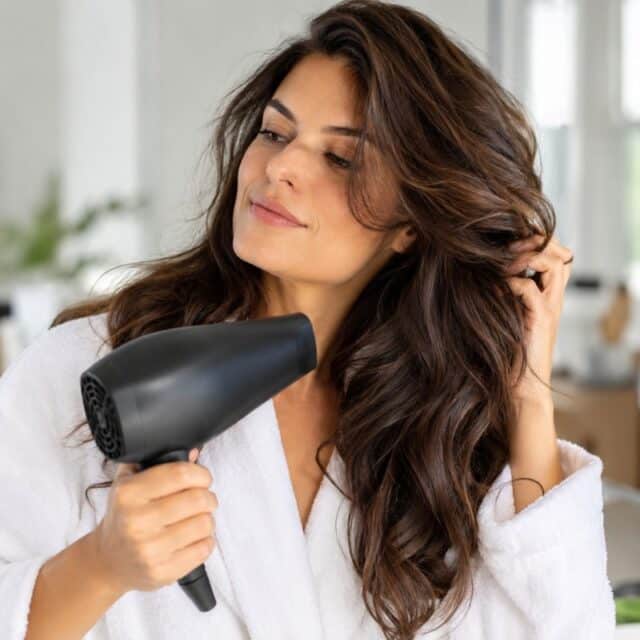
An analysis of newly grown hair from healthy adults found that the expression of a specific gene, coagulation factor C homology (COCH), is closely associated with disulfide bonds in the hair fiber. These bonds are an important factor in hair strength.
Higher disulfide bond content is associated with greater tensile strength and resistance to breakage, while the research suggests that aging can reduce both bond content and hair strength.
Participants aged 50 and over had at least 21% lower disulfide bond content and at least 40% lower tensile strength than participants between 20 and 40 years old.
The research also found a significant relationship between disulfide bond content and hair tensile strength. This points to the follicular environment as a potential factor in determining the quality of newly formed hair.
The findings are contributing to research into peptide-based hair care ingredients designed to target biological mechanisms involved in healthy hair formation. One peptide-based ingredient developed from this research is intended to support the formation of stronger hair and has been incorporated into a recently launched hair care line.
The findings were published in the international journal Experimental Dermatology in a paper titled COCH Expression in the Hair Follicle Microenvironment Is Associated With Cortical Disulfide Bonding and Tensile Resistance in Aging Hair.
Peptides and the hair follicle
The research is adding to a wider interest in peptide-based hair care solutions. Researchers are examining scalp and hair follicle structures to better understand the mechanisms involved in healthy hair formation.
This work is helping guide the development of ingredients designed to act on those mechanisms rather than focusing only on the appearance of hair after it has grown.
The broader research direction includes technologies intended to help hair stay healthy for longer, with peptide-based ingredients forming part of this approach.
Heat-activated hair repair
Another area of innovation is focused on repairing damaged hair through heat activation. A newly developed hair care active is designed to use the heat generated by blow-drying and straightening as part of the repair process.
The ingredient is intended for hair damaged by bleaching, coloring, and environmental stress. It can be used in rinse-off or leave-on formulations, with heat from styling tools activating the ingredient so it can interact with the hair’s keratin structure and help seal damaged cuticles.
Demand for hair repair is reported to be at its highest in a generation, driven by increased coloring, chemical treatments, and heat styling.
Research cited by the ingredient developer states that 65% of women regularly use heat styling tools while seeking healthier hair and salon-quality repair results at home. The hair restoration market is projected to nearly triple by 2032, while hair-damage management products recorded a €139 million (US$158.5 million) sales increase in key global markets. More than a quarter of consumer-targeted hair influencer posts are now reported to highlight “damage repair” as a leading claim.
The category is being shaped by growing demand for formulations that work at a structural level rather than focusing only on surface shine. Hair care routines are becoming more multi-step, science-backed, and ingredient-led. Consumers are increasingly seeking professional-grade results from everyday products, creating what has been described as a “home spa mindset.”
Testing on bleached hair found that the heat-activated ingredient reduced friction by up to 47%, improving cuticle alignment and hair smoothness. It reduced the energy needed for combing by 52%, supporting easier detangling.
Testing further showed a 12% improvement in hair protein integrity, indicating structural repair at the fiber level. Repeated use was linked to improved hair shine, while straightened hair was better able to retain its shape under high-humidity conditions, with visibly reduced frizz.
Hair loss enters the treatment conversation
Hair loss is becoming another area of interest for companies working on science-led hair health solutions. Pharmaceutical companies are exploring whether their existing expertise in hormone-related medicine could be applied to potential hair loss treatments.
This interest comes alongside continued research into the relationship between GLP-1 receptor agonists and hair loss. Observational studies have suggested an association, although researchers note that weight loss itself may contribute to shedding and that further investigation is needed.
A 2026 study published in BMJ found that people using GLP-1 medicines were 37% more likely to report hair loss than patients using other diabetes medications.
The potential treatment market is substantial. Pattern hair loss is reported to affect approximately 80 million people in the US. Around 50 million men and 30 million women are reported to experience hair loss, with women currently having no approved oral treatment options.
Together, these developments show how hair care research is moving across several areas, from understanding the biology of the hair follicle and developing peptide-based ingredients to repairing damaged fibers through heat and investigating new approaches to hair loss treatment.
