
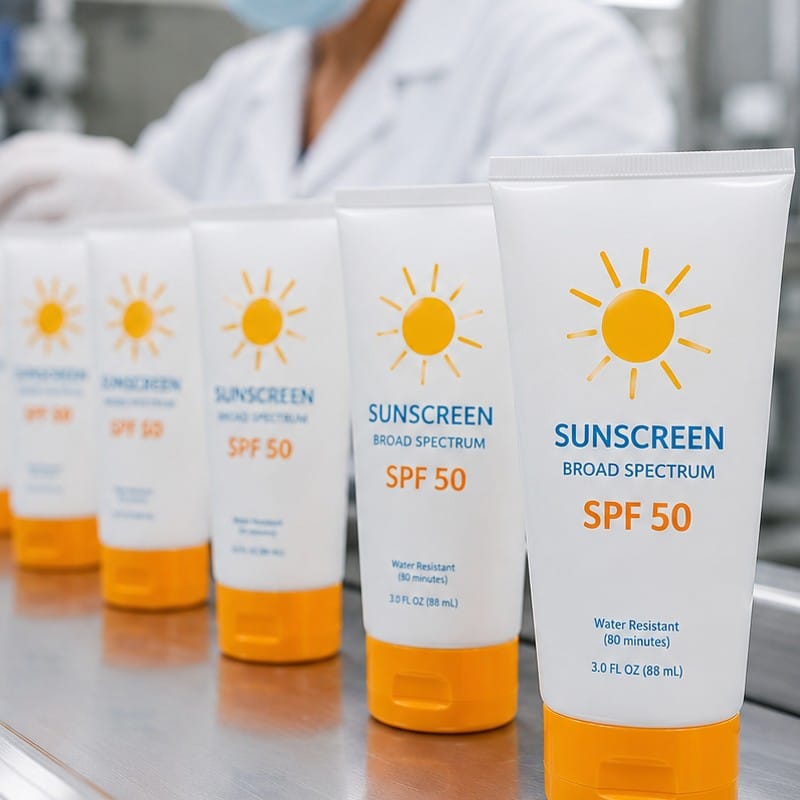
In the United States, sunscreen products are regulated as over-the-counter drugs instead of cosmetics. The reason is tied to their intended use. Since they are marketed to help prevent sunburn and reduce risks linked to ultraviolet radiation, including premature skin aging and skin cancer, they fall under FDA drug regulations. That changes nearly everything for companies entering the U.S. market, from formulation and testing to manufacturing and labeling.
The FDA Framework for Sunscreens

The monograph sets rules for:
- Approved active ingredients
- Concentration limits
- Dosage forms
- SPF and broad spectrum claims
- Warnings and directions
- Testing methods
- Label structure
Products that comply with these requirements are considered Generally Recognized as Safe and Effective, or GRASE.
Ingredient Status Matters
The regulatory status of sunscreen actives plays a major role in product strategy. FDA separates ingredients into categories such as:
- Ingredients considered GRASE
- Ingredients requiring more safety data
- Ingredients not considered GRASE
Mineral UV filters like zinc oxide and titanium dioxide are broadly accepted under current conditions. Some organic UV filters still require additional evaluation before final classification.
Testing and Manufacturing Expectations
Meeting monograph requirements involves more than selecting approved ingredients. Companies must support claims through recognized testing methods, which may include SPF testing, broad spectrum evaluation, water resistance studies, stability data, microbiological quality checks, and safety assessments.
Manufacturing standards are stricter than cosmetic GMP requirements. Drug GMP compliance often includes validated processes, quality systems, laboratory controls, batch traceability, change control procedures, and recall systems. Foreign manufacturing sites can fall under FDA inspection authority as well.
Registration, Fees, and Oversight
Before commercialization, companies typically need FDA establishment registration, product listing, NDC number assignment, and label compliance verification. Facilities manufacturing OTC sunscreen products are subject to OMUFA fees, which apply to both domestic and foreign sites.
Foreign companies must appoint a U.S. Agent during FDA registration. The agent serves as the FDA contact point for the foreign establishment, though regulatory responsibility only transfers if defined contractually.
Common Market Entry Problems
A few issues appear repeatedly during U.S. sunscreen launches. Some companies assume sunscreens are regulated like cosmetics. Others use non-permitted active ingredients, make claims outside FDA allowances, underestimate testing complexity, or operate in facilities that do not meet drug GMP standards.
Successful market entry usually depends on early regulatory planning across formulation, labeling, testing, manufacturing, and post-market obligations. Even without individual product approval, sunscreen compliance in the U.S. remains highly technical and closely regulated.


