
In global cosmetic regulation, microbiological safety is considered a core element of product compliance. Although requirements differ between regions, authorities worldwide share the same objective: ensuring that cosmetic products do not present microbiological risks to consumers.
The Main Types of Microbiological Testing
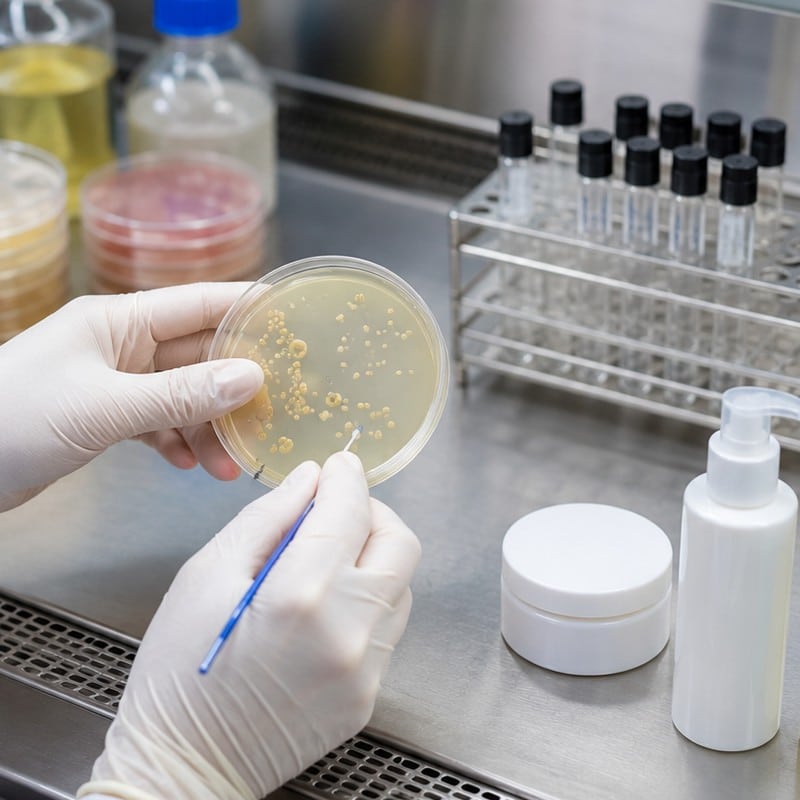
Cosmetic microbiological control generally focuses on two areas: microbiological quality testing and preservative efficacy testing.
Microbiological quality testing evaluates the total microbial load of a product and confirms the absence of potentially harmful microorganisms such as E. coli, Staphylococcus aureus, Pseudomonas aeruginosa, or Candida albicans. Preservative efficacy testing, often called challenge testing, assesses whether the preservative system can effectively control microbial growth after contamination.
One of the most internationally recognized references is ISO 11930, developed by the International Organization for Standardization. This standard provides harmonized guidance for preservative efficacy testing and is widely used across the cosmetic industry.
How Global Regulations Approach Microbiological Testing
Unlike pharmaceutical regulations, cosmetic legislation rarely imposes a single universal testing protocol. Instead, most regulatory systems require manufacturers to demonstrate that products are microbiologically safe under normal or reasonably foreseeable conditions of use.
In the European Union, microbiological safety data form part of the Product Information File (PIF) required under Regulation (EC) No 1223/2009. The regulatory approach relies heavily on risk assessment, formulation characteristics, and scientific justification.
In the United States, the U.S. Food and Drug Administration places responsibility on manufacturers to ensure products are not adulterated or unsafe, even though testing methods are not always specifically prescribed.
In Latin America, countries such as Brazil, Mexico, and Argentina increasingly align with international standards while maintaining local regulatory frameworks. Agencies frequently reference ISO methods and require microbiological quality controls as part of cosmetic compliance.
Other markets, including China and ASEAN countries, may require more detailed technical documentation, particularly for imported products or products considered higher risk. Climate conditions also influence expectations, since warm and humid environments increase the importance of preservative performance.
A Key Part of Global Compliance
As cosmetic formulations become more complex and preservative systems evolve alongside “clean beauty” trends, microbiological testing has become increasingly important for both safety and regulatory compliance.
For manufacturers operating internationally, understanding regional expectations is essential not only to meet legal requirements, but also to maintain product quality and consumer trust across global markets.


