The beauty and cosmetics market in the Middle East is growing rapidly. The market is expected to increase from US$14.3 billion in 2025 to US$20.8 billion by 2030. Saudi Arabia plays an important role in this growth, with strong beauty spending and particularly high demand for fragrance products. Premium beauty is gaining attention across the Gulf region as well.
A fast-growing beauty market
The beauty market in the Middle East and Africa grew by 16% in 2025, compared with around 6% for the global beauty market. The six Gulf countries together represent an economy worth approximately US$2.3 trillion.
Saudi Arabia accounts for around 40% of total beauty spending in the region. Its fragrance market was valued at US$2.9 billion in 2025.
More than half of the population in the Gulf region is under the age of 30. Growing urban populations and higher disposable incomes are creating more demand for consumer products and modern retail.
Premium beauty continues to grow
Consumers in the region are well informed, digitally connected and selective. There is a strong interest in premium products, with consumers expecting high quality and performance.
Premium beauty is expected to grow faster than mass-market beauty across all Gulf markets through 2030.
Fragrance is a major category
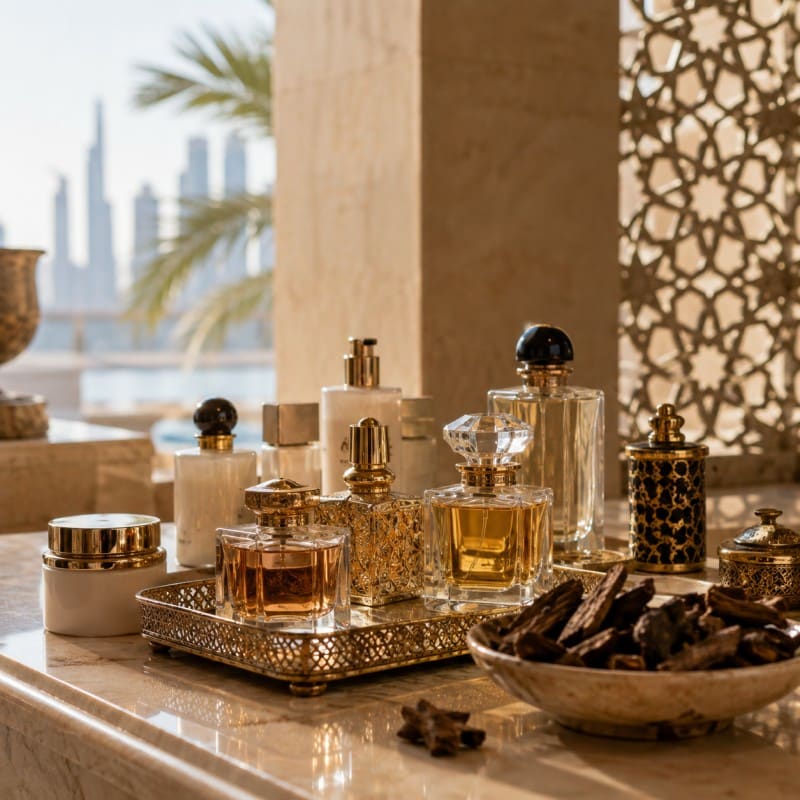
Fragrance is one of the strongest growth categories in the Middle Eastern beauty market. Saudi Arabia has particularly high fragrance consumption.
Consumers in the country are reported to have around 12 to 14 fragrances in their homes. Combining different fragrances, known as layering, is also common.
Despite having a population of around 35 million, Saudi Arabia’s fragrance consumption is reported to be four times higher than in Europe or the United States.
A diverse market
The Middle East includes more than 40 different ethnic and ethnoreligious groups. This makes cultural relevance increasingly important for products entering the market.
The Gulf region has an economy worth approximately US$2.3 trillion. Saudi Arabia and the United Arab Emirates together account for around 77% of the region’s GDP.
The population is expected to continue growing by around 2% per year. According to the United Nations, the population could reach 83.6 million by 2050.
Opportunities and challenges
The beauty market in the Middle East is expected to continue growing, but companies are facing economic uncertainty, different regulatory frameworks and climate-related challenges.
Tensions between the United States and Iran have contributed to raw material shortages and supply chain disruptions. Several suppliers of cosmetic raw materials have responded by adjusting their prices.
Some companies are supporting suppliers financially or diversifying their sourcing. Despite these challenges, investment in the region continues and the Middle East is becoming increasingly important within the global beauty market.