
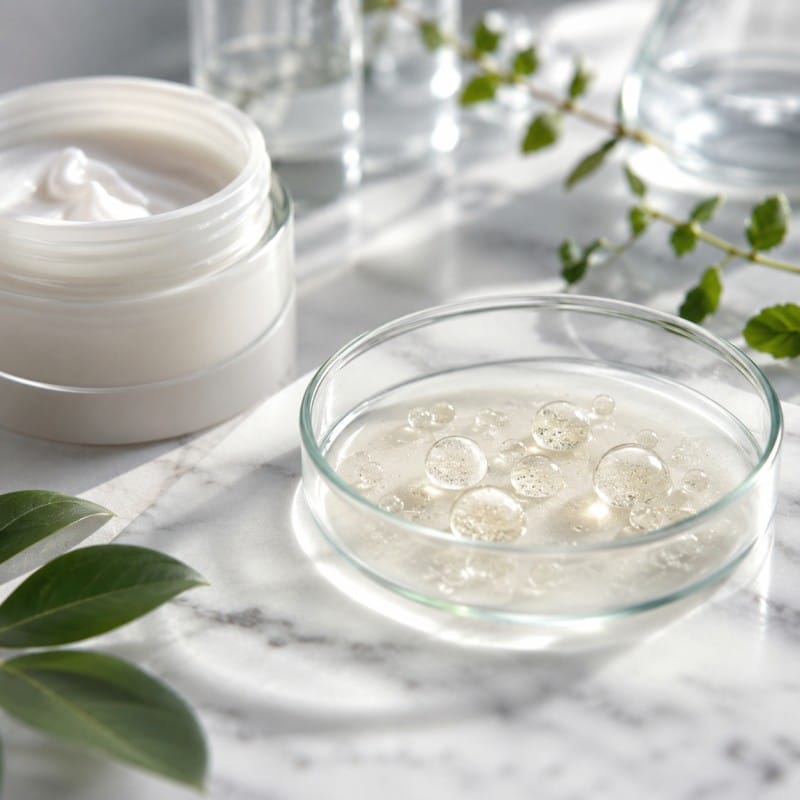
Researchers have patented microcapsules designed to preserve live probiotic bacteria in cosmetic formulations for over twelve months. This breakthrough overcomes a persistent obstacle in probiotic skin care,matching the rising demand for products that support the skin’s microbiome. These microcapsules safeguard the probiotic bacteria within the formula, then dissolve on the skin to deliver the active strains. The team confirms that commercialization is now possible thanks to the patent protection for this new technology.
A New Solution to Safeguard Live Probiotics in Cosmetics
Conserving live bacteria in skin care has remained tough because most preservation systems prevent spoilage but destroy probiotics. Cosmetic products require preservatives to inhibit contamination by harmful microbes, yet these same agents reduce the viability of added probiotics.
This innovation relies on alginate microcapsules, each with a diameter under 100 micrometres. The outer layer consists of a biopolymer sourced from brown algae. This shell isolates the contained bacteria from preservation agents during shelf life but disintegrates once applied, releasing the live microorganisms onto the skin.
Studies have shown that bacteria inside these microcapsules remain active in tested cosmetic bases for at least one year, far exceeding the typical seven-day survival outside capsules.
Contribution to Skin Microbiome Health
According to the scientists,probiotic skin care aims to reinforce the skin’s ecosystem,which includes a diverse population of bacteria,yeasts,and other microbes. This balance forms a natural shield and can modulate immune function.
detergents, harsh cosmetics, and changing environments frequently enough upset this protective community, which may lead to issues such as flare-ups in sensitive skin or increased risk of conditions such as rosacea or irritation.
recent industry reports show that consumer interest in moisturizers with barrier support has grown rapidly. Microbiome-centered brand launches in personal care expanded by about 33% yearly between 2021 and 2025, with facial and body skin care seeing the most product progress.
By introducing live bacteria directly to the skin using a timed-release system, these new formulations work to quickly restore the skin’s natural microbial mix when imbalance occurs.
Researchers highlight that products featuring encapsulated probiotics may offer specific support to those with dry or reactive skin types,as well as individuals coping with persistent problems including atopic dermatitis or persistent breakouts.
Advanced Encapsulation for Modern Cosmetic Production
The microcapsule format offers advantages for manufacturers by mixing seamlessly into standard formulations. The process does not alter texture or product appearance, allowing brands to upgrade product lines without any detectable change to performance.
Producers can adapt existing equipment to incorporate this technology, removing the need for expensive new manufacturing infrastructure or complex adjustments.
Beyond daily skin health routines, researchers note that encapsulated probiotics could help maintain hand health for workers exposed to frequent hand washing or harsh agents, such as staff in clinical, food industry, or scientific lab settings.
