
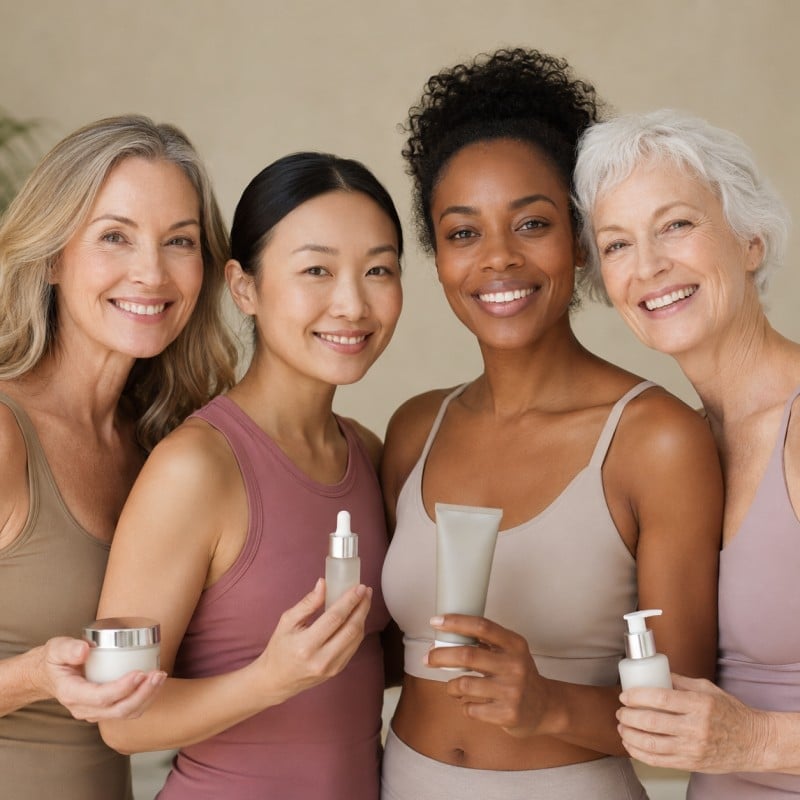
Cosmetic companies are increasingly recognizing that customers want products grounded in solid research, along with honest and open dialogue. Consequently, brands now position inclusive aging at the heart of their messaging. Aging features as a form of human diversity,not a flaw needing correction. Marketing now highlights a broader spectrum of ages, genders, and skin types, showing that healthy aging relates to everyone, not just one group.Personal Care Insights recently analyzed this evolving sector,gathering perspectives from leaders at Olay,Eastman,and PhytoGaia.Their insights reveal why science-driven openness, ingredient accuracy, and support for the skin microbiome are transforming the future of anti-aging skincare.
dr. Lindsey Zubritsky, board-certified dermatologist at Olay, says that customers are seeking skin care options that are “modern, practical, and focused on long-term skin wellness.”
“Interest is growing in skin care formulas backed by science that strengthen core skin functions like cellular renewal, collagen production, hydration, and a stable barrier. That’s why topics like longevity, proactive maintenance, and cellular health have become central to today’s conversation around skin,” she explains.
Recent advances in ingredient technology allow for more precise targeting of skin aging markers. This is leading to multi-action formulas that not only address visible aging but also support key biological processes, driving product development forward.
“Today’s customers value products that blend scientific credibility with practicality. Olay stands out in this space by using ingredients reviewed in clinical settings, dermatologist and plastic surgeon guidance, and benefits you can see. Skin care now spotlights health and self-confidence at every age, not an unreachable vision of perfection,” says zubritsky.
As science-backed and adaptable formulas gain popularity,more companies are introducing multifunction treatments. Thes are designed to address needs at every age and stage, reflecting how people’s skin changes through life.
Advancing the Body’s Own Skin Mechanisms
The shift from “anti-aging” messaging to focus on “healthy aging” marks a broader transformation in industry and consumer attitudes. Instead of erasing signs of aging, the goal is now to nurture and support this natural process.
Modern buyers are wary of exaggerated promises,preferring proof-based benefits and realistic claims.
Dr. Ariati Aris, scientific affairs specialist at PhytoGaia, explains that many now recognize how skin aging is linked to deeper processes: ”People are becoming much more aware of how oxidative stress, persistent low-level inflammation, and weak skin barriers all contribute to visible aging. as an inevitable result,the focus is turning from superficial fixes to reinforcing the skin’s natural resilience.”
Aris also observes resistance to message framing that suggests aging is a flaw.Rather, the healthy aging approach aims for positivity and accurate biology, viewing aging as a time to maintain robust, adaptable skin rather than chase reversal.
“Healthy aging is not only a change in language.It signals a convergence of longevity science with personal care.This new focus strives to support the skin’s natural ability to bounce back, rather than simply treat what we see on the surface,” he adds.
According to PhytoGaia’s research, the most triumphant brands now combine topical therapies, ingestible supplements, and lifestyle choices. Nutrition, metabolic health, and even stress management factor into effective strategies for lasting skin health.
Industry leaders are shifting from formulas that target visible lines and wrinkles toward ingredients that counter the core contributors of aging-like oxidative decline, fat loss in the skin, and weakened protective barriers.
There is growing focus on bioactives capable of multiple actions, especially those offering cell-level protection and blending into skin structures for stronger, longer-term benefits.
Tocotrienols are now gaining notice for their strong antioxidant effects and ability to help shield skin fats from environmental harm. Squalene is equally valued for hydration and for reinforcing the skin’s protective layers.
New innovations aim for microbiome-friendly and barrier-supportive formulations. As Aris notes, reinforcing the skin’s micro-ecosystem matters for ongoing health much more than short-term visual results.
Online platforms and social media now shape public discourse, encouraging honest exchanges and bringing scientific education to a wider audience.
Technology continues to evolve, as advanced carriers-such as nanoemulsions, liposomes, and encapsulation-improve ingredient penetration and stability, delivering more measurable results at the cellular level.
Focusing on Lifelong Skin Health
Lauren Leonard, who manages global market development at Eastman, sees a surge in proactive habits aimed at protecting skin across decades.
“Sun exposure ranks among the strongest accelerators of visible aging, breaking down collagen,” Leonard warns. “Sunscreen is now a daily necessity, built into most recommended routines and featured by many brands.”
This leap in sunscreen adoption signals a move toward core ingredient quality, not just claims, in anti-aging advances.
Brands continue to rely on gentle but powerful actives that support healthy skin. Clients want anti-aging products but avoid harsh components that cause redness or irritation, driving up demand for well-balanced ingredients that deliver results with minimal side effects.
Leonard points out that companies who mix proof of performance with clarity, broader inclusion, and authentic stories will earn more trust and loyalty from consumers of all ages and backgrounds.
looking Ahead: The Evolving Meaning of Aging
Aris predicts that scientific and biology-first approaches will set the stage for how we view and celebrate aging. This shift is already updating formulation, marketing, and the shopping experience.
“Product development will put skin durability and lasting health above short-term image improvements. There will be stronger focus on clinical mechanisms-like barrier protection, reduction of inflammation, and cellular strength,” he notes.
Smart,multi-use ingredients and tailored systems will continue to rise as people expect products to be both highly effective and backed by real data.
Packaging and product concepts are trending toward straightforward, eco-friendly designs with labels that clarify ingredient roles and scientific backing. Brands will step away from inflated messages, instead giving proof and honest descriptions of what their products accomplish.
Inclusivity and science-based messaging will dominate branding, positioning skin aging as a journey of supportable biological changes, not defeat.
“Moving forward, personalized care and education will matter even more, supported by diagnostic technology and AI tools that empower users to make informed choices,” Aris predicts.
Leonard agrees that the skin care field is heading toward celebrating healthy, individual skin at every age-valuing long-term well-being, self-confidence, and diversity.
her view: “From the lab bench to retail shelves, the industry will focus on solutions that combine scientific effectiveness, inclusiveness, and adaptability, while giving shoppers a more custom and positive path to healthy skin.”
Zubritsky expects future trends in healthy aging to emphasize prevention, skin longevity, and gentle, non-surgical options for everyone.
“Product innovation will keep blending professional-level technologies with home use, expanding the choices for supporting collagen, barrier strength, and resilience at every stage of life,” she says.
