
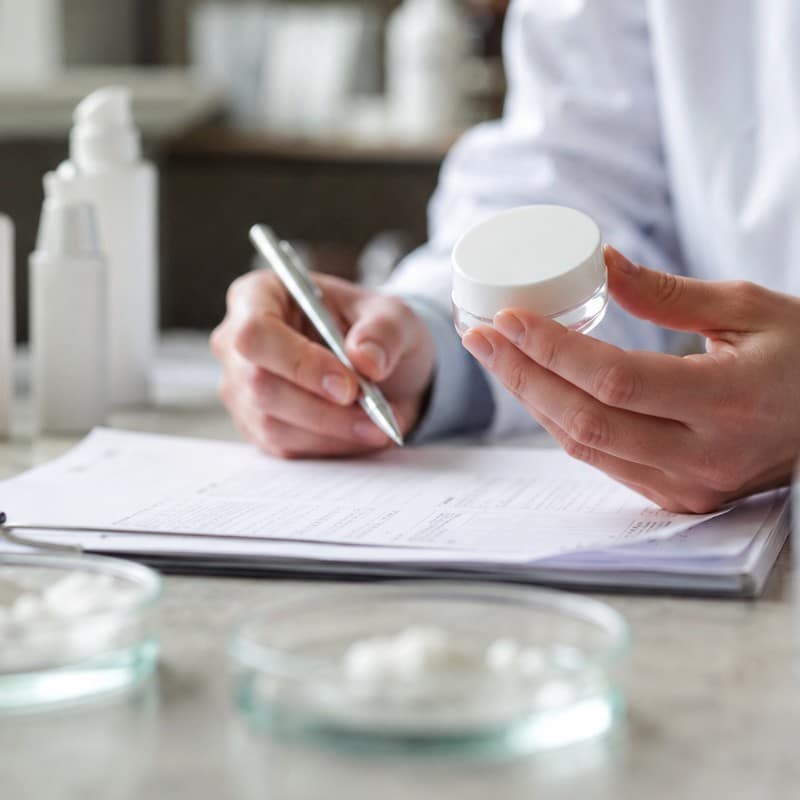

The European Union maintains some of the strictest cosmetic regulations worldwide. Despite this, a growing number of cosmetic items are now flagged in EU safety warning lists.
Data released in the European Commission’s Safety Gate 2025 report reveals that cosmetics made up 36% of all perilous-product alerts reported that year-the most for any category. In total, Safety Gate issued 4,671 alerts in 2025, the highest since its inception in 2003 and a 13% increase over the previous year.
These rising numbers do not automatically suggest that cosmetic products are increasingly unsafe. A deeper look shows the uptick is driven by improved monitoring, stronger collaboration among authorities, updated restrictions, and a more varied cosmetic market in Europe.
How Cosmetic Safety Alerts Work
A Safety Gate notification warns of a dangerous non-food item and records what actions have been taken. If a health authority in one country finds a product with serious hazards or violations, the alert travels through the rapid EU system. This lets other member countries check their own markets and act if those items are sold locally.
A single alert does not mean every item in a product category is risky, nor does it always point to issues across an entire brand or ingredient type.
Cosmetic warnings often stem from banned ingredients, improper formulas, missing or incorrect labels, or other legal breaches. Most importantly, each alert serves as an enforcement notice: it flags a particular product, batch, or formula that needs attention.
Why Are Cosmetic Products Frequently Flagged?
Today’s authorities uncover more problematic products in part as detection resources have expanded.
In 2025, the Safety Gate report logged 5,794 follow-up measures from national agencies-up 35% compared with 2024. These included withdrawing items from stores, recalling products, checking imports at the borders, and deleting online offers. The european Commission credits these increases to more organized data-sharing and firmer action spanning both the EU and European Economic Area.
Cosmetics now reach shoppers through varied routes. Alongside stores, people buy from global websites, online retail platforms, and through social media. the EU General product Safety regulation, active since December 2024, tightened online product controls and set new rules for digital marketplaces.
With these changes, regulators have more methods and data to spot safety risks and respond quickly when problems arise.
The Impact of Ingredient Bans on safety Alerts
Recent regulatory changes clearly affect the number of notifications.
Nearly 80% of cosmetic alerts in 2025 linked to BMHCA (Lilial), a synthetic scent chemical banned in EU cosmetics.Other cases involved TPO (Trimethylbenzoyl Diphenylphosphine Oxide), used in nail products, prohibited as of 2025.
These findings highlight a tough challenge for producers: safety compliance must be continuous, not a one-time process.
A product can pass initial safety checks, but a later ban or new scientific finding may require reformulation or market withdrawal. Companies must have systems that continuously review regulations, check their formulas, and manage all items currently being sold.
This matters even more for brands managing many products or working with several suppliers and international logistics, because one substance could appear in multiple formulas.
Robust Regulatory Requirements for Cosmetics in Europe
EU cosmetics legislation demands clear evidence of product safety before any item enters the market.
regulation (EC) No 1223/2009 requires a Responsible Person to have each product undergo a formal safety assessment and prepare a Cosmetic Product Safety Report before EU market launch. This review covers the product’s intended uses and ingredient exposure risks.
Producers and distributors must also keep a Product Information File that contains all vital details and safety data. That document must be accessible for at least ten years after the final product batch is released.
But even with proper assessments, some products still show up in safety alerts. Why?
Because product safety and legal compliance never stand still. Raw materials or suppliers can change over time, contamination might be found, ingredients can become banned, and a product might be handled differently in distribution or manufacture than first planned.
Authorities can also discover items that did not meet the requirements for market entry.
E-Commerce and New Enforcement Challenges
Digital sales are reshaping how authorities enforce safety.
The General Product Safety Regulation now gives online shoppers more protection and places more duty on digital retailers. By late 2025, the European Commission noted registrations from over 1,200 online marketplaces on Safety Gate. New eSurveillance technologies help spot products previously flagged that reappear in online listings or web shops.
For cosmetic makers, this demands more dynamic monitoring. Taking a faulty item off one shop’s shelf no longer solves the issue. Brands must track where all their products sell online and act fast if regulatory changes or ingredient bans arise.
This is even more critical for items imported through complex supply networks or offered direct to buyers.
Do More Alerts Mean Decreased Cosmetic Safety?
The steady climb in alerts does not automatically indicate that products are less safe.
Rather, it signals that regulatory enforcement and market surveillance are getting sharper.The Commission sees these rising notifications as evidence of rapid and effective action against hazardous products.
There’s a difference between actually having more dangerous cosmetics in circulation and simply identifying existing risks more efficiently.
Safety Gate stats alone cannot confirm that the overall safety of cosmetics has dropped. What stands out is that cosmetic goods remain a primary target of european oversight, and authorities can better identify non-compliance and remove unsafe products from the market.
For the public, this improved vigilance offers greater protection. The alert system is valuable because it spots and shares risks before major incidents occur.
