
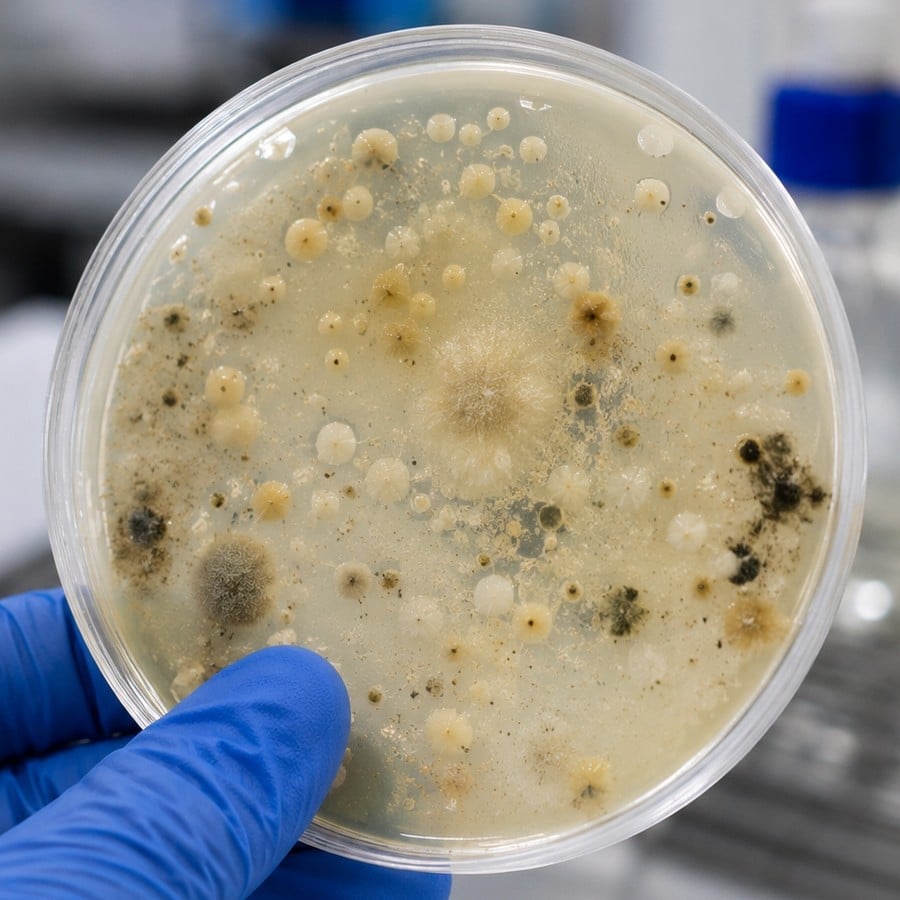

Laboratory testing is designed to identify potential problems before products reach consumers. Detecting issues during development gives manufacturers the opportunity to investigate the cause, improve the formulation or packaging, and generate the evidence needed to demonstrate product safety and quality.
Laboratory failures have different meanings depending on the study performed.
Some results indicate that the product does not currently meet recognised quality criteria. Others suggest that additional evidence or further investigation is needed before reliable conclusions can be drawn.
For example, a stability study may reveal changes in appearance or viscosity after storage, while a microbiological analysis may detect contamination above accepted limits. These findings identify issues that require attention, but they do not necessarily imply that the product would immediately pose a health risk.
The laboratory report should always be interpreted in the context of the formulation, packaging and intended use of the product.
Review the laboratory findings carefully
The first step is to understand exactly what failed.
Laboratory reports generally include detailed observations describing the parameters evaluated, the testing conditions and the results obtained. Rather than focusing only on whether the study passed or failed, manufacturers should identify which specific measurements fell outside the expected acceptance criteria.
A technical discussion with the laboratory is often valuable at this stage. Understanding whether the issue is isolated, progressive or potentially related to another aspect of the product helps determine the most appropriate corrective action.
Different tests reveal different types of problems
The corrective actions depend on the nature of the laboratory finding.
A failed stability study may indicate problems such as:
- Phase separation
- Significant viscosity changes
- Colour or odour alterations
- Packaging incompatibility
A microbiological quality failure usually suggests contamination introduced during manufacturing, raw material handling or packaging.
If a preservative efficacy test is unsuccessful, the preservation system may not adequately control microbial growth throughout the product’s intended use.
Performance or claim support studies may also reveal that the available evidence is insufficient to justify the proposed marketing claims.
Each type of failure requires its own scientific assessment rather than a universal solution.
Identify the root cause
One of the most important stages is determining why the failure occurred.
The visible laboratory result is often only the symptom of an underlying issue.
Possible causes include formulation instability, unsuitable packaging, manufacturing variability, inadequate preservation, contaminated raw materials or process deviations during production.
A structured root cause investigation allows manufacturers to address the real problem rather than simply correcting its consequences.
In many cases, several contributing factors may interact rather than a single isolated cause.
Corrective actions may involve more than the formulation
Although reformulation is sometimes necessary, it is not always the solution.
Depending on the laboratory findings, corrective actions may include:
- Changing packaging materials or dispensing systems
- Improving manufacturing hygiene
- Modifying production parameters
- Updating storage recommendations where scientifically justified
The objective is to eliminate the cause of the problem while maintaining the intended performance of the cosmetic product.
Retesting is usually necessary
Once corrective actions have been implemented, the relevant laboratory studies normally need to be repeated.
This is because laboratory results apply only to the specific formulation and packaging that were originally tested. If significant changes have been introduced, the previous data may no longer represent the final product.
The extent of the required retesting depends on the nature of the modifications. Minor adjustments may affect only certain studies, whereas major formulation or packaging changes may require a broader reassessment.
For this reason, manufacturers should discuss proposed modifications with both the testing laboratory and the cosmetic safety assessor before assuming that previous results remain valid.
Can a product still be marketed after a failed test?
Generally, a product should not be placed on the European market if the available evidence does not support its safety and quality.
Under Regulation (EC) No 1223/2009, the Responsible Person must ensure that sufficient information is available to demonstrate that the product is safe for consumers under normal or reasonably foreseeable conditions of use.
If laboratory testing identifies unresolved problems that could affect safety, stability or microbiological quality, those issues should be addressed before commercialisation.
Launching a product without resolving known deficiencies may create regulatory, commercial and reputational risks that are far more costly than delaying the launch.
Preventing failures through early testing
Many laboratory failures can be identified more efficiently when testing begins early in product development.
Testing prototype formulations before large-scale production provides opportunities to optimise the formulation, packaging or manufacturing process while changes are still relatively straightforward.
Early laboratory evaluation also reduces the likelihood of discovering significant issues immediately before launch, when corrective actions become more expensive and disruptive.
Viewing laboratory testing as part of product development rather than as a final regulatory requirement often leads to smoother projects.


