
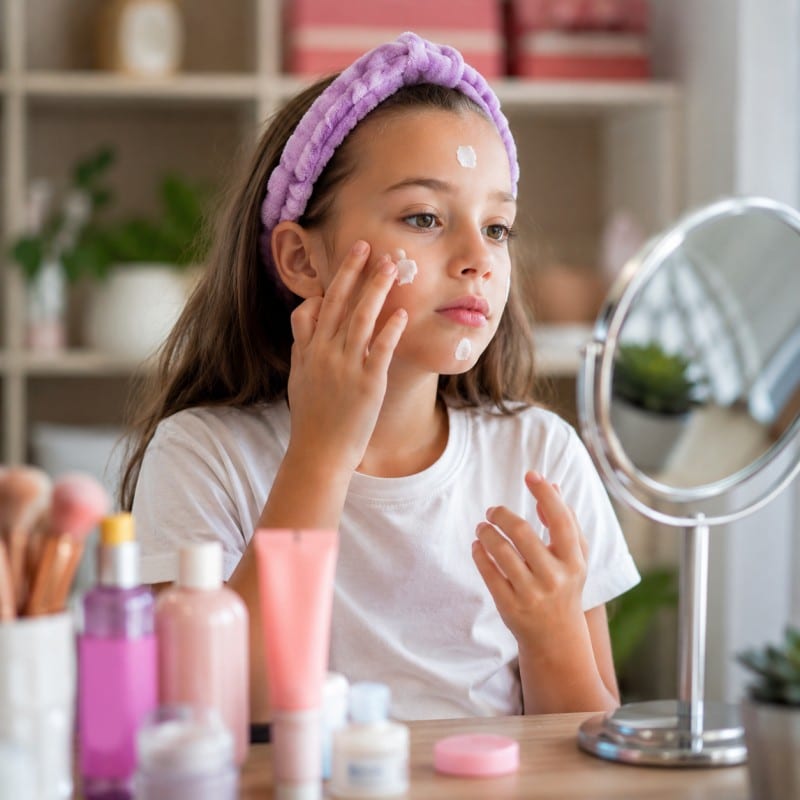
Interest in skin care among children is rising quickly, with an increasing number of companies targeting this age group. While the market is expanding, many consumers, medical experts, and dermatologists are asking an notable question: are companies meeting a real need, or fueling insecurity in young people? Dr. Masoud Saman, a board-certified facial plastic and head and neck surgeon in the US, believes this topic needs much closer review.
Skin Care or early Branding?
Dr. Saman’s main focus isn’t on isolated ingredients.Rather, he points out the industry trend of packaging health as part of identity for children.
“The core issue goes beyond ingredient safety. It’s the message that children must examine their appearance, identify faults, and purchase new products to correct them.”
Companies claim thay are supplying products driven by demand, yet social media plays a strong role in shaping that demand. Children constantly see airbrushed images and influencers showcasing “perfect” skin, setting unrealistic standards. Data from pattern, an e-commerce company, shows that over 30,000 cosmetic brands are now available on TikTok Shop, with the beauty segment growing by 26%-surpassing most othre categories.
More brands have started creating lines exclusively for children,with frequent marketing appeals referencing nurturing parents or even kid “co-founders.”
According to Dr. Saman, a children’s line focused strictly on health, with simple and mild products, can be ethical. Problems start when the marketing and language imitate adult beauty culture, shifting children from seeking health to chasing trends.
When Care Becomes Commercialization
There are legitimate reasons for some children to use skin care. Dr. Saman recommends sunscreen, fragrance-free cleansers, gentle moisturizers for dry skin or eczema, and medical treatments prescribed by professionals.
“There are genuine needs: children with eczema, dryness, excessive sun exposure, or acne should have reliable, gentle options. But this isn’t the same as telling every child to follow a multi-step ritual.”
He rejects the idea that children require routines promising “anti-aging,” “glow,” “pore refinement,” brightening, or “correction.”
Advocates of children’s skin care argue that young consumers will use these products anyway; it’s safer to provide alternatives designed for their age. Dr. Saman acknowledges that argument, but warns that developing targeted lines can normalize obsessive product use and amplify worries about appearance.
The better answer is to keep children’s products basic: no exaggerated claims, no influencer-led beauty inspiration, and clear interaction to parents that most children need only sunscreen and basic cleansing.
He emphasizes that children shouldn’t inherit adult worries about beauty any more than they should inherit adult products.Safe skin care for kids should always put health first, avoid beauty language, and focus messaging toward parents.
Focusing on Protection, Not Perfection
Dr. Saman supports a small, health-oriented category for children’s products.
“effective skin care for children serves to protect, not project. It responds to real needs-never invented problems.”
He sees a problem when brands encourage children to view normal features as flaws or compete in beauty trends. at that point, the focus shifts from care to commerce.
Dr. Saman urges cosmetic brands to remove anti-aging terms, pore-shrinking promises, “glass skin” messaging, makeover comparisons, and influencer partnerships aimed at children.
He points to TikTok as a major influence.the app condenses adult beauty ideals into quick, viral content, encouraging youngsters to join in to feel accepted.
“Kids watch routines, buying sprees, and ‘get ready with me’ videos. The message is that skin care signals status and fits an identity. Buying a cream is now a social activity,not just a health step.”
Responsibility is shared, he says. Companies, shops, and social platforms must act together.
“Marketers should avoid distributing products to child influencers or building campaigns that clearly target minors. Sellers should add age guidance and steer clear of making serums appear as toys. Social media platforms must limit sponsored beauty content aimed at underage viewers and label ads transparently.”
This debate is attracting greater scrutiny from regulators and the beauty industry itself.Earlier this year, Italian regulators began investigating companies such as Sephora and Benefit Cosmetics for claims of stealth marketing adult products to children.
Dr. Saman supports keeping children’s skin care straightforward, lightly fragranced or fragrance-free, dermatologist-advised, and focused on practical needs-sun protection, moisturization for dry skin or eczema, lip balms for chapped lips, and gentle cleansers.
He hopes for tougher age restrictions, increased education for parents, clearer warnings, and improved product placement in stores.
At the same time, Dr. Saman cautions against blaming parents or children.
“It’s unfair to shame families. Kids are absorbing ideals shaped by adults. Most parents are simply searching for safer options for their children.”
He believes the whole ecosystem-brands, retailers, social platforms, and health professionals-must set firmer boundaries.
“The goal isn’t to restrict sunscreen or moisturizer, but to push back against the notion that ordinary childhood skin must be ‘fixed.'”
Beyond Skin: Lasting Effects of Child-Focused Beauty
Public concern over children’s skin care spiked with the appearance of the “Sephora kids” trend. Social networks filled with stories and warnings about kids buying luxury serums and anti-aging products.
Medical groups such as the British Association of Dermatologists have cautioned that children exposed to ingredients designed for adults can develop allergies, eczema, and even permanent skin damage.
Dr. Saman explains that both physical reactions and psychological impacts are deeply linked.
“A child develops irritation from an active ingredient, then starts obsessing over red patches or texture. One product sets off a cycle-first causing a problem, then selling the answer as a fix.”
He points to the risk that emotional harm will outlast any skin irritation.
“Children,especially girls,are learning to treat their natural appearance as a list of flaws. This can lead to anxiety, low self-esteem, compulsive checking, and an early attachment to beauty branding.”
He concludes that while irritated skin can heal, the belief that a child’s healthy face requires correction can shape their self-image for years.
