

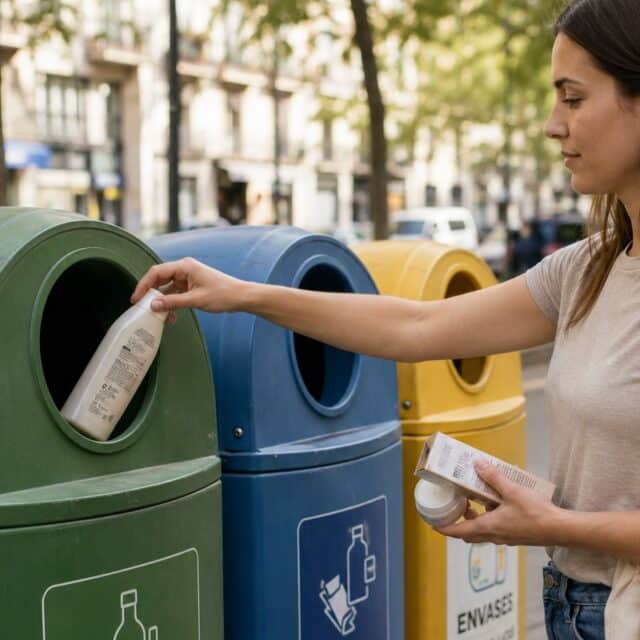
Since 1 January 2025, new packaging marking requirements apply in Spain under Royal Decree 1055/2022 on Packaging and Packaging Waste. These rules are particularly relevant for cosmetic manufacturers and brands because most cosmetic products are sold in household packaging such as bottles, jars, tubes, pumps, cartons and other containers.
The objective is simple: consumers must receive clear information about where packaging waste should be disposed of.
This requirements concern packaging placed on the Spanish market. Brands selling cosmetics into Spain from another EU country should therefore assess whether their packaging includes the required Spanish disposal information.
This is especially important for companies using harmonised multilingual packaging across several European markets. Although cosmetic labelling is largely governed by Regulation (EC) No 1223/2009, packaging waste requirements may still differ between Member States.
Spain, France and Italy are examples of markets where national packaging and recycling requirements must be considered separately.
What Are the Spanish Recycling Requirements?
Under Royal Decree 1055/2022, household packaging placed on the Spanish market must indicate the waste fraction or collection container in which the packaging waste should be deposited.
The requirement applies to packaging placed on the Spanish market from 1 January 2025.
For cosmetic products, this may affect the primary container, such as a cream jar or shampoo bottle, as well as secondary packaging such as a cardboard box.
The information must help the consumer correctly separate the packaging after use.
Which Recycling Container Should Be Indicated?
The correct disposal information depends on the packaging material.
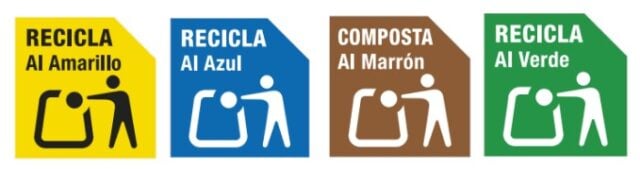
Plastic and metal packaging generally belongs in the yellow container. This may include cosmetic bottles, plastic jars, tubes, aluminium packaging and certain closures.
Paper and cardboard packaging is generally deposited in the blue container. Cosmetic folding cartons and cardboard boxes are common examples.
Glass packaging is generally deposited in the green container. This is particularly relevant for perfume bottles and glass cosmetic jars.
Compostable packaging may be associated with the organic waste collection system. However, specific requirements apply before packaging can be presented as compostable.
Manufacturers should assess the actual packaging material and the applicable waste collection fraction rather than automatically selecting a recycling symbol based on the appearance of the packaging.
Is a Specific Recycling Symbol Mandatory in Spain?
Spanish legislation does not prescribe one specific recycling pictogram or graphical format for indicating the disposal container.
The legal requirement is to indicate the fraction or container in which the packaging waste should be deposited.
The information must be clearly visible, easily legible and sufficiently durable. It must normally appear physically on the packaging or its label.
Ecoembes provides the “Símbolo Recicla” and practical recommendations that companies can use to communicate disposal information. However, the Ecoembes graphical system should not be confused with a mandatory format established directly by Royal Decree 1055/2022.
This distinction is important when preparing cosmetic packaging artwork for the Spanish market.
What About Cosmetic Packaging with Several Components?
Cosmetic packaging is often made from several separate elements.
A perfume may have a glass bottle, plastic or metal cap and cardboard box. A cosmetic jar may consist of a jar, lid and inner protective component. Pumps and dispensers may contain several materials.
Where the consumer can separate the different packaging elements, the appropriate disposal container should be indicated for each element.
Ideally, the information is shown directly on each packaging component. If this is not possible, the different disposal instructions may be presented together on the main packaging element or label.
If the components cannot be separated by the consumer, the disposal information should correspond to the predominant packaging material.
This makes packaging assessment particularly important for complex cosmetic containers such as pumps, airless bottles and multi-material closures.
Reusable Cosmetic Packaging
Reusable packaging is subject to additional marking requirements.
Reusable packaging acquired from 1 January 2025 must indicate that it is reusable. There is no mandatory graphical format for communicating this condition.
Where the packaging forms part of a deposit, return and refund system, the associated system symbol must also be indicated.
Cosmetic brands introducing refillable or reusable packaging should carefully distinguish between packaging that is simply refillable in theory and packaging that legally forms part of a reuse system.
Requirements for Compostable Packaging
Compostable packaging is also subject to specific marking requirements.
From 1 January 2025, compostable packaging must include a message indicating that it should not be abandoned in the environment.
The packaging must also indicate compliance with UNE EN 13432:2001 or another applicable European compostability standard.
A cosmetic brand should therefore not describe packaging as compostable solely because it contains bio-based or plant-derived materials. The relevant packaging characteristics and certification requirements must be assessed.
Environmental Claims That Are Prohibited
Royal Decree 1055/2022 also restricts certain environmental wording on packaging.
Expressions such as “environmentally friendly” or equivalent statements that could encourage the abandonment of packaging in the environment are prohibited.
This is particularly relevant for cosmetic brands using sustainability claims as part of their packaging design.
Terms such as “natural”, “green”, “eco” or similar environmental messages should always be carefully assessed in their full context. Packaging claims should be specific, accurate and supported by appropriate evidence.
Is the Green Dot Mandatory in Spain?

The symbol of the collective Extended Producer Responsibility system, or SCRAP, to which the producer belongs may be displayed voluntarily.
This means that the Green Dot should not be confused with the mandatory requirement to indicate the correct waste fraction or disposal container.
These are separate packaging compliance considerations.
Voluntary Packaging Information
Spanish rules also allow certain packaging information to be provided voluntarily.
This may include the material from which the packaging is made, the amount of recycled material incorporated into the packaging and the percentage of recyclability.
However, recyclability percentages must be certified by an entity independent from the packaging manufacturer.
Cosmetic companies should avoid unsupported recycling or recyclability claims. A packaging material being technically recyclable does not automatically mean that every environmental claim about the packaging is justified.
Cosmetic Labelling and Recycling Labelling Are Different Requirements
Recycling information should not be confused with the mandatory cosmetic label information required under Regulation (EC) No 1223/2009.
The cosmetic label must still contain the applicable information such as the Responsible Person details, nominal content, durability or PAO information, precautions for use, batch identification, product function where necessary and the ingredient list.
Spanish recycling marking requirements are additional packaging obligations.
A cosmetic product may therefore have a compliant cosmetic label while its packaging still fails to meet national waste and recycling requirements.
Let our expert assessors review the compliance of your labels for you. Check out our Cosmetic Label Review services to make sure your cosmetic product labels are compliant!
