
Both the European Union and South Korea apply robust regulatory controls to sunscreens, although they do so through different legal frameworks and testing approaches. Understanding these differences helps separate marketing trends from regulatory reality.
Two Different Regulatory Models
In the European Union, sunscreens are regulated as cosmetic products under Regulation (EC) No. 1223/2009. Every UV filter permitted in cosmetic formulations must appear in Annex VI of the Regulation and undergo a scientific safety assessment before approval. This evaluation considers toxicological data, skin exposure, photostability, and other safety parameters.
South Korea follows a different model. Sunscreens are classified as functional cosmetics and fall under the supervision of the Ministry of Food and Drug Safety (MFDS). Manufacturers must provide evidence supporting the product’s claimed level of protection before it can be placed on the market.
Although the legal pathways differ, both systems are designed to ensure that marketed sunscreens are safe for consumers.
Comparing UVA Protection
One of the most noticeable differences between the two regions is how UVA protection is communicated.
European recommendations require the UVA protection factor to reach at least one-third of the labelled SPF before a product may display the recognised UVA symbol. This requirement is intended to ensure balanced protection against both UVB rays, which cause sunburn, and UVA rays, which contribute to skin ageing and long-term skin damage.
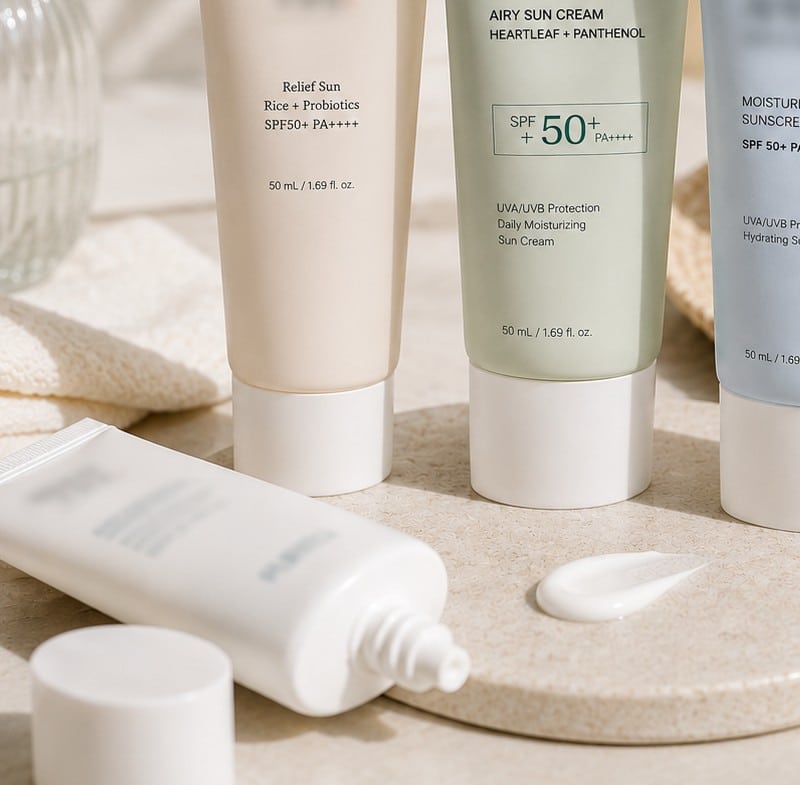
Korean products typically use the PA grading system, which is based on the Persistent Pigment Darkening (PPD) test. Ratings range from PA+ to PA++++, with higher grades indicating stronger UVA protection. However, PA++++ represents a minimum performance threshold rather than a precise protection value, meaning products with the same rating may still provide different levels of UVA protection.
Are Korean UV Filters More Advanced?
A common belief is that Korean sunscreens contain superior UV filters. In reality, many of the modern filters frequently associated with Korean formulations—including highly photostable broad-spectrum filters—are also authorised and widely used in European sunscreen products.
The main distinction is therefore not access to fundamentally different ingredients, but how manufacturers formulate their products to achieve specific performance and sensory characteristics.
Why Korean Sunscreens Feel Different
Consumer preference for Korean sunscreens is often driven by formulation rather than regulation.
Many Korean manufacturers prioritise lightweight emulsions, rapid absorption and a finish that layers well with other skincare and makeup products. European formulations, particularly those intended for outdoor activities, frequently place greater emphasis on water resistance, durability and long-lasting protection.
These formulation objectives can produce noticeably different textures while still meeting their respective regulatory requirements.
Safety Standards Remain High in Both Regions
Neither regulatory framework can be considered inherently more protective than the other. Both require manufacturers to demonstrate product safety before products reach consumers, although the legal procedures differ.
For companies exporting Korean sunscreens into the European market, compliance with EU legislation remains mandatory. Imported products must satisfy all applicable European cosmetic requirements, including ingredient restrictions, product safety assessment, and regulatory notification before being marketed within the EU.
The perception that Korean sunscreens are automatically safer or more effective than European products is not supported by regulatory evidence. Their popularity largely reflects formulation preferences and consumer experience rather than significant differences in safety standards.
When selecting or developing a sunscreen, the most important considerations remain adequate SPF, reliable UVA protection, product quality, and correct daily application. Regulatory compliance ensures that products placed on the market meet established safety requirements, regardless of whether they originate in South Korea or the European Union.
