
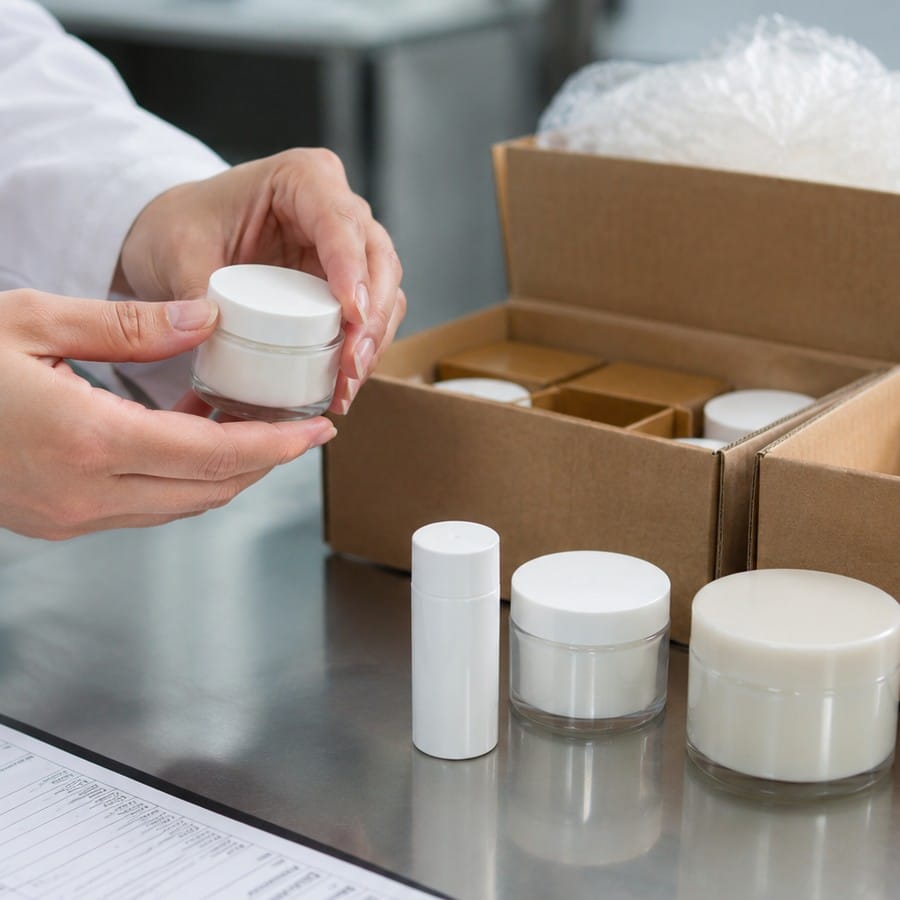
Preparing samples correctly allows laboratories to begin testing immediately, reduces the need for clarification and helps ensure that the generated data can be used to support the Cosmetic Product Safety Report (CPSR).
Submitting representative samples is one of the simplest ways to ensure reliable laboratory results. Even the most accurate analytical methods cannot compensate for samples that are contaminated, incorrectly packaged or no longer represent the product that will eventually be placed on the market.
Although each laboratory may have its own submission requirements, following a few general principles helps avoid delays, repeated testing and unnecessary costs. Proper sample preparation is therefore an important part of any cosmetic testing programme.
Submit the final formulation whenever possible
As a general rule, laboratory testing should be carried out using the final commercial formulation.
Testing an experimental version that is later modified may mean that some or all laboratory studies need to be repeated. Even apparently minor formulation changes, such as adjusting preservative concentrations, replacing a fragrance or changing an emulsifier, can affect stability or microbiological performance.
If modifications are unavoidable after testing has started, discuss them with the laboratory before assuming that previous results remain applicable.
Send the product in its final packaging
Whenever possible, samples should be submitted in the same packaging that will be used for the finished product.
The container forms part of the cosmetic product. Packaging can influence stability, compatibility and microbiological protection, particularly for products stored for extended periods or used repeatedly after opening.
Sending products in temporary containers may prevent the laboratory from evaluating packaging interactions or may require additional testing once the final packaging has been selected.
If the final packaging is not yet available, it is advisable to inform the laboratory in advance so that the most appropriate testing strategy can be discussed.
Provide enough product
Different laboratory studies require different sample quantities.
For example, microbiological testing generally uses relatively small amounts of product, whereas stability studies require multiple containers because samples are evaluated at different time points throughout the study. Additional product may also be needed if more than one test is performed simultaneously.
The laboratory will normally indicate the required quantity before samples are shipped. Providing insufficient material is one of the most common reasons for delays.
Label every sample clearly
Each sample should be easy to identify upon arrival.
Useful information typically includes:
- Product name or internal reference
- Batch or lot number
- Date of manufacture, if available
- Packaging format
- Requested laboratory tests, where applicable
Clear identification reduces the risk of administrative errors and ensures that laboratory reports correspond to the correct product.
Include the necessary documentation
In addition to the physical samples, laboratories usually require basic technical information before testing begins.
Depending on the study, this may include the product name, formulation type, intended use, packaging description and the specific laboratory services requested.
Many laboratories also provide a sample submission form that should accompany the shipment. Completing this information before dispatch helps the laboratory register the samples quickly and avoid unnecessary queries.
If samples are being shipped internationally, customs documentation may also be required. Declaring the shipment as cosmetic samples for laboratory testing and providing an appropriate commercial or proforma invoice helps prevent customs delays.
Package samples carefully for transport
Cosmetic samples should arrive at the laboratory in the same condition in which they left the manufacturer.
Containers should be tightly closed to prevent leakage and protected against impact during transport using suitable cushioning materials. Glass packaging deserves particular attention to minimise the risk of breakage.
Whenever possible, individual products should be packed separately to prevent leakage from one container affecting the others.
Products that require controlled storage conditions should be transported according to the laboratory’s instructions.
Inform the laboratory before shipping
Good communication helps prevent unnecessary delays.
Before sending samples, it is advisable to notify the laboratory of the shipment and confirm the delivery address, contact details and any specific packaging or documentation requirements.
Providing the courier tracking number once the shipment has been dispatched also allows the laboratory to anticipate delivery and process the samples promptly upon arrival.
Common mistakes to avoid
Many testing delays result from simple administrative or logistical issues rather than laboratory problems.
Common examples include sending products in temporary packaging, providing too few samples, failing to identify the batch correctly or omitting essential documentation.
Another frequent issue is submitting products that no longer represent the final formulation. If significant changes are made after testing has begun, some laboratory studies may need to be repeated to ensure that the results remain scientifically valid.
Taking a little extra time to prepare samples correctly often saves considerably more time later in the development process.
A simple checklist before shipping
Before dispatching cosmetic samples, it is worth confirming that:
- The formulation is final or sufficiently representative.
- The product is packaged in its intended commercial container whenever possible.
- Enough units have been provided for all requested tests.
- Every sample is clearly labelled.
- The required documentation has been completed.
- The products have been packaged securely for transport.
- The laboratory has been informed that the shipment is on its way.
These straightforward checks help laboratories begin testing without unnecessary interruptions.


