
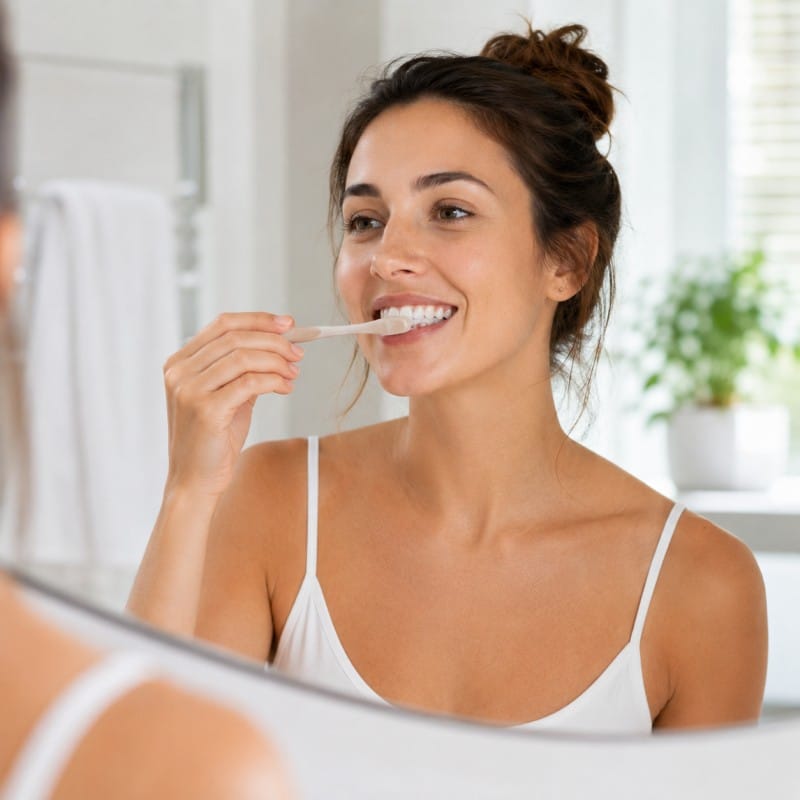
Skin care concepts are increasingly finding their way into oral care. Ingredients and approaches once associated mainly with facial care are now being used to support oral health, the mouth microbiome, and oral mucosa. This newer approach focuses less on eliminating bacteria and more on maintaining balance within the oral environment. At the same time, familiar skin care ingredients are being explored for their potential role in supporting tissue health and healthy aging in the mouth.
A Shift From Teeth to Soft Tissue
Traditional oral care has long focused on enamel protection, cavity prevention, and antimicrobial control. A newer perspective starts with the soft tissues of the mouth, including the gums, mucosal lining, and oral microbiome.
The idea is similar to how skin care evolved over time. Earlier products often focused on stripping away oils and impurities. Modern skin care shifted toward protecting and restoring the skin barrier. Supporters of oral skinification believe the same principle can be applied inside the mouth.
The oral mucosa is living tissue with its own protective systems. It contains a salivary pellicle that functions in a way comparable to the skin’s acid mantle. The mouth is also home to microbial communities that benefit from balance rather than complete elimination.
This approach places greater emphasis on supporting soft tissue health while continuing to care for tooth enamel.
Familiar Ingredients With New Roles
Two ingredients attracting attention in oral care are niacinamide and hyaluronan.
Niacinamide is known for supporting barrier function and hydration in skin care. Similar mechanisms may be relevant in the mouth, where gum tissue is exposed to constant microbial challenges. Research suggests niacinamide may help support tissue resilience and homeostasis. It has also been linked to anti-aging pathways at the cellular level, an area of interest given that periodontal aging remains an under-recognized concern.
Hyaluronan occurs naturally in gingival tissue and is already used in periodontal procedures. Its value lies in tissue hydration, wound modulation, and matrix support.
The ingredient forms a hydrating layer and supports tissue remodeling. Since it is already present in oral tissues, its use in at-home oral care products is viewed as a natural extension of existing science.
Early Consumer and Professional Interest
Clinical testing in this emerging category is still developing. Small clinical studies are beginning to explore the effects of these newer formulations.
Consumer feedback has highlighted experiences such as reduced plaque, less tongue buildup, a cleaner mouth feel, and less time spent in the dental chair. Dental professionals and integrative practitioners have noted that products focused on microbiome support may help fill a gap that has existed in oral care for years.
There is growing interest in products that align with a microbiome-supportive and fluoride-free philosophy. Users frequently report greater gum comfort, reduced sensitivity, smoother tooth surfaces, and less visible tartar buildup over time.
Many consumers also value the sensory experience. Comfort and enjoyment can influence consistent use, which may contribute to long-term oral care habits.
The Future of Oral Care
Many experts believe oral care is following a path similar to the one skin care took roughly fifteen years ago. Consumers increasingly expect transparency, purposeful ingredient selection, and pleasant product experiences.
Interest in the connection between oral health and overall wellness continues to grow. Researchers are examining links between the oral microbiome and areas such as cardiovascular health, metabolic disease, and neuroinflammation.
As awareness of these connections expands, oral care may increasingly be viewed as part of a broader wellness and longevity strategy rather than simply a daily hygiene routine.
This broader view treats the mouth as a complete ecosystem rather than focusing solely on teeth and gums. That perspective could open the door to new types of product innovation inspired by both beauty science and oral health research.
