
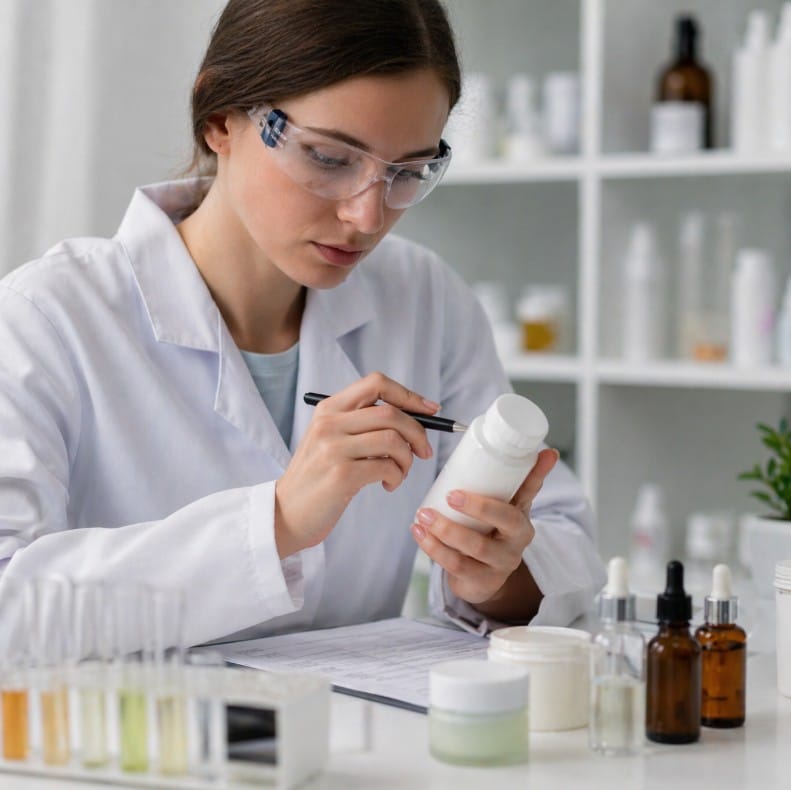
Understanding which ingredients are banned in cosmetics is a fundamental step for anyone working in formulation, manufacturing, or product development within the European Union. Under EU law, safety is the cornerstone of cosmetic regulation, and certain substances are strictly prohibited to protect consumer health.
This article explains how banned ingredients are regulated, where to find the official lists, and how to interpret them correctly in practice.
What Are Banned Ingredients?

In contrast to restricted substances—which may be used under specific conditions—banned substances are completely excluded from cosmetic formulations.
Where to Find the EU List of Banned Ingredients
The official list of banned substances is contained in Annex II of Regulation (EC) No 1223/2009, the main legal framework governing cosmetic products in the European Union.
Annex II includes thousands of entries, ranging from well-known hazardous chemicals to less familiar compounds and specific derivatives. Each entry typically provides:
- The name of the substance
- Chemical identifiers (such as CAS or EC numbers)
- Any relevant notes or clarifications
Because the regulation is regularly updated, it is essential to consult the most recent consolidated version when verifying compliance.
Why Are These Ingredients Banned?
The inclusion of a substance in Annex II is not arbitrary. Decisions are based on scientific risk assessments, primarily conducted by the Scientific Committee on Consumer Safety (SCCS).
These assessments consider:
- Toxicological profiles
- Exposure levels through cosmetic use
- Long-term health effects
- Potential accumulation in the body
If a substance is found to present an unacceptable risk under any foreseeable conditions of use, it is banned entirely.
Banned vs Restricted: A Critical Distinction
For formulators and manufacturers, verifying whether an ingredient is allowed is a critical step in product development.
This process typically involves:
- Identifying the exact chemical substance (not just its trade name)
- Cross-referencing it with Annex II
- Reviewing any updates or amendments to the regulation
A common source of confusion is the difference between banned and restricted substances.
- Banned substances (Annex II): cannot be used at all
- Restricted substances (Annex III): allowed only under specific conditions
Misunderstanding this distinction can lead to formulation errors and regulatory issues. A substance not listed in Annex II is not automatically safe to use—it may still be restricted or subject to other regulatory provisions.
The Importance of Regulatory Updates
Cosmetic regulation in the EU is dynamic. New scientific data, emerging safety concerns, or changes in usage patterns can lead to updates in Annex II.
An ingredient that was previously allowed may later be banned, or new substances may be added to the list. Staying informed about these changes is essential to avoid non-compliance.
Regularly consulting official publications and regulatory updates should be part of any compliance strategy.
Other Prohibited Ingredients Beyond Annex II
While Annex II is the primary and official list of banned substances in cosmetic products, it is not the only regulatory mechanism that can lead to a prohibition.
All substances explicitly banned for use in cosmetics are listed in Annex II of Regulation (EC) No 1223/2009. However, certain ingredients may become prohibited as a consequence of other European legislation. In particular, substances classified under the CLP Regulation (Regulation (EC) No 1272/2008) as CMR (carcinogenic, mutagenic, or toxic for reproduction) are generally not allowed in cosmetic products, unless very specific conditions for derogation are met.
This means that a substance may not yet appear in Annex II but can still be effectively prohibited due to its hazard classification or restrictions arising from other frameworks such as CLP or REACH. For this reason, compliance should never rely solely on Annex II, but must take into account the broader EU regulatory landscape.
Practical Implications for Formulators
Working within the EU regulatory framework requires a proactive approach. Compliance should not be treated as a final checklist but as an integral part of formulation from the beginning.
This means:
- Designing formulations with full awareness of regulatory status
- Avoiding ingredients with uncertain or borderline classifications
- Documenting decisions and ingredient sourcing carefully
Taking these steps early reduces the risk of costly reformulations and delays in bringing products to market.


