

Although the requirements themselves are not entirely new, the latest notification emphasizes that manufacturers and importers must ensure existing warning obligations are properly implemented across affected products.
Why the Reminder Was Issued
On 20 May 2026, Japan’s Ministry of Health, Labour and Welfare (MHLW) issued a notification to local health authorities requesting renewed enforcement of labeling requirements for hair cosmetics containing henna.
The decision came after Japan’s National Consumer Affairs Center (NCAC) published an investigation into cases of anaphylaxis associated with some henna-based hair products that also contained oxidation hair dyes. The investigation found that several products did not provide sufficiently clear information about allergy risks or proper precautions before use.
As a result, the MHLW instructed authorities to reinforce compliance with existing safety requirements that have been in place for many years.
Henna and Allergy Risks
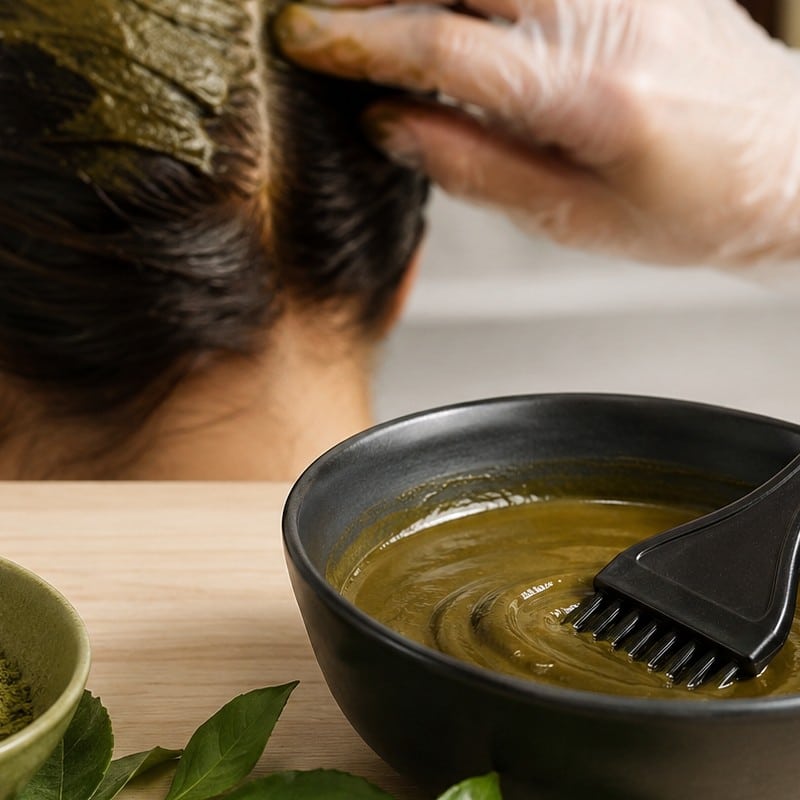
Henna is obtained from the plant Lawsonia inermis and has traditionally been used as a natural hair colorant. Its main coloring compound is lawsone, which gives henna its characteristic staining properties.
Although henna is often associated with natural cosmetic products, allergic reactions may still occur, particularly when products also contain oxidation hair dye ingredients or when consumers already have sensitivities to hair colorants.
For this reason, Japanese authorities require specific precautionary statements to help consumers reduce the risk of serious allergic reactions.
Existing Labeling Requirements Remain in Force
Japan originally introduced mandatory precautionary labeling for henna-containing hair cosmetics in 2006. The recent notification does not create an entirely new regulatory framework but reinforces compliance with those established obligations.
Hair cosmetics and shampoos containing henna or henna-derived substances are expected to include clear warnings on the product container or outer packaging advising consumers to:
- stop using the product if skin irritation occurs;
- exercise particular caution if they have previously experienced allergic reactions to hair dyes; and
- perform a skin allergy (patch) test before every use.
In addition, products must include detailed instructions explaining how consumers should correctly perform the patch test before applying the product.
Transition Period for Existing Products
The notification also clarifies how manufacturers should implement the requirements.
Newly manufactured products are expected to comply immediately with the required precautionary labeling.
For products that have already been manufactured, companies are expected to update labeling as soon as reasonably possible, with a maximum transition period of one year from the date of the notification.
During this transition, businesses may temporarily provide the required safety information through supplementary leaflets, stickers, or similar materials until permanent packaging updates are completed.
A Continued Focus on Consumer Safety
The latest notification illustrates Japan’s continued emphasis on improving consumer protection through effective cosmetic labeling. Rather than introducing new ingredient restrictions, the authorities are reinforcing the importance of communicating allergy risks clearly so consumers can use hair coloring products more safely.
For cosmetic manufacturers selling in Japan, reviewing warning statements and ensuring full compliance with labeling requirements remains an important part of maintaining market access and meeting regulatory expectations.
