

For manufacturers, brand owners and product developers, this opinion represents an important regulatory signal. It also highlights a broader trend in cosmetic regulation: ingredients with significant pharmacological activity are increasingly being scrutinized when used in products marketed as cosmetics.
Why Did the SCCS Assess These Ingredients?
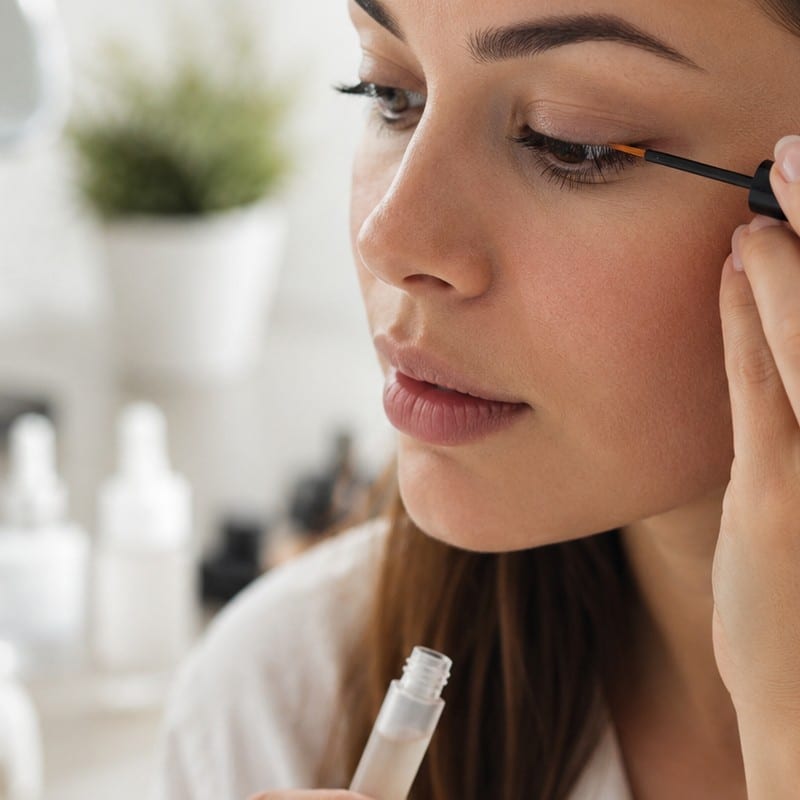
Over time, a variety of prostaglandin-related substances have appeared on the cosmetic market, especially in lash and brow serums claiming longer, thicker or fuller-looking hair.
However, the very mechanism that makes these substances effective also raises important safety and regulatory questions.
The SCCS was asked by the European Commission to evaluate the safety of prostaglandins and prostaglandin analogues used in cosmetic products, particularly those applied close to the eye. The request followed concerns raised by national authorities regarding products marketed for eyelash enhancement containing substances structurally related to medicinal prostaglandins.
The key challenge is that these compounds are not simple cosmetic ingredients. Many belong to a class of substances known to exert potent biological effects at extremely low concentrations. Several are structurally related to pharmaceutical active ingredients used in prescription medicines.
This creates a fundamental question for regulators: can a substance with a clear pharmacological mode of action be considered sufficiently safe and appropriate for cosmetic use?
The SCCS Conclusions
In its 2022 opinion, the SCCS reviewed available evidence on prostaglandins and prostaglandin analogues used in cosmetics. The Committee concluded that it was unable to establish the safety of certain substances, including isopropyl cloprostenate and ethyl tafluprostamide, at the concentrations proposed for cosmetic use. The SCCS also expressed broader concerns regarding the use of prostaglandin analogues in products applied near the eye.
More recently, in its 2025–2026 assessments, the SCCS evaluated additional prostaglandin analogues, including Isopropyl Cloprostenate (IPCP), Methylamido-Dihydro-Noralfaprostal (MDN) and Dechloro Dihydroxy Difluoro Ethylcloprostenolamide (DDDE). After reviewing the available data, the Committee concluded that none of these substances could be considered safe for use in cosmetic products intended to promote eyelash and eyebrow growth.
Importantly, the SCCS concerns were not limited to irritation or local tolerance. The Committee emphasized the potent pharmacological activity of these compounds and highlighted uncertainties regarding systemic effects and other toxicological endpoints.
Why Is Safety Assessment Particularly Challenging?
At first glance, lash serums may appear to involve very low exposure levels. However, several factors complicate the safety assessment.
First, these products are applied in direct proximity to the eye, one of the most sensitive areas of the body.
Second, prostaglandin analogues are active at extremely low concentrations. In pharmaceuticals, therapeutic effects are intentionally achieved using minute amounts of active substance.
Third, a range of adverse effects associated with ophthalmic prostaglandin medicines has been documented in the scientific literature. These effects include changes in iris pigmentation, eyelid pigmentation, periocular tissue changes and other ocular effects. While cosmetic products may differ from medicinal formulations, the existence of these pharmacological effects raises concerns when structurally related substances are intentionally used to stimulate eyelash growth.
From a regulatory perspective, demonstrating the safety of such ingredients therefore requires a particularly robust scientific package.
What Should Manufacturers Do?
For companies developing eyelash and eyebrow enhancement products, the SCCS opinions should be viewed as a clear signal to carefully review ingredient portfolios and future innovation strategies.
Manufacturers should evaluate whether any ingredients used in lash and brow products are structurally related to known prostaglandin analogues or possess comparable pharmacological activity. Existing safety assessments may need to be revisited in light of the SCCS conclusions and the evolving regulatory landscape.
In addition, companies developing new growth-promoting products should anticipate increasing scrutiny of ingredients that achieve their effects through pharmacological mechanisms rather than cosmetic pathways.
