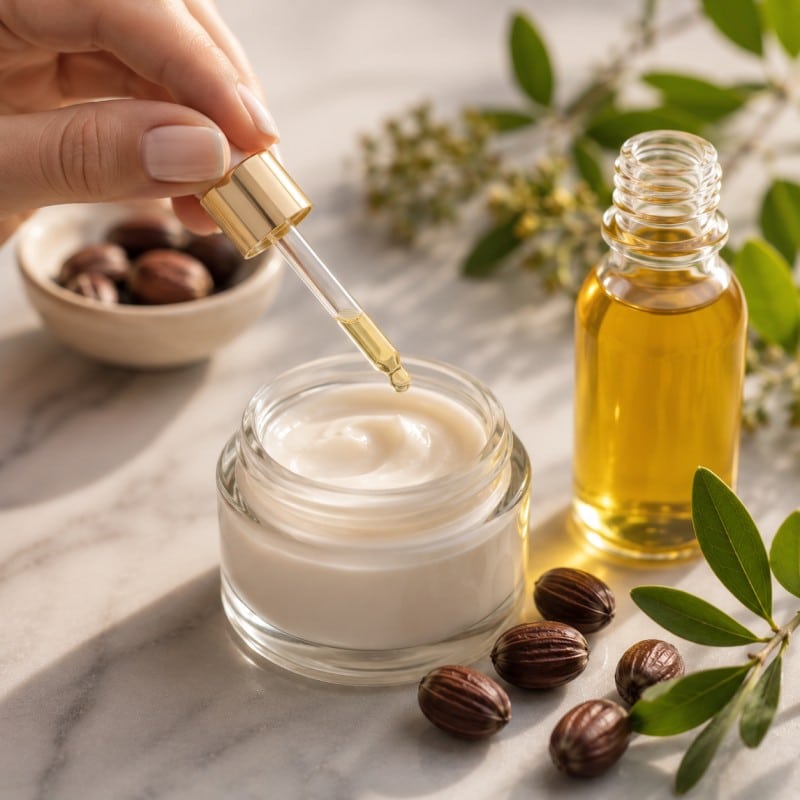
Jojoba oil has become a sought-after component in modern skin and hair care products, praised for both its eco-pleasant profile and wide range of uses.Its structure is similar to the body’s natural oils, which makes it a preferred choice for brands searching for natural, high-performance ingredients that appeal to consumers. The appeal of jojoba oil is rising in the beauty industry, with more brands launching ingredient-focused, value-driven products. Recent data reveals that between April 2025 and march 2026, the majority of new products featuring jojoba oil appeared in the skin care sector, reflecting the ongoing demand for solutions that are both effective and environmentally responsible.
Why Jojoba Oil Remains Key in Personal Care
Jojoba continues to play a meaningful role in personal care. Its broad range of applications and strong performance, along with enduring qualities, means it offers more than just a fleeting trend within the industry.
Extracted from the jojoba shrub, jojoba oil is technically a liquid wax ester instead of a typical plant oil. This unique nature sets it apart from other oils used in cosmetics. Noted for hydrating and gently protecting the skin, jojoba oil forms a light, breathable barrier.
Key Facts About Jojoba Oil
Jojoba oil’s composition closely mirrors that of human sebum, supporting both hydration and an effective skin barrier. Its emollient properties stem from its chemical structure as a liquid wax ester, making it highly compatible with skin, quickly absorbed, resistant to oxidation, and non-greasy. These traits help maintain a pleasant, balanced feel after use.
Peer-reviewed studies indicate its positive effects are challenging to match with other cosmetic ingredients.
Research shows that jojoba’s linear monoesters mirror the main elements found in skin’s own oils. This resemblance supports quick absorption,compatibility,and the ability to lock in moisture without feeling heavy or clogging pores.
When included in hair and scalp treatments, jojoba oil resulted in a 108% enhancement in shine and made hair easier to comb after washing compared to D5. It also provided 62% increased resistance to heat damage and improved overall scalp wellness.
For lips, jojoba oil offered an immediate 51% rise in hydration, softening lips and providing richer nourishment.
Certain formulas that feature jojoba oil can strengthen the absorption of other active ingredients-such as retinol-while also giving products a pleasant feel.Its unique texture means formulators often need fewer separate ingredients to reach desired effects in both function and texture.
Supporting Clean and sustainable Choices
jojoba oil delivers real sustainability benefits, both in farming and in formulation plans for cosmetic brands.
It’s well suited to ”clean label” product development-biodegradable, derived from natural sources, often cold-pressed, and available in organic-certified and recognized grades. Its low environmental impact throughout the supply chain adds further appeal for eco-minded companies.
Responsible water use has become a growing concern across the beauty industry, especially with record temperatures and prolonged droughts influenced by climate change. Jojoba’s farming profile helps address these issues.
Jojoba plants thrive in barren or semi-arid locations requiring minimal water, such as regions in Arizona and California in the United States, along with parts of Mexico, Argentina, and Peru.This resilience makes jojoba oil an attractive option for brands committed to climate-friendly ingredient sourcing.