
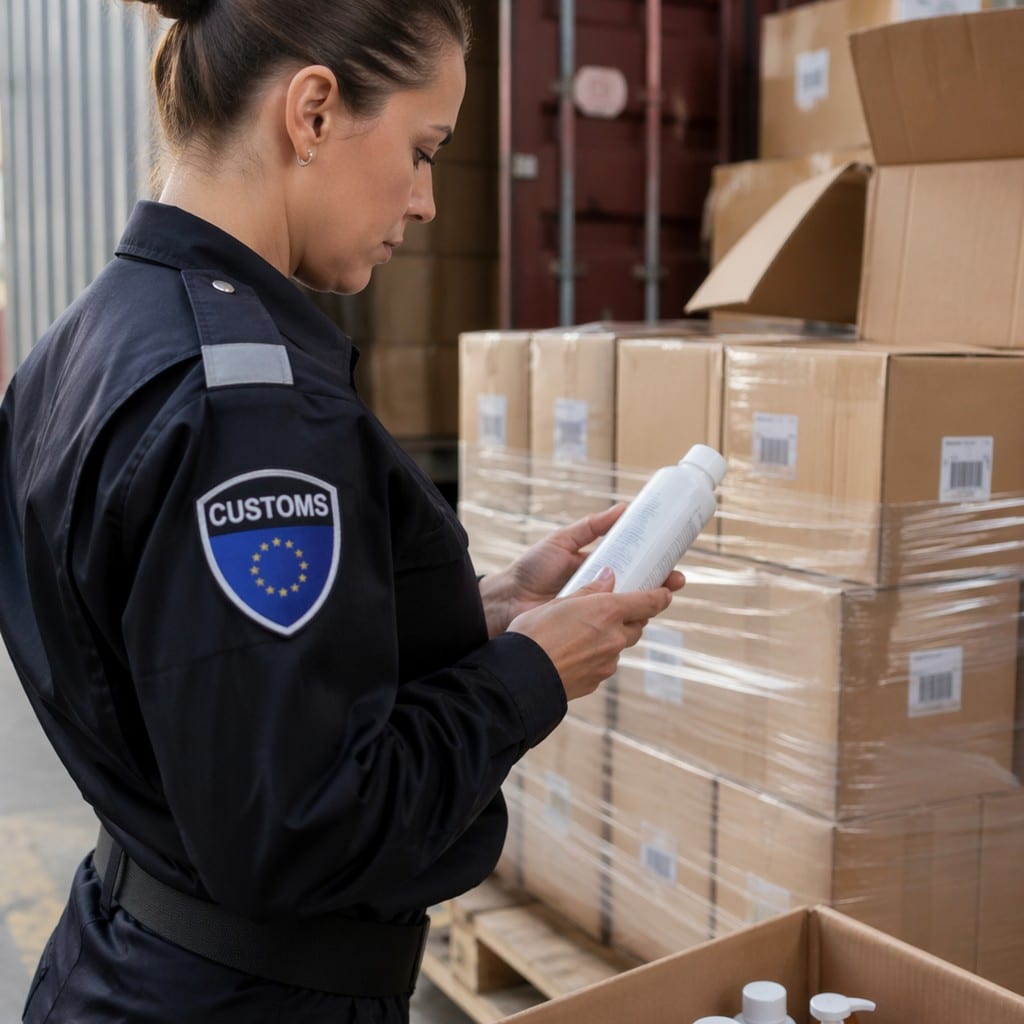
These situations are typically stressful and time-sensitive. Understanding what is legally required—and how authorities actually operate in practice—is essential to assess your options and move forward.
The regulatory framework: what is required before import
Cosmetic products in the EU are governed by Regulation (EC) No 1223/2009, which establishes a harmonised set of rules applicable across all Member States. One of its core principles is that compliance must be ensured before a product is placed on the market.
For imported products, this requirement applies at the moment they enter the EU market. Three elements are central to this framework.
- A Responsible Person established within the EU must be designated. This entity is legally accountable for ensuring that the product complies with all applicable requirements, including safety, labelling, and documentation.
- The product must be notified through the Cosmetic Products Notification Portal (CPNP) prior to being placed on the market. This notification provides authorities with key information about the product and its composition.
- A Product Information File (PIF) must be compiled and kept readily accessible at the address of the Responsible Person. This file includes, among other elements, the cosmetic product safety report, formulation details, and evidence supporting claims.
From a legal standpoint, these requirements are not sequential steps that can be completed after import. They are conditions that must already be fulfilled.
What authorities actually check at customs
In practice, customs authorities operate with a more limited scope. Their role is to verify, often in cooperation with market surveillance authorities, that products entering the EU appear to comply with applicable legislation.
Controls at the border tend to focus on visible or easily verifiable elements. In many cases, this includes the presence of a Responsible Person within the EU, the existence of a CPNP notification, and compliance of labelling requirements.
This leads to an important distinction that is often misunderstood.
Customs may primarily check the Responsible Person and the CPNP. However, full compliance—including the existence of a PIF—is legally required before import or placement on the market. The absence of a PIF therefore constitutes non-compliance, even if it is not immediately detected at the border.
This gap between legal requirements and practical controls is one of the main reasons why some shipments appear to “pass” despite incomplete compliance.
Possible outcomes when compliance is missing
When one or more required elements are missing or unclear, authorities may decide to hold the shipment temporarily. The importer is then asked to provide additional information or documentation within a defined timeframe.
If a Responsible Person has not been designated or if no CPNP notification exists, these issues are usually identified quickly and must be addressed before the product can proceed.
The situation becomes more complex when it comes to the PIF. Because it is not always checked at customs, its absence may only become apparent later. However, if authorities request it—either at the border or through market surveillance—the file must be available without delay.
If compliance cannot be demonstrated, authorities may prevent the product from being placed on the market. This can result in the shipment being returned or, in some cases, destroyed.
Can you regularise products after import?
Whether a situation can be corrected depends on what is missing and on how quickly action is taken.
Certain steps, such as completing a CPNP notification or formally designating a Responsible Person, can sometimes be carried out after the product has arrived, provided that it has not yet been placed on the market.
The PIF presents a different challenge. While it is sometimes described as documentation that can be “prepared later,” this interpretation is not aligned with the regulation. The safety assessment and supporting data must exist before the product is placed on the market, meaning that compiling a PIF retrospectively can be complex and time-sensitive, yet in many cases, it remains feasible if addressed promptly and with the right information.
In addition, if the product formulation, ingredients, or claims do not comply with EU requirements, corrective actions may go beyond documentation and require changes to the product itself.
A practical path to recovery
When a shipment is blocked or under review, the first step is to establish a clear picture of the situation. This involves identifying which elements are missing and whether the necessary data exists to support compliance.
The next step is to evaluate feasibility. In some cases, it is possible to complete the missing steps within the timeframe provided by authorities. In others, particularly when technical documentation is incomplete or unavailable, the options may be more limited.
Clear and structured communication with authorities is essential throughout this process. Providing accurate information and demonstrating a concrete plan toward compliance can influence how the situation is handled.
Looking beyond customs: the role of market surveillance
Even when products are released from customs, compliance obligations do not end there. Market surveillance authorities across the EU have the power to request documentation, including the PIF, at any point after the product has entered the market.
This means that passing customs should not be interpreted as confirmation of compliance. It simply indicates that no blocking issue was identified at that specific stage.
The regulatory framework is designed to ensure continuous compliance, not only at entry but throughout the product’s presence on the market.
