

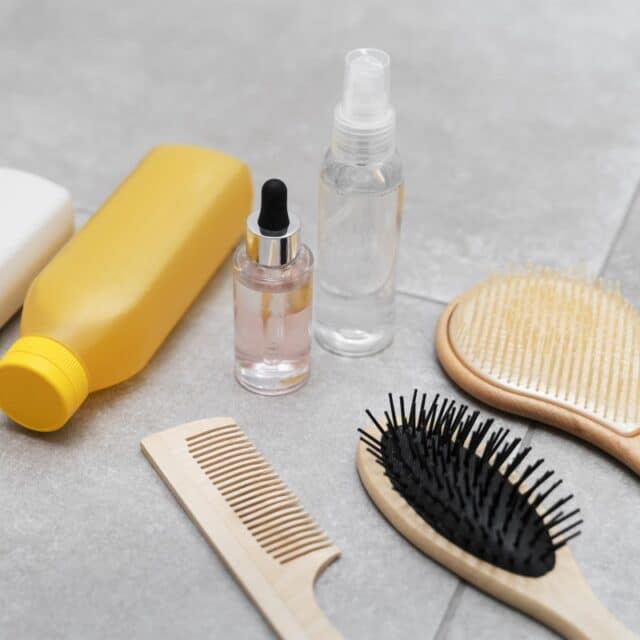
Some products, especially those that claim to stop hair loss or promote new growth, fall into a gray area. The type of product they are depends on whether it is primarily for cosmetic (appearance) or medicinal (physiological) purposes. This blog talks about how the EU Regulation 1223/2009 rates these kinds of products, using the European Commission’s Borderline Manual as a reference. It also talks about how Certified Cosmetics helps brands with CPSR service for hair care cosmetics and borderline cosmetic assessments to make sure they are fully compliant.
What Defines a Cosmetic Product under EU Law?
Regulation (EC) No 1223/2009 says that a cosmetic product is a substance or mixture that is meant to be put on the outside of the body to clean, perfume, change its appearance, protect it, or keep it in good condition.
Cosmetics for hair care include shampoos, conditioners, masks, and scalp serums that make hair look better, feel better, or be easier to style without changing how it works biologically. A Hair growth cosmetic product EU stays in this group only if its effects are limited to making the hair look better, like by making it thicker, less likely to break, or shinier. But if the product says it can stimulate hair follicles, restore hair growth in bald spots, or change the way the scalp works, it might be classified as a medicine. The difference is not just in the claim but also in how the product works to get the effect.
Guidance from the EU Borderline Manual
The European Commission’s Borderline Manual specifically addresses “Products for hair growth or reducing hair loss” (Section 3.3.9). It clarifies that products claiming to act by stimulating hair growth or preventing hair loss may raise classification doubts. “Products that claim to improve the appearance of hair, for instance, by making it look thicker or fuller, are cosmetics. Products that act on the hair root or influence physiological functions of the scalp may be considered medicinal.”
This guidance emphasizes the intention and presentation of the product.
- If a lotion or serum gives hair a fuller appearance by coating or conditioning, it fits within cosmetics.
- If it stimulates the hair follicle, affects cellular metabolism, or restores growth, it crosses into the medicinal field.
Thus, two formulations with similar ingredients can be classified differently depending on their concentration, claims, and marketing language, a perfect example of why borderline cosmetic assessment for hair loss products is essential before market entry.
Classification Criteria for Hair Growth Products
Regulators look at a number of things at once to decide if a product is a cosmetic or a medicine. This classification is not based on just one thing, like the ingredient list or a single claim. Instead, it is based on the product’s overall look, how it works, and the scientific reasons for it. The EU’s approach is holistic, which means that it looks at every part of the product’s identity, such as the claims made on the packaging, the way the product works, the amount of active ingredients, the way it makes people feel, and even the language used in marketing materials.
This thorough review is very important because claims about hair loss and hair growth often mix up cosmetic and medical purposes. A product that makes hair look denser or thicker may still be cosmetic, but one that says it works on the scalp’s physiology, stimulates follicular activity, or restores growth patterns will probably be considered medicinal. So, brands need to think about not only what their products do, but also how they tell customers about those things. The right classification has a direct impact on product documentation, CPSR requirements, and whether it can be legally sold under the cosmetic regulation.
Intended Function
If the main goal is to make hair look better, like by making it less likely to break or making it look thicker, the product is still cosmetic. If it says it can help hair grow back, stop it from falling out, or grow new follicles, it has a medicinal purpose.
Mode of Action
Hair products for cosmetics work on the outside by moisturizing, strengthening, or coating the hair shaft. Medicinal products work below the surface by changing biological or metabolic functions, like increasing blood flow to the scalp or changing the activity of hair follicles.
Ingredients and Concentrations
Adding minoxidil, caffeine in high amounts, or active botanical extracts that change the way the scalp works can make a product more like a medicine. The EU looks at both the ingredients and how they are used in the formulation.
Claims and Presentation
Phrases like “reduces the appearance of thinning hair” or “supports hair density” suggest cosmetic purpose, while “stimulates new growth” or “treats hair loss” imply therapeutic intent. Visuals resembling pharmaceutical products can also influence interpretation.
These distinctions highlight why cosmetic product classification EU hair care requires both regulatory insight and precise claim control.
Certified Cosmetics’ Role in Borderline Compliance
At Certified Cosmetics, we help brands navigate these subtle but critical boundaries. Our team of regulatory experts ensures that your hair growth or anti-hair loss products are properly classified, documented, and safely introduced to the market.
Our key services include:
- CPSR Service Hair Care Cosmetic: Preparation of the Cosmetic Product Safety Report, assessing toxicological data, exposure scenarios, and ensuring that the product meets safety standards under Regulation 1223/2009.
- Borderline Cosmetic Assessment Hair Loss Products: A scientific and legal analysis of claims, formulation, and intended function to determine whether your product qualifies as cosmetic or medicinal.
- Label and Claim Review: Ensuring marketing materials, packaging, and digital content use compliant language aligned with EU guidelines.
- Cosmetic Product Classification EU Hair Care: Guidance through the complete classification process, from concept to market launch, including support for CPNP notification and PIF documentation.
By combining scientific evaluation with legal expertise, Certified Cosmetics minimizes classification risks and strengthens your product’s regulatory foundation.
Why Classification Matters
For hair care brands, proper classification determines everything, from label wording and marketing freedom to the type of safety documentation required. Misclassification can lead to market withdrawal, penalties, or reputational damage.
A clear borderline cosmetic assessment not only protects against these risks but also strengthens your brand’s credibility. It ensures your Hair growth cosmetic product EU launches are supported by the correct CPSR documentation, labeling, and registration within the Cosmetic Product Notification Portal (CPNP).
With the right compliance strategy, brands can confidently communicate benefits like stronger, thicker, and healthier-looking hair without crossing into medical claims.
Key Takeaways
- Hair care products that improve appearance (shine, volume, manageability) are cosmetics.
- Hair loss treatments that claim to stimulate follicles or restore growth are medicinal.
- Mode of action and claim wording determine classification under EU Regulation 1223/2009.
- Certified Cosmetics provides specialized CPSR service and borderline cosmetic assessment for hair care products to ensure compliance and safety.
Correct classification is not just a legal formality; it is a mark of transparency and responsibility. By understanding how the EU differentiates between cosmetic and medicinal claims within the context of cosmetic product classification EU hair care, your brand can innovate confidently, deliver effective results, and maintain full regulatory compliance from the earliest development stage to market launch.
Frequently Asked Questions
Q1. Do all hair growth products count as medicines in the EU?
Not always. Cosmetics are things that only make you look better, like making your hair look fuller or stronger. Medicinal products are only those that say they can help hair grow or bring it back.
Q2. What paperwork do you need for hair care products?
All cosmetic products need a CPSR report, a PIF file, and a CPNP notification. Certified Cosmetics helps with all parts of preparing and submitting.
Q3. How can Certified Cosmetics help with hair loss products that are on the edge?
We review your formulation and claims through borderline cosmetic assessments to ensure your product meets the definition of a cosmetic and complies with EU standards.
Q4. What happens if a product is put in the wrong category?
It can be removed from the EU market or given a new label as a medicine, which requires a marketing authorization. Proper classification at the beginning can help you avoid these expensive results.
Conclusion
The line between cosmetic and medicinal hair products is delicate but clearly defined within EU regulation. Whether your brand develops a hair growth cosmetic product EU or a conditioning serum, compliance begins with accurate classification.
At Certified Cosmetics, our mission is to support safe, transparent, and innovative product launches through CPSR services, borderline cosmetic assessments, and expert guidance in EU cosmetic product classification. By staying aligned with regulatory requirements from the start, your brand can deliver trusted hair care solutions that meet both consumer expectations and EU compliance standards.


