
Pore Visibility Test
$492.64
The Pore Visibility Test is a laboratory method used to measure the size, number, and visibility of pores on the skin surface. It provides objective data to demonstrate the refining and smoothing effects of cosmetic products that target pore appearance, texture improvement, and skin clarity.
Purpose of the Test
The purpose of this test is to assess whether a product can visibly reduce pore size, minimize the appearance of pores, or smooth uneven skin texture. It supports marketing claims such as “refines pores,” “smooths skin,” or “improves texture uniformity.”
How the Test Works
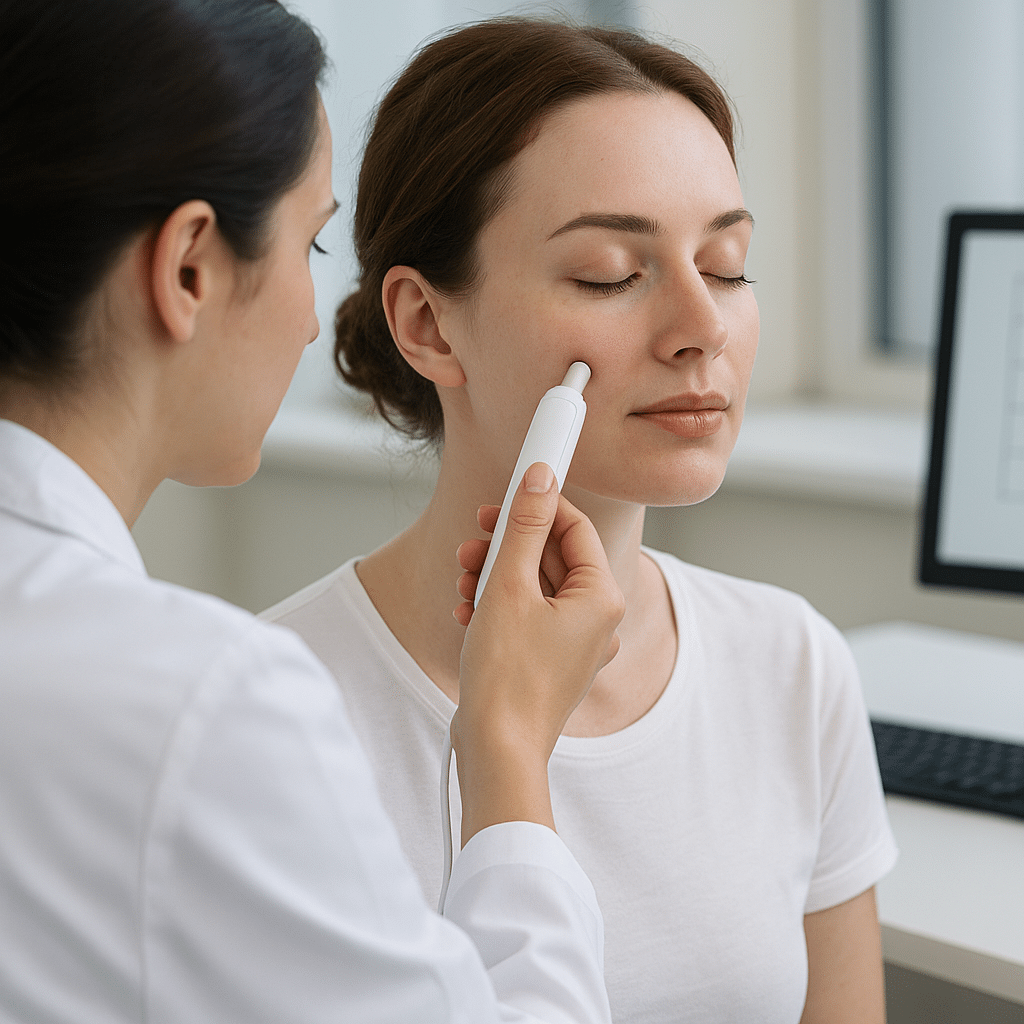
The Pore Visibility Test is performed using an Apparatus Test that involves high-resolution skin imaging. Digital photographs or dermatoscopic scans of the skin are captured under controlled lighting conditions. Image analysis software is then used to quantify pore count, size distribution, and visibility intensity before and after product application.
Applications in Cosmetic Testing
- Evaluation of pore-refining creams, serums, or primers
- Testing of exfoliating or clarifying treatments
- Assessment of skin-smoothing and texture-improving formulations
- Support for “reduces visible pores” or “refines skin texture” claims
- Comparison of product performance over time
Test Procedure
- Volunteers are acclimatized in a controlled environment.
- Baseline images of the test area (typically the nose, cheeks, or forehead) are captured using a calibrated imaging device.
- The product is applied according to its intended use instructions.
- Post-application images are taken at specified intervals (e.g., after 30 minutes, 2 hours, or following a multi-day treatment).
- Image analysis software quantifies pore size, number, and visibility changes.
Results & Reporting
The final report includes:
- Detailed description of the imaging method and apparatus
- Baseline and post-treatment pore size and count data
- Statistical evaluation of visible improvements
- Interpretation of refining and smoothing efficacy
- High-resolution before-and-after images (optional)
Why This Test Matters
Large or visible pores can affect the overall appearance of skin smoothness. The Pore Visibility Test provides precise, measurable data showing how effectively a product reduces pore size and improves texture. This information supports marketing claims for mattifying, refining, or smoothing skincare formulations.
Sample Requirements
- Minimum quantity: 50–100 g or mL of finished product
- Number of samples: 11 finished products
- Product type: serums, creams, masks, primers, or exfoliants
- Storage: room temperature unless otherwise specified
Turnaround Time
Results are typically available within 10–15 working days after receipt of samples and approval of the study protocol.
Deliverables
- Comprehensive laboratory report in PDF format
- Quantitative pore size and count data
- Summary and visual proof suitable for marketing or regulatory submission
Compliance & Standards
The Pore Visibility Test is performed according to international cosmetic testing standards under controlled laboratory conditions. Environmental factors such as light, humidity, and temperature are standardized to ensure consistent and reproducible results.
Related Tests
- Sebum Regulation Test
- TEWL (Transepidermal Water Loss) Test
- Skin Redness & Erythema Test
- Corneometry (Hydration Measurement)


