
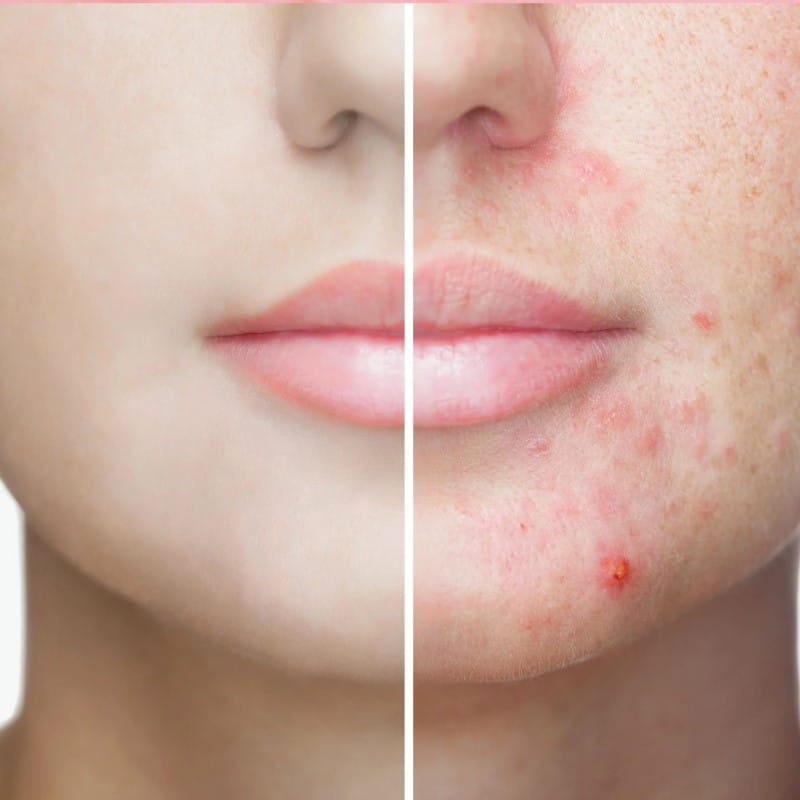
Non-Comedogenicity Test
$519.14
The non-comedogenicity test is a clinical and photographic evaluation designed to determine whether a cosmetic product clogs pores or contributes to the formation of comedones (blackheads and whiteheads). This test provides objective visual and dermatological evidence of skin tolerance and is essential for products marketed as “non-comedogenic” or suitable for acne-prone skin.
Purpose of the test
The purpose of this test is to verify that a cosmetic product does not clog pores or cause comedone formation after regular use. It supports product claims such as non-comedogenic, does not clog pores, suitable for acne-prone skin, and dermatologically tested for purity.
How the test works
The non-comedogenicity test is performed using a instrumental test with standardized before-and-after skin photography. High-resolution photos are taken of selected skin areas (usually on the face, back, or chest) under consistent lighting and positioning conditions. After a specified period of product use, new photos are taken and analyzed for visible signs of clogged pores or comedone formation.
Applications in cosmetic testing
- Verification of non-comedogenic claims for skincare and makeup products
- Evaluation of formulations for acne-prone or oily skin
- Testing of face creams, foundations, serums, and sunscreens
- Support for “dermatologically tested” and “gentle on the skin” claims
- Evaluation of skin tolerance and surface condition after use
Test procedure
- The study involves 10 volunteers with normal to acne-prone skin types.
- Before applying the product, baseline images of selected skin areas are taken.
- Participants use the product regularly over a specific treatment period (e.g., 48 weeks).
- After the test period, new high-resolution images are taken under identical conditions.
- Dermatologists evaluate the images to determine visible changes in the condition of the pores or the presence of comedones.
Results and reporting
The final report includes:
- Detailed study protocol and test methodology
- Before-and-after photos of the tested skin areas
- Dermatological evaluation of the presence of comedones and the condition of the pores
- Statistical summary of findings and classification of non-comedogenicity
- Interpretation of results to confirm product tolerance and pore compatibility
Why this test is important
Consumers with oily or acne-prone skin often want assurance that a cosmetic product will not cause breakouts. The Non-Comedogenicity Test provides scientific and visual evidence that a formula is safe for daily use without clogging pores, and helps brands build trust and substantiate gentle, skin-friendly claims.
Sample requirements
- Minimum quantity: 50100 ml or g of finished product
- Number of samples: 11 finished products
- Product type: creams, serums, lotions, sunscreens, or makeup products
- Storage: room temperature unless otherwise specified
Test parameters
- Duration: typically 48 weeks of regular product use
- Measurement intervals: before and after the treatment period
- Participants: 10 volunteers
- Documentation: high-resolution skin photography
- Proprietary methodology: I06/PO-08
Turnaround time
The typical turnaround time is 58 weeks, depending on the duration of treatment and the image analysis schedule.
Deliverables
- Comprehensive laboratory report in PDF format
- Before-and-after photographic documentation
- Dermatological assessment of pore condition and the presence of comedones
- Conclusion confirming non-comedogenic status
Compliance and Standards
The non-comedogenicity test is conducted according to internal methodology I06/PO-08 and in accordance with Good Clinical Practice (GCP) and international cosmetic testing standards. All evaluations are performed by trained dermatologists in a controlled environment to ensure reliable, reproducible, and ethical results.
Related products
-

Ophthalmological Test


