
Hair Heat Protection Claim Test
$493.87
The Hair Heat Protection Claim Test is a controlled laboratory study that evaluates the ability of hair care products to protect hair fibers from damage caused by styling tools such as straighteners, dryers, and curling irons. It provides measurable data to substantiate claims of thermal protection, reduced breakage, and improved hair condition after repeated heat exposure.
Purpose of the Test
The purpose of this test is to determine whether a product forms a protective barrier on the hair surface, helping to minimize structural damage, dryness, and brittleness induced by heat styling. It supports marketing claims such as “provides heat protection,” “reduces heat damage,” “smooths and shields hair,” and “maintains hair strength after styling.”
How the Test Works
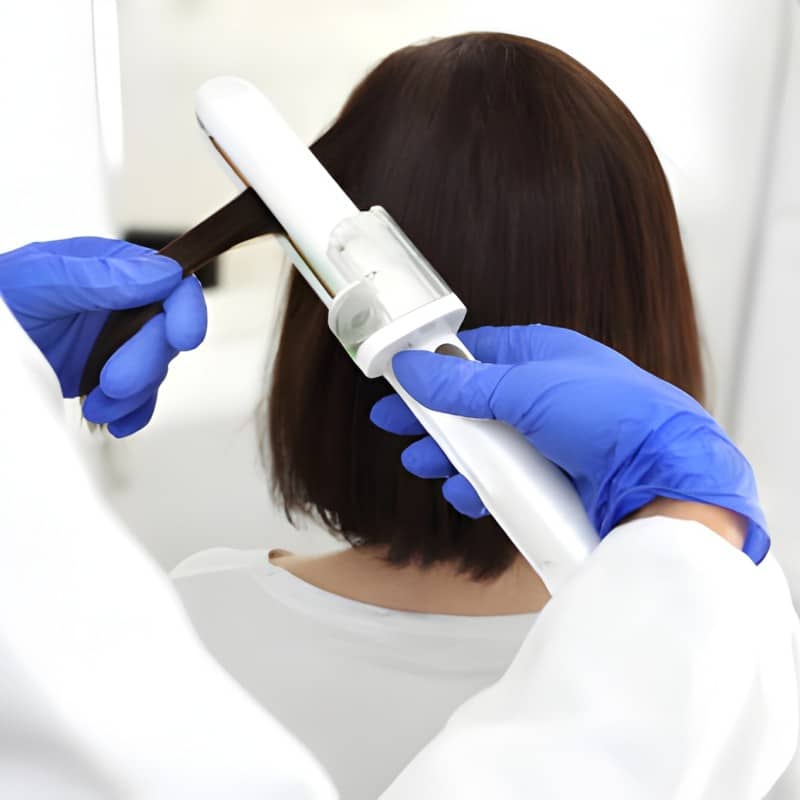
The Hair Heat Protection Claim Test is conducted using an Apparatus Test under controlled conditions. Hair strands treated with the test product are exposed to standardized heat application (e.g., hairdryer, straightener, or curling iron) at a defined temperature. The condition of the hair is measured before and after product use to determine changes in strength, texture, and moisture retention. The study also includes visual and tactile evaluations of treated versus untreated hair.
Applications in Cosmetic Testing
- Evaluation of heat-protective sprays, serums, and leave-in conditioners
- Assessment of products designed for thermal styling and smoothing
- Verification of anti-breakage and heat protection claims
- Testing of formulations aimed at moisture retention and shine preservation
- Comparison of product performance before and after regular use
Test Procedure
- The study is conducted with 5 volunteers using in-house methodology I06/PO-08.
- Baseline measurements of hair condition are recorded before product application.
- Participants apply the product regularly for a defined treatment period (e.g., 2–4 weeks) according to usage instructions.
- Hair samples or sections are exposed to standardized heat conditions mimicking daily styling routines.
- After the treatment period, measurements are repeated to assess visible and structural improvements.
Results & Reporting
The final report includes:
- Detailed study protocol and environmental conditions
- Baseline and post-treatment assessments of hair condition
- Visual and instrumental evaluation of smoothness, gloss, and breakage reduction
- Comparative analysis of treated versus untreated hair samples
- Interpretation of results to support heat protection claims
Why This Test Matters
Frequent heat styling can weaken hair structure and cause irreversible damage. The Hair Heat Protection Claim Test provides scientific evidence of a product’s ability to reduce the negative effects of heat exposure. It validates claims for thermal protection, helping brands demonstrate product safety, efficacy, and added value for daily hair care routines.
Sample Requirements
- Minimum quantity: 50–100 mL of finished product
- Number of samples: 11 finished products
- Product type: sprays, serums, leave-in conditioners, or thermal protectants
- Storage: room temperature unless otherwise specified
Test Parameters
- Duration: typically 2–4 weeks of regular use
- Measurement intervals: before and after treatment period
- Participants: 5 volunteers
- Evaluation criteria: smoothness, breakage, shine, and overall condition
- In-house methodology: I06/PO-08
Turnaround Time
Typical turnaround time is 3–5 weeks depending on the treatment duration and hair evaluation schedule.
Deliverables
- Comprehensive laboratory report in PDF format
- Before-and-after measurements and photographic documentation
- Data analysis highlighting heat protection efficacy
- Summary suitable for claim substantiation and marketing purposes
Compliance & Standards
The Hair Heat Protection Claim Test is performed according to in-house methodology I06/PO-08 and in compliance with Good Clinical Practice (GCP) and international cosmetic testing standards. All studies are carried out under controlled environmental conditions to ensure reliable and reproducible results.


